
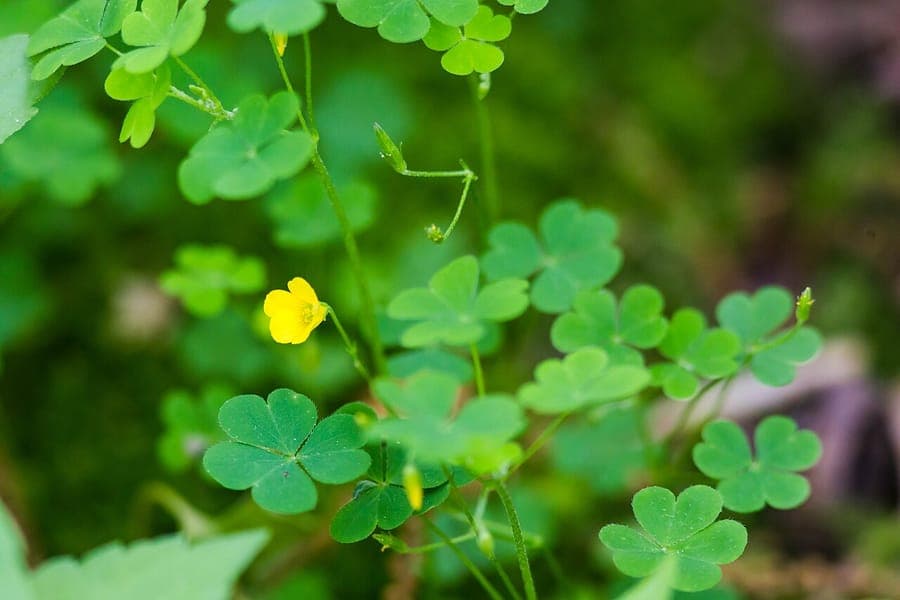
Melissa McMasters on flickr / CC BY 2.0, via Wikimedia Commons
Oxalis dillenii: complete guide
Oxalis dillenii
¿Quieres ver Oxalis dillenii: complete guide en tu jardín?
1 minuto, sin tarjeta de crédito
Overview
Oxalis dillenii, commonly known as Slender yellow wood-sorrel, is a graceful plant species originating from Central and Eastern Canada through Eastern Mexico. This wild-type Oxalis offers something different from domesticated relatives: a ranker, more ethereal appearance combined with cheerful yellow flowers blooming from May through October. As a member of the Oxalidaceae family, Oxalis dillenii forms a light, open mat of delicate branching stems, ideal for gardeners seeking a more naturalistic, wild-appearing groundcover.
Reaching 20 to 30 centimeters in height, it spreads via seed rather than rhizomes, making it less invasive than cousins while still capable of self-sowing if left to bloom fully. The rangy, elegant appearance and bright yellow flowers make Oxalis dillenii a popular choice for wild gardens, borders, and balcony containers alike.
Appearance and bloom cycle
The leaves of Oxalis dillenii are notably slender and graceful compared to other species. The leaflets are narrower, lance-shaped, giving the plant an airy, elegant bearing. Like all Oxalis species, it exhibits characteristic nyctinastic movements with evening leaf closure.
Flowers are diminutive, approximately 10-12 millimeters across, and brilliant yellow. They appear in dense small clusters atop long, thin stems, creating an airy, natural effect. The blooming period extends from May through October with summer peaks. Each flower lasts merely one day, yet the plant blooms extremely profusely. Seed capsules follow and ripen quickly; to prevent excessive self-seeding, remove spent flowers regularly.
Ideal location
Oxalis dillenii grows best in positions receiving abundant sunlight. The plant prefers minimum 5-6 hours of direct daily sun, though it tolerates partial shade reasonably. In full shade, growth becomes weak and unsatisfactory. For best results, place it in a sunny, warm garden location.
This remarkably adaptable plant functions excellently both in borders and containers. It grows well between stones and amongst other low groundcovers. On balconies, it provides natural wildness offsetting formal plantings. It suits semi-wild garden corners admirably.
Soil requirements
Oxalis dillenii is a truly remarkable groundcover regarding soil tolerance. It thrives in virtually all soil types, from sand to clay, poor to rich. However, for optimal growth and flowering, light, well-draining, moderately fertile substrate is preferred. A pH between 5.5 and 7.0 proves ideal.
The plant displays admirable indifference and tolerates even impoverished soils well - making it an excellent choice for garden areas where other plants struggle. When growing in containers, standard potting compost without amendments works perfectly.
Diseño gratis
¿Quieres ver Oxalis dillenii: complete guide en tu jardín? Crea un diseño gratis ahora.
Watering
Oxalis dillenii demonstrates considerably greater drought tolerance than many garden plants. Once established, it requires minimal supplemental water. During dry periods, occasional irrigation helps, but it tolerates brief droughts well. Container cultivation requires slightly more frequent watering, yet significantly less than typical potted plants.
Never create waterlogging conditions. During winter and cooler seasons, minimal watering suffices. This plant suits gardeners who prefer not watering daily!
Pruning and shaping
Oxalis dillenii requires little to no pruning. Its natural form is already appealing. However, regularly removing spent flowers and seed stalks prevents uncontrolled spread via seed, also encouraging prolonged bloom. If plants become overgrown or untidy, light spring cutback stimulates compact, full regrowth. The plant tolerates relatively rough cutting.
Maintenance calendar
March-April: Monitor for seedlings from previous season. Optional feeding - this plant demands little.
May-June: Regularly remove spent flowers for continuous bloom and controlled seed production.
July-August: During dry periods, check regularly; water if foliage weakens.
September-October: Allow some seed heads to ripen if desiring more plants next season. Discontinue feeding.
November-January: Virtually no care required. Plant rests; monitor for disease only.
Winter hardiness
Oxalis dillenii possesses moderate frost tolerance. In temperate climates, it sometimes survives outdoors or regenerates from seed in spring. However, in cooler regions (above the Alps), it's better brought indoors for winter or treated as annual.
In milder climates like southern Netherlands and Belgium, outdoor survival is likely with self-regeneration via seed next spring. This is actually simplest: simply clear plants in October, allowing natural spring reseeding.
Companion planting suggestions
Oxalis dillenii appears fantastic in wild gardens alongside other delicate herbs. It works beautifully with other yellow bloomers like Goldenrod and yellow Composites. In containers, pair it nicely with silvery-foliaged Senecio or purple Alternanthera foliage.
The rangy form contrasts beautifully with more compact, full plants. Use it as filler between robustly-structured elements in borders. It imparts an airy, natural quality improving many gardens.
Final thoughts
Oxalis dillenii is essential for wild gardeners and those seeking greater naturalism. This plant demands minimal attention yet returns generous visual pleasure. Find it at smaller nurseries or start from seed. Most garden centers can refer you to suppliers.
Following this guide, you'll enjoy this elegant plant. Visit gardenworld.app for wild garden ideas and natural plant combinations. Let your garden grow wild!
¿Quieres ver Oxalis dillenii: complete guide en tu jardín? Crea un diseño gratis ahora.
Sube una foto, elige un estilo y obtén un diseño fotorrealista con lista de plantas en menos de un minuto.
Más de 10.000 jardines diseñados
Sin tarjeta de crédito


Plantas similares
Oxalis incarnata: complete guide
Oxalis incarnata
Discover the charming lilac oxalis for your front garden. Full growing guide, care tips and design ideas for this delicate summer bloomer.
Oxalis valdiviensis: complete guide
Oxalis valdiviensis
Learn how to grow Chilean yellow-sorrel with location, soil, watering and care tips. An elegant yellow-flowering ornamental.
Lifeplant: complete guide
Biophytum sensitivum
Lifeplant is a fascinating houseplant with sensitive leaves that fold when touched. Discover how to grow this tropical wonder and where to find it.