
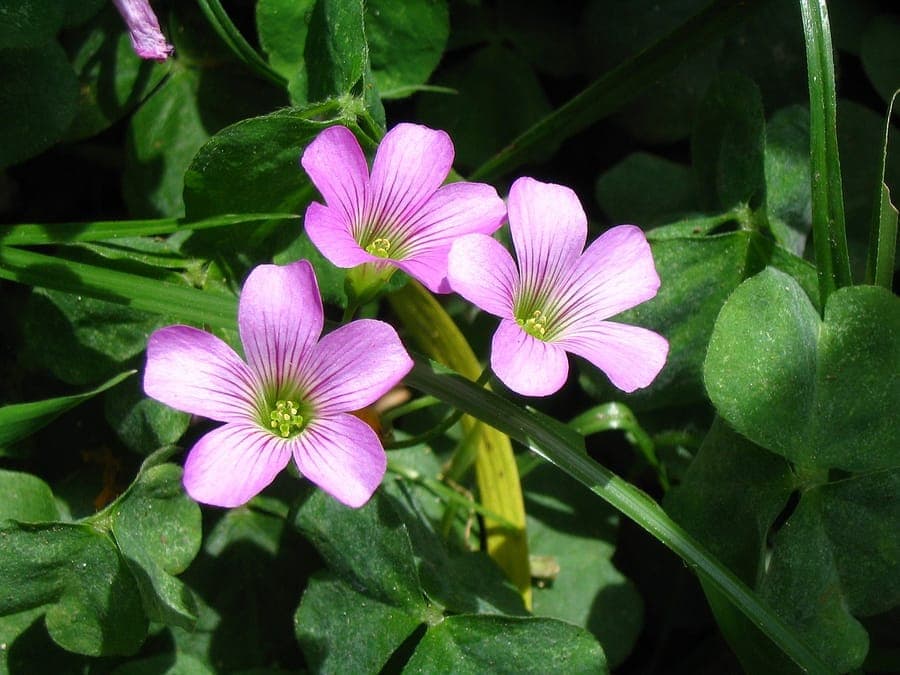
Minghong / CC BY-SA 3.0, via Wikimedia Commons
Oxalis debilis: complete guide
Oxalis debilis
¿Quieres ver Oxalis debilis: complete guide en tu jardín?
1 minuto, sin tarjeta de crédito
Overview
Oxalis debilis, commonly known as Large-flower pink-sorrel, is an elegant groundcover that captivates every gardener with its charming pink flowers. This beautiful plant originates from Central America through Guyana and Paraguay, bringing tropical sophistication to temperate gardens worldwide. As a member of the Oxalidaceae family, Oxalis debilis forms a dense, lush foliage mat crowned with delicate pink blooms from May through October.
Reaching just 15 to 25 centimeters in height, this plant spreads gradually via rhizomes, forming gorgeous clumps perfect for borders and container cultivation. What distinguishes Oxalis debilis from its yellow cousins is its spectacular floral display and slightly elevated light requirements. It's the choice for gardeners seeking something special, combining elegance with manageable care.
Appearance and bloom cycle
The leaves of Oxalis debilis are characteristically trifoliate, composed of three rounded leaflets displaying fresh green coloration. Leaves exhibit the distinctive nyctinastic movements of all Oxalis species - they fold at night, transforming your garden into a miniature landscape of closed hearts when darkness falls.
The flowers represent the true highlight of this species. Measuring approximately 15 to 20 millimeters across, they're considerably larger than those of O. corniculata. The coloration is delicate pink, sometimes with a lighter center or softer undersides. Flowers appear in open clusters, providing continuous bloom throughout the growing season. Following pollination, small seed capsules develop, though the plant also spreads steadily via underground rhizomes.
Ideal location
Oxalis debilis prefers a location with abundant light, brighter than many of its relatives. The plant thrives best with minimum 5-6 hours of direct sunlight daily. In partial shade, growth remains acceptable though flowering becomes less profuse. Position it preferably in full sun - your garden, terrace, or balcony.
The plant is exceptionally suited to container cultivation. In pots, growth becomes more compact and manageable compared to open ground planting. Use terracotta or plastic containers at least 20-25 centimeters in diameter for optimal root development. On balconies or terraces, Oxalis debilis provides a decorative spectacle lasting months.
Soil requirements
Oxalis debilis prefers well-draining, lightly fertile substrate with a pH of 6.0-7.0. A mixture of standard potting compost with organic material works excellently. Add sand or perlite to further improve drainage if working with heavy clay soils.
Due to its tropical origin, this species appreciates slightly more organic matter than O. corniculata. Work compost or well-made leafmould into topsoil in spring. This enhances not only structure but also nutrition and moisture retention capacity significantly.
Diseño gratis
¿Quieres ver Oxalis debilis: complete guide en tu jardín? Crea un diseño gratis ahora.
Watering
Oxalis debilis prefers consistently moist substrate, never completely dry. Water when the top 1-2 centimeters feel dry, but prevent waterlogging carefully. During growth periods (April-October), this means frequent watering; in winter, reduce considerably.
Use rainwater where possible; hard tap water causes problems. Always water from soil level, never wetting foliage. In container cultivation, regular moisture monitoring is essential - assess by lifting the pot periodically.
Pruning and shaping
Oxalis debilis requires virtually no pruning. The plant grows naturally compact and full. However, light pruning in February or March encourages even fuller development during the season. Regularly remove spent flowers and declining foliage for a neat appearance.
If the plant outgrows its container and becomes too dense, gently divide it into smaller sections when repotting in spring. This rejuvenates the plant and provides extra propagating material.
Maintenance calendar
February-March: Inspect for winter damage, remove dead foliage. Light pruning and initial feeding.
April-May: Begin regular feeding. Water more frequently as temperatures rise.
June-August: Weekly or twice-weekly feeding with half-strength fertilizer. Ensure adequate moisture.
September-October: Reduce feeding gradually. Water less frequently.
November-January: Minimal feeding and water. Plant enters dormancy; monitor for fungal issues.
Winter hardiness
Oxalis debilis lacks frost tolerance in most temperate climates. In cooler regions (above the Alps), this tropical species must winter indoors or in protected glasshouses. The plant tolerates brief freezes to approximately zero degrees Celsius, but prolonged frost proves fatal.
In very mild climates (southern France, Italy), it may remain outdoors with frost protection applied. For most European gardeners: bring inside in October, return outdoors in May. This minor effort is worthwhile given the visual spectacle this plant provides all summer.
Companion planting suggestions
Oxalis debilis creates beautiful contrasts with dark-foliaged plants such as purple Ajuga or burgundy Heuchera. For classic summer compositions, position soft blue Lobelia or delicate Diascia beside it. In large containers, combine with white Bacopa or silvery Sedum for a refreshing effect.
In hanging baskets or cascading pots, it creates a natural waterfall of pink bloom. The soft pink against silvery Senecio or cream-edged variegated foliage is truly enchanting.
Final thoughts
Oxalis debilis deserves greater attention than it typically receives. This is a plant for gardeners seeking something distinctive - not the standard groundcover, but something with personality and elegance. You'll find quality specimens at most garden centers. Following this guide, your season will overflow with pink blossoms.
For care questions, visit gardenworld.app for additional inspiration. This plant will bring you pleasure for many seasons!
¿Quieres ver Oxalis debilis: complete guide en tu jardín? Crea un diseño gratis ahora.
Sube una foto, elige un estilo y obtén un diseño fotorrealista con lista de plantas en menos de un minuto.
Más de 10.000 jardines diseñados
Sin tarjeta de crédito


Plantas similares
Oxalis incarnata: complete guide
Oxalis incarnata
Discover the charming lilac oxalis for your front garden. Full growing guide, care tips and design ideas for this delicate summer bloomer.
Oxalis valdiviensis: complete guide
Oxalis valdiviensis
Learn how to grow Chilean yellow-sorrel with location, soil, watering and care tips. An elegant yellow-flowering ornamental.
Lifeplant: complete guide
Biophytum sensitivum
Lifeplant is a fascinating houseplant with sensitive leaves that fold when touched. Discover how to grow this tropical wonder and where to find it.