
Wikimedia Commons / CC BY-SA 3.0, via Wikimedia Commons
Orobanche rapum-genistae: complete guide
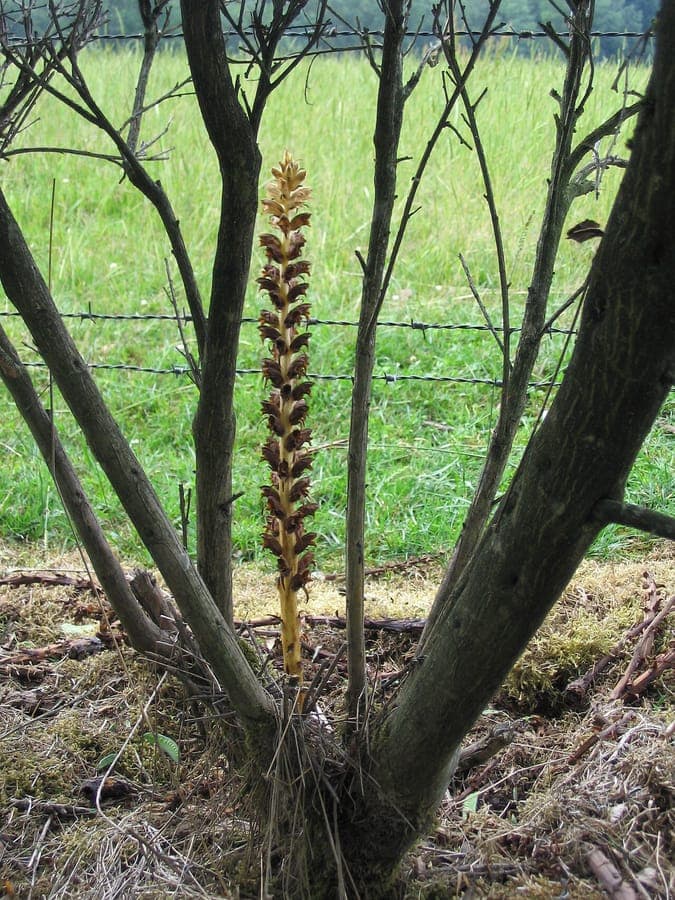
Orobanche rapum-genistae
¿Quieres ver Orobanche rapum-genistae: complete guide en tu jardín?
1 minuto, sin tarjeta de crédito
Overview
Orobanche rapum-genistae, known as greater broomrape, is a fascinating parasitic plant from the Orobanchaceae family. This yellow to purple-flowering plant is native to north-west Europe through western and central Mediterranean regions. It represents a unique, obligate parasitic plant extracting nutrients and water directly from broom species (Genista species).
This is a true botanical wonder demonstrating ecological relationships and coevolution.
Appearance and Bloom
Orobanche rapum-genistae displays yellow to purple flowers densely arranged along the stem. The plant lacks chlorophyll and depends entirely on its host for nutrition. The flowers possess an interesting shape with four to five lobes.
The blooming period extends from May through July, when large bumblebee-like insects visit flowers for pollination.
Ideal Location
This plant grows exclusively where broom species (Genista species) exist. It cannot grow independently. In gardens where broom flourishes, you may occasionally observe this plant appearing.
The plant thrives in full sun to light shade on identical locations where its host plant grows.
Soil
This plant requires identical soil conditions as its host, the broom. It typically feels at home on dry to moderately moist, well-draining soil with lower pH.
The plant cannot be cultivated independently because it represents an obligate parasite, obtaining all nutrients solely from the host plant.
Diseño gratis
¿Quieres ver Orobanche rapum-genistae: complete guide en tu jardín? Crea un diseño gratis ahora.
Watering
Direct watering proves unnecessary, as the plant extracts water and nutrients from the host plant. It grows on identical moisture regimes as the broom upon which it lives.
Pruning
Pruning is unnecessary. In fact, pruning the broom upon which it lives may negatively impact the parasite.
Maintenance Calendar
May: Initial appearance. June: Bloom culmination. July: Seed formation and dispersal. August-April: Underground growth phase.
Winter Hardiness
Orobanche rapum-genistae remains winter hardy in most temperate zones. It completes its life cycle within one year, with seed overwinter and growth occurring in the following spring.
Companion Plants
The plant is not directly "companioned" with others because it is parasitic. However, if you grow broom, you may unexpectedly observe this plant appearing. It grows alongside broom with no other plants forming a true "combination".
Supporting wild plants such as broom helps this unique parasite persist.
Conclusion
Orobanche rapum-genistae represents a true biological wonder demonstrating how plants have adapted to extreme lifestyles. While it is parasitic, it is not harmful enough to cause serious garden concern. Should you observe it growing on your broom, consider it a sign of healthy wildflower habitat.
This plant is best observed and appreciated in its natural context.
Gardenworld.app/en/guide/wild-plants | Gardenworld.app/en/tips/ecological-gardens
¿Quieres ver Orobanche rapum-genistae: complete guide en tu jardín? Crea un diseño gratis ahora.
Sube una foto, elige un estilo y obtén un diseño fotorrealista con lista de plantas en menos de un minuto.
Más de 10.000 jardines diseñados
Sin tarjeta de crédito


Plantas similares
Northwestern Indian paintbrush: complete guide
Castilleja angustifolia
All about Castilleja angustifolia, the northwestern Indian paintbrush from dry western US steppes. Growing, care, and companion plant advice.
Wavyleaf Indian paintbrush: complete guide
Castilleja applegatei
Everything about Castilleja applegatei, the wavyleaf paintbrush from Oregon and California. Host plants, care, location, and garden use covered.
Bushy bird's-beak: complete guide
Cordylanthus ramosus
Complete guide to Cordylanthus ramosus, the hemiparasitic annual of western US steppes: ecology, host plants, cultivation and uses.