
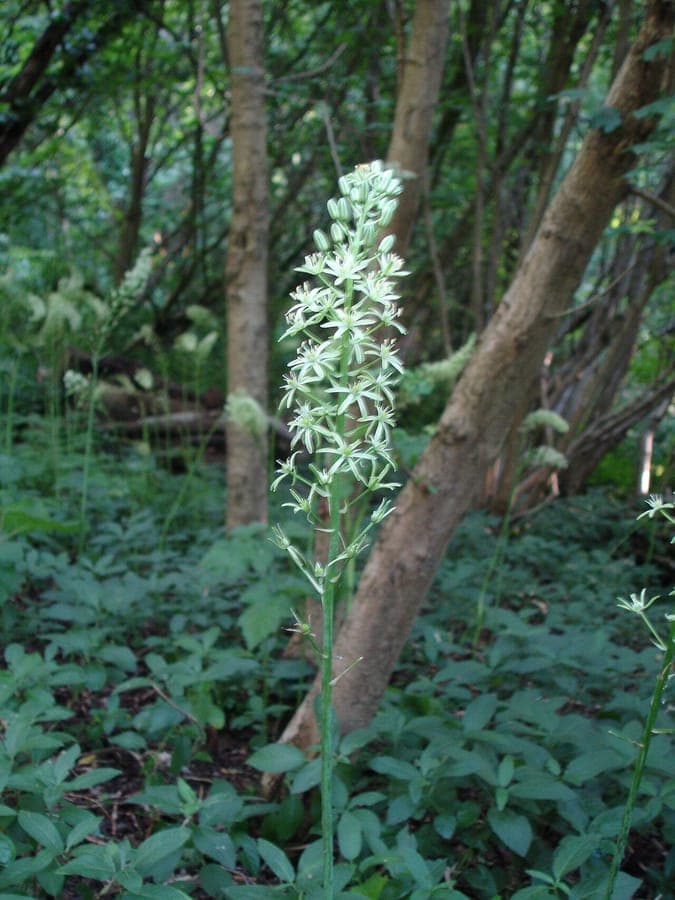
Garrytowns at English Wikipedia / Public domain, via Wikimedia Commons
Ornithogalum pyrenaicum: complete guide
Ornithogalum pyrenaicum
¿Quieres ver Ornithogalum pyrenaicum: complete guide en tu jardín?
1 minuto, sin tarjeta de crédito
Ornithogalum pyrenaicum: complete guide
Overview
Ornithogalum pyrenaicum, also known as Pyrenean star-of-Bethlehem, spiked star-of-Bethlehem, or aspergette, is a fascinating plant that serves two roles: ornamental and food crop. This is one of the few Ornithogalum species traditionally used as food, particularly in Southern European cuisine. At the same time, it is an attractive bulb with elegant yellow-white flowers. The plant is hardy and reliable.
Appearance and bloom
Pyrenean star-of-Bethlehem grows to about 40-60 centimetres tall with slender, line-shaped green leaves. The plant feels airy and light. The flowers are the focal point: small, yellow-white or green-white flowers grouped in long, slender flower spikes. Flowering occurs from May to June and is long-lasting. Not only are the flowers decorative, but the young stems (for their nutritional value) can also be harvested.
Ideal location
Pyrenean star-of-Bethlehem grows best in full sun to light shade. At least four hours of direct sunlight per day is ideal. The plant also accepts semi-shade, although flowering can be sparser. Plant it in open, well-lit locations where light can illuminate the fine flower heads. The plant thrives in Mediterranean gardens and in natural, wild garden designs.
Soil
Pyrenean star-of-Bethlehem is flexible regarding soil type but grows best in well-draining soil. If your garden has heavy clay, add sand and gravel. The plant accepts poor to moderately fertile soils. In fact, very rich soils can promote unnecessary leaf growth at the expense of flowering and bulb size.
Diseño gratis
¿Quieres ver Ornithogalum pyrenaicum: complete guide en tu jardín? Crea un diseño gratis ahora.
Watering
Once the plant begins to sprout and grow (in early spring), water regularly until flowering is over. Once the foliage begins to fade (June-July), gradually reduce watering. In summer and autumn, the plant needs almost no water once foliage is completely dead. Ensure the plant does not remain waterlogged.
Pruning
Pruning is not necessary. If you are harvesting as food, cut the young stems in spring (April) when they are about 15-20 centimetres tall - they have a mild, asparagus-like flavour. If you want it purely as an ornamental plant, let the flowers go through their natural cycle and do not remove spent flowers.
Maintenance calendar
October to December: Plant bulbs. January to March: Sprouting, rapid foliage growth. April to May: Harvest young stems (optional), flowering begins. June to September: Flowering continues, foliage disappears, plant rests.
Winter hardiness
Ornithogalum pyrenaicum is very winter hardy and can tolerate severe winters. The plant naturally grows in Europe from the Pyrenees to the Mediterranean region and can overwinter outdoors in most climates. No special protection is needed.
Companion plants
Pyrenean star-of-Bethlehem combines well with other Mediterranean plants, wildflowers and natural garden designs. Try it with wild daffodils, Muscari, and other early spring bloomers. The yellow-white flowers go well with purple and blue flowers. Plant in groups for best effect. It also fits well in food gardens and permaculture gardens.
Closing
Ornithogalum pyrenaicum is for gardeners who want something special - a plant that is both decorative and food. Plant it in autumn, enjoy its flowering every spring and optionally harvest the young stems. It is a truly unique addition to any garden. For more information, visit gardenworld.app.
For more garden tips and plant selection, visit gardenworld.app for personalized garden designs.
¿Quieres ver Ornithogalum pyrenaicum: complete guide en tu jardín? Crea un diseño gratis ahora.
Sube una foto, elige un estilo y obtén un diseño fotorrealista con lista de plantas en menos de un minuto.
Sin tarjeta de crédito


Plantas similares
Narrow-leaved dracaena: complete guide
Dracaena angustifolia
Everything about Dracaena angustifolia - the narrow-leaved dracaena: location, care, overwintering and use as a houseplant or patio plant.
Chaparral yucca: complete guide to Hesperoyucca whipplei
Hesperoyucca whipplei
Hesperoyucca whipplei (Our Lord's candle) is a dramatic rosette-forming plant from California that produces a towering flower spike, ideal for dry and gravel gardens.
False lily-of-the-valley: complete guide
Maianthemum dilatatum
Everything about Maianthemum dilatatum, the false lily-of-the-valley. Care, shade location, propagation and garden combinations for this popular shade ground cover.