
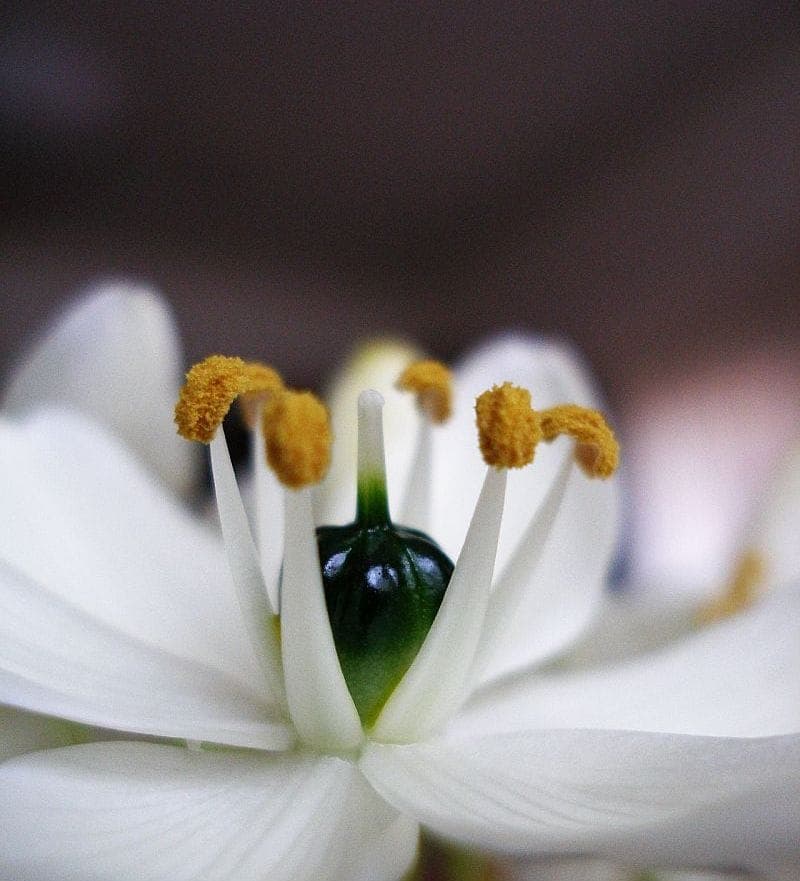
tanakawho from Tokyo, Japan / CC BY 2.0, via Wikimedia Commons
Ornithogalum arabicum: complete guide
Ornithogalum arabicum
¿Quieres ver Ornithogalum arabicum: complete guide en tu jardín?
1 minuto, sin tarjeta de crédito
Overview
Ornithogalum arabicum, commonly known as Arabian starflower or lesser cape-lily, is a captivating bulb plant from the Mediterranean and North Africa. This plant is renowned for its delicate, star-shaped white flowers with characteristic black anthers. It is a popular choice for spring borders, Mediterranean gardens, and rock basins due to its elegance and ease of cultivation.
Ornithogalum arabicum represents a refined choice for those who love elegant spring bloomers. With its white flowers and extended flowering period, it offers subtle beauty and grace to spring gardens.
Appearance and bloom
Ornithogalum arabicum grows from underground bulbs and typically reaches 40 to 60 centimeters in height. The plant forms elegant, upright flower stems with narrow, linear leaves at the base. The leaves are gray-green, approximately 30 centimeters long, and create a graceful appearance.
The flowers are the highlight: they are white, star-shaped, approximately 2 to 3 centimeters in diameter, and appear in rich, spherical clusters at the tops of the stems. Each flower has six white petals and characteristic black anthers, creating a very distinctive and elegant appearance. The flowers appear from April through May, depending on local climate and planting time.
The flowers have a subtle, pleasant fragrance. Following flowering, seed pods develop, though these are usually not propagated in gardens; propagation typically occurs through bulb division.
Ideal location
Ornithogalum arabicum grows best in full sun to light shade. The plant requires at least three to four hours of direct sunlight daily for good flowering. In excessive shade, the plant will grow tall and spindly, flowering poorly.
This plant is suitable for Mediterranean and warm temperate climates. It tolerates temperatures down to approximately -5 to 0 degrees Celsius, although in very cold winters, bulbs may suffer damage. In cold climates, the plant is best grown in pots that can be brought indoors in winter.
Ornithogalum arabicum appreciates protection from very strong winds, though it values the airiness of gardens.
Soil
Ornithogalum arabicum grows best in well-draining soils. The plant tolerates diverse soil types: sand, light clay, and saline soils. What matters: the plant cannot tolerate waterlogging or persistent moisture, especially during the dormant period after flowering.
Good drainage is essential. In wet or clay soils, it is advisable to add sand or gravel, or to grow the bulbs in raised beds or pots. For pot planting, very well-draining mix should be used.
Soil nutrition: Ornithogalum arabicum does not demand rich soils. An average garden soil is sufficient. When planting bulbs, some sand and compost can be added, but no excessively rich mixture.
Diseño gratis
¿Quieres ver Ornithogalum arabicum: complete guide en tu jardín? Crea un diseño gratis ahora.
Watering
Ornithogalum arabicum tolerates dry soils well and requires minimal watering once planted. The plant grows best with moderate moisture during the growing and flowering season (spring). After flowering and leaf drop, the plant should be kept dry.
This is crucial: after flowering in May, the plant should be kept dry. In wet summers, waterlogging can damage bulbs or cause rot. This is why pot cultivation is often preferred in wetter climates.
In normal years, natural rainfall will be sufficient during the growing season. No supplemental watering is usually needed.
Pruning
Ornithogalum arabicum requires no pruning. Dead flowers can be removed for neater appearance, but this is optional. Leaves should not be cut until fully withered, as the plant draws energy from the leaves to recharge the bulb for the next season.
Maintenance calendar
October-November: Bulb planting time. Plant bulbs at approximately 10-12 centimeter depth in well-draining soil.
December-March: Root growth and vegetative growth. Minimal care needed; no watering in normal winters.
April-May: Flowering reaches its peak. Enjoy the elegant white flowers. Remove dead flowers if desired.
June-August: Leaf drop and dormant period. Plant should be kept dry. In very wet periods, some protection from rain can be helpful.
August-October: Preparation for next season. In October, bulbs can be dug, divided, and replanted.
Winter hardiness
Ornithogalum arabicum is moderately winter-hardy, tolerating temperatures down to approximately -5 to 0 degrees Celsius, depending on soil moisture and growing location. In very cold winters or wet winters, bulbs may suffer damage.
In cold climates, it is best to dig the bulbs from the ground after leaf drop (August) and store them dry in a cool place during winter. They can then be replanted in October.
In more southern, milder climates, bulbs can remain in the ground year-round.
Companion plants
Ornithogalum arabicum works well in spring borders with other spring bloomers:
Tulipa (Tulips) - Similar planting time and growing period. White tulips offer compatible color.
Hyacinthus (Hyacinths) - Other spring flowers offer similar culture.
Narcissus (Daffodils) - Similar bulb plants with similar timing.
Crocus - Earlier flowers offer sequential color.
Pulmonaria - Foliage provides ground cover.
Helleborus - Late-winter flower complements early spring bloom.
Conclusion
Ornithogalum arabicum represents an elegant and refined choice for spring gardens. With its delicate, star-shaped white flowers, extended flowering period, and ease of cultivation, it offers subtle beauty and grace. Though moderately winter-hardy in cold climates, it is excellent for Mediterranean regions and can also be grown in cold climates as a potted plant.
Look for Ornithogalum arabicum bulbs at nurseries, especially in autumn when bulb material is available. For more inspiration and plant advice, visit gardenworld.app for more guidance on spring-flowering plants.
¿Quieres ver Ornithogalum arabicum: complete guide en tu jardín? Crea un diseño gratis ahora.
Sube una foto, elige un estilo y obtén un diseño fotorrealista con lista de plantas en menos de un minuto.
Más de 10.000 jardines diseñados
Sin tarjeta de crédito


Plantas similares
Narrow-leaved dracaena: complete guide
Dracaena angustifolia
Everything about Dracaena angustifolia - the narrow-leaved dracaena: location, care, overwintering and use as a houseplant or patio plant.
Chaparral yucca: complete guide to Hesperoyucca whipplei
Hesperoyucca whipplei
Hesperoyucca whipplei (Our Lord's candle) is a dramatic rosette-forming plant from California that produces a towering flower spike, ideal for dry and gravel gardens.
False lily-of-the-valley: complete guide
Maianthemum dilatatum
Everything about Maianthemum dilatatum, the false lily-of-the-valley. Care, shade location, propagation and garden combinations for this popular shade ground cover.