
Stan Shebs / CC BY-SA 3.0, via Wikimedia Commons
Opuntia microdasys: complete guide
Opuntia microdasys
¿Quieres ver Opuntia microdasys: complete guide en tu jardín?
1 minuto, sin tarjeta de crédito
Overview
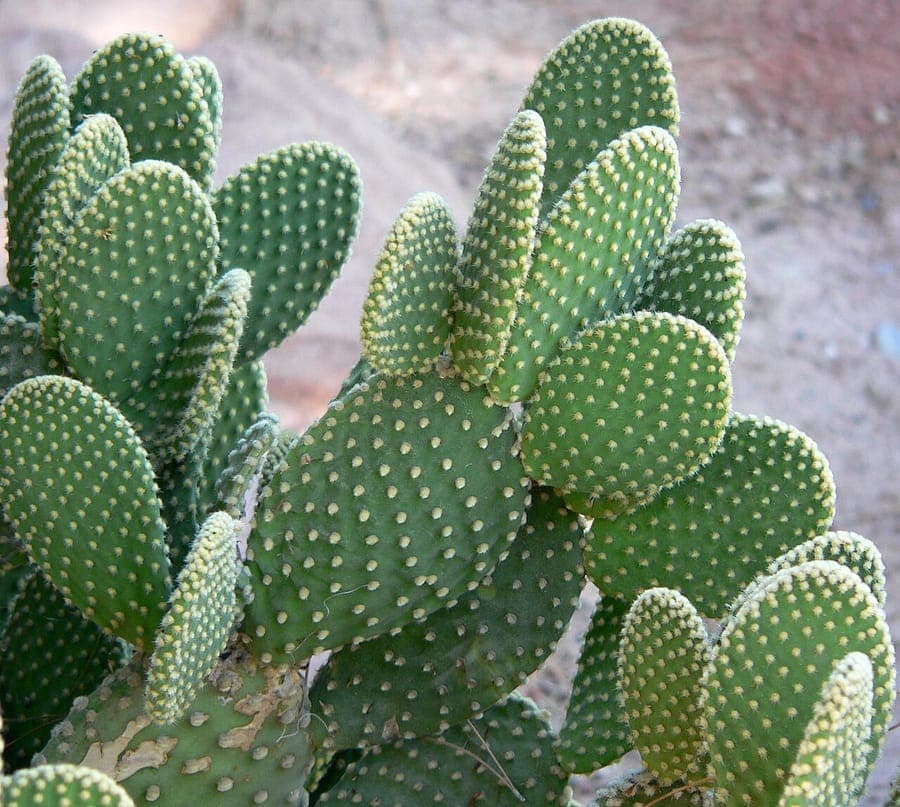
Opuntia microdasys, commonly known as Bunny-ears cactus or Bunny Ears, is a compact, golden-spotted cactus from the Cactaceae family. Native to Mexico, this popular houseplant represents one of the most recognizable and beginner-friendly cacti available.
The plant's distinctive character comes from its flat, oval stem segments (cladodes) covered with fine, silky golden hairs called glochids. These give the plant its characteristically soft appearance, though care is necessary as glochids can penetrate skin easily.
Bunny-ears grows slowly, forming a compact shrub rarely exceeding 60-90 centimeters in household conditions. The plant produces bright yellow flowers in summer followed by distinctive red fruits. It's exceptionally suited for beginners and thrives in dry, warm interiors.
Appearance and Bloom
Opuntia microdasys grows into an upright, compact shrubby form. Individual stem segments are flattened ovals, approximately 5-10 centimeters long and 3-6 centimeters wide. Bright green segments are completely covered with dense clusters of golden glochids arranged in distinctive patterns.
Flowers emerge in summer, usually on edges of mature segments. These bright yellow blooms measure 2-3 centimeters across, featuring numerous stamens. Following pollination, distinctive red fruits develop.
Variations exist: Opuntia microdasys var. albispina features white glochids, while var. fulvispina displays reddish-brown hairs. All forms share identical care requirements and user-friendly characteristics.
Ideal Location
Bunny-ears thrives in very bright light to full sun. Position the plant on a sunny windowsill receiving 4-6 hours direct sunlight daily. In dim locations, the plant will stretch and weaken.
Ventilation matters significantly; ensure regular air circulation to prevent fungal diseases. In household settings, this means placement in well-lit rooms with gentle airflow but without harsh drafts.
Temperature fluctuations between day and night stimulate blooming. Ideally, maintain daytime temperatures of 20-25 degrees Celsius and nighttime temperatures of 10-15 degrees Celsius, though the plant tolerates wider ranges.
Soil
Extremely well-draining cactus soil is essential. Use commercial cactus or succulent mix, or create your own by combining garden soil with coarse sand and perlite in 2:1:1 ratio. Drainage is critical; waterlogging causes root rot.
PH is less critical; this plant tolerates any pH from 5.5 to 7.5. Adding coarse sand or perlite significantly improves root aeration. For container culture, use smaller pots than typical; this promotes growth and reduces overwatering risk.
Terracotta pots with drainage holes are ideal due to porosity and air circulation benefits. Repot only when roots significantly crowd the pot, typically every 2-3 years.
Diseño gratis
¿Quieres ver Opuntia microdasys: complete guide en tu jardín? Crea un diseño gratis ahora.
Watering
The golden rule: better too dry than too wet. Water thoroughly but very sparingly. During growing season (spring-summer), water only when soil feels completely dry; this occurs approximately every 2-3 weeks depending on environment.
In winter, drastically reduce watering. Water only every 4-6 weeks, just enough to prevent complete root desiccation. The plant enters dormancy and requires minimal water. Never water in winter when temperatures drop below 10 degrees Celsius.
Use lukewarm water preferably. Ensure water drains completely from drainage holes. Avoid misting foliage, as moisture on leaves promotes rot.
Pruning
Opuntia microdasys requires minimal pruning if a natural form is desired. You may gently remove overcrowded or damaged segments to improve form. Cut close to segment base using a sharp knife.
Tip: Wear gloves and exercise caution during pruning; glochids easily penetrate skin. Allow segments to dry for several days before using them for propagation. Regularly remove yellow or weak-looking older segments to redirect energy to healthy growth.
Maintenance Calendar
January-March: Winter dormancy. No feeding, minimal moisture. April-May: Growth initiation. Begin regular feeding (every 4 weeks) with diluted balanced fertilizer. Gradually increase watering. June-July: Summer growth peak. Feed biweekly, maintain consistent moisture. August: Bloom preparation. Continue feeding, maintain moisture levels. September-October: Flowering and declining growth. Gradually reduce feeding. November-December: Winter dormancy. No feeding, minimal moisture, keep cooler.
Winter Hardiness
Bunny-ears cactus is moderately cold-sensitive. While capable of surviving brief periods just above freezing, maintain temperatures above 5 degrees Celsius for long-term cultivation. Frost protection is essential in cold climates.
In southern European regions with mild winters (Mediterranean areas), outdoor cultivation becomes possible with frost protection. In cold-winter countries, indoor overwintering is mandatory. A cool winter period (10-15 degrees Celsius) promotes blooming in subsequent spring-summer, mimicking natural seasonal rhythms.
Companion Plants
Bunny-ears grows beautifully alongside other cacti and succulents sharing identical requirements, such as Echeveria, Aloe, Haworthia, and other Opuntia species. These combinations create attractive cactus garden arrangements.
Smaller succulents underneath the cactus also work well; consider Sedum or Jade plants in the same container. Ensure all plants share identical drainage needs.
Closing Thoughts
Opuntia microdasys represents an ideal introduction to cactus cultivation. The plant is hardy, low-maintenance, and offers visual appeal through golden glochids and summer flowering. With minimal precautions, you'll enjoy many years of this charming cactus.
At your local garden center, you'll find cactus soil, drainage pots, and plant care products suitable for succulents. For additional advice on cactus cultivation and interior planting, consult gardenworld.app, where experts guide you through collection development.
Add this classic Bunny-ears cactus to your home! It guarantees long-term enjoyment with minimal care requirements.
¿Quieres ver Opuntia microdasys: complete guide en tu jardín? Crea un diseño gratis ahora.
Sube una foto, elige un estilo y obtén un diseño fotorrealista con lista de plantas en menos de un minuto.
Más de 10.000 jardines diseñados
Sin tarjeta de crédito


Plantas similares
Plains prickly pear: complete guide
Opuntia polyacantha
All about plains prickly pear cactus: hardiness, soil, placement and care. One of the most cold-tolerant cacti for temperate gardens.
Saguaro: complete guide
Carnegiea gigantea
Everything about growing saguaro cactus: container care, watering, overwintering, and companion plants for this iconic desert giant.
Cylindropuntia imbricata: complete guide
Cylindropuntia imbricata
The Tree Cholla offers distinctive segmented stems and vibrant red flowers. A unique ornamental succulent perfect for sunny, dry gardens and large containers.