
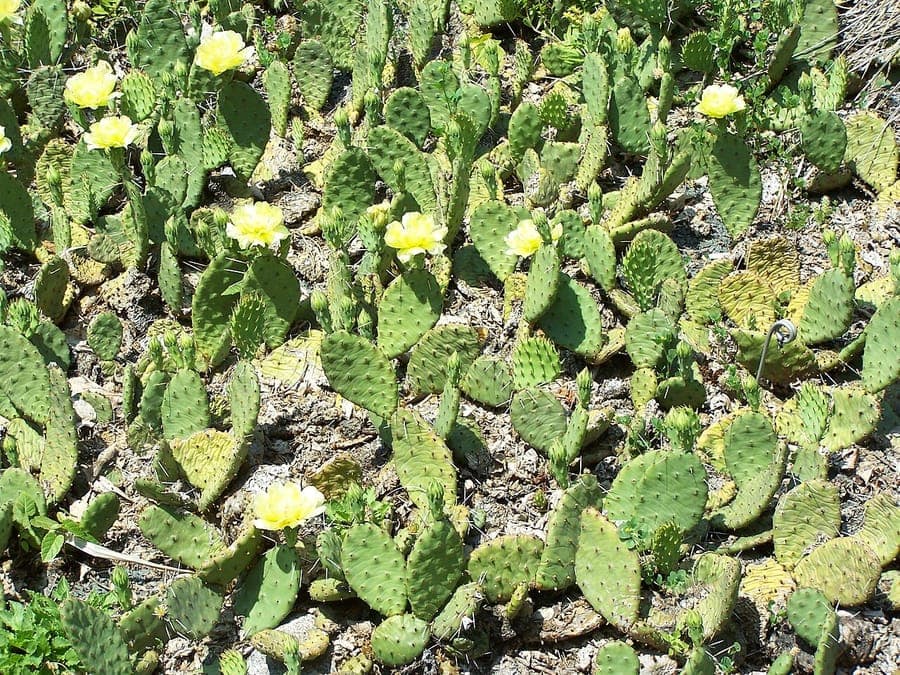
SEWilco / CC BY-SA 3.0, via Wikimedia Commons
Opuntia humifusa: complete guide
Opuntia humifusa
¿Quieres ver Opuntia humifusa: complete guide en tu jardín?
1 minuto, sin tarjeta de crédito
Overview
Opuntia humifusa, better known as creeping prickly pear or low prickly pear, is a groundcover cactus from the eastern United States and Mexico. This unique cactus forms low, creeping mats only 15-30 cm tall but spreading to 60 cm or more. It is remarkably cold-hardy (to zone 5) and renowned for its lovely yellow flowers in June-July followed by red fruit. Perfect for rock gardens, gravel areas, or dry gardens.
Appearance and bloom
Opuntia humifusa forms flat, oval paddle-shaped leaves (actually stems) with very fine spines. The plant spreads by producing new pads that extend horizontally across the ground. In June-July, lovely yellow flowers about 3-4 cm across appear from pad margins. After flowering, reddish-purple fruits about 2-3 cm long develop. These are actually edible, though small.
Ideal location
Opuntia humifusa thrives best in full sun with minimum 6-8 hours direct sunlight daily. The plant tolerates both intense sun and heat reflection. Plant on sunny, warm sites. Shade is unsuitable; in shade the plant grows poorly and doesn't flower. Place on raised rocks or terraces where moisture accumulation is avoided.
Soil
This cactus requires well-draining, sandy to gritty soil. It grows best in very dry soils. Add sand, gravel, and perlite to heavy soils. pH may be acidic to neutral (5-7). Moisture-retaining soils are disastrous; soil must be very loose and dry. Fertilization is not needed.
Watering
Once established, Opuntia humifusa requires virtually no water. Water only during very severe drought or extreme heat periods. In winter, withhold water entirely. Overwatering is the most common cause of death. Only water once monthly in hot summers. The plant stores water in its pads.
Diseño gratis
¿Quieres ver Opuntia humifusa: complete guide en tu jardín? Crea un diseño gratis ahora.
Pruning
Pruning is not really necessary. Remove only damaged or dead pads by carefully breaking them off and removing them. Protect yourself against spines. Let the plant grow into its natural form. Excessive pruning weakens flowering.
Maintenance calendar
April-May: planting time, water carefully first month. June-July: flowering period, enjoy yellow blooms. August-September: fruit development and growth period. October-November: plant begins rest period. December-March: winter rest, no water. Annually: check pad health, remove damaged sections.
Winter hardiness
Opuntia humifusa is remarkably hardy to zone 5 (-20C). In many American states and much of Europe, it grows outdoors through winter. Cold is less problematic than moisture; ensure good drainage. In wet winters, pads may rot. Protection with gravel or rock helps in very cold zones.
Companion plants
Lovely with other succulents: Sedum species, Sempervivum, Echeveria. Also with small rock shrubs: Genista, Thymus, Armeria. In Mediterranean gardens: other Opuntia species, Agave, Yucca. Plant together in dry rock gardens.
Closing
Opuntia humifusa is a fascinating, hardy groundcover cactus with lovely yellow summer flowers. It is very low-maintenance, drought and frost resistant. Perfect for innovative rock gardens, dry gardens, and south-facing sites. At gardenworld.app, we help you integrate this unique plant into your design. At gardenworld.app, we create garden designs that reflect seasons and honor nature.
¿Quieres ver Opuntia humifusa: complete guide en tu jardín? Crea un diseño gratis ahora.
Sube una foto, elige un estilo y obtén un diseño fotorrealista con lista de plantas en menos de un minuto.
Más de 10.000 jardines diseñados
Sin tarjeta de crédito


Plantas similares
Plains prickly pear: complete guide
Opuntia polyacantha
All about plains prickly pear cactus: hardiness, soil, placement and care. One of the most cold-tolerant cacti for temperate gardens.
Saguaro: complete guide
Carnegiea gigantea
Everything about growing saguaro cactus: container care, watering, overwintering, and companion plants for this iconic desert giant.
Cylindropuntia imbricata: complete guide
Cylindropuntia imbricata
The Tree Cholla offers distinctive segmented stems and vibrant red flowers. A unique ornamental succulent perfect for sunny, dry gardens and large containers.