
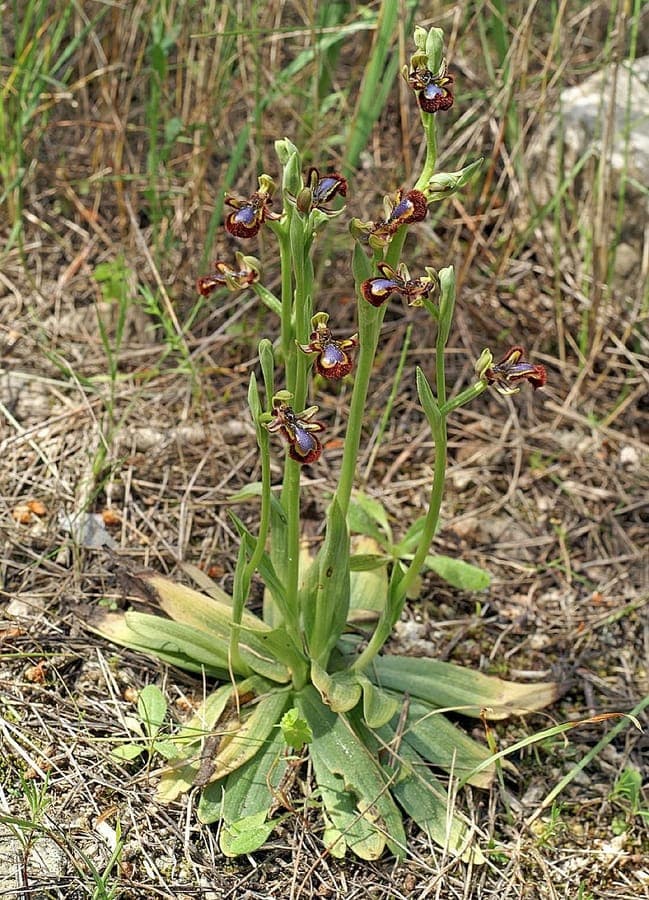
Orchi / CC BY-SA 3.0, via Wikimedia Commons
Mirror orchid: complete guide
Ophrys speculum
¿Quieres ver Mirror orchid: complete guide en tu jardín?
1 minuto, sin tarjeta de crédito
Overview
The Ophrys speculum, also known as the Mirror Orchid or Blue-eyed Orchid, is a fascinating small terrestrial orchid from the Mediterranean region. This unusual plant belongs to the Orchidaceae family and is renowned for its flowers mimicking insects - specifically the female wasp. The flower features a glossy, mirror-like patch that reflects light and attracts male wasps for pollination. This is one of the most advanced forms of flower mimicry in the plant world.
Appearance and bloom
The Mirror Orchid forms compact rosettes of narrow, lanceolate leaves, usually 5-8 cm long. The inflorescence consists of a simple raceme with 4-12 small flowers. The flowers are striking: two upper petals are pink to purple with green veins. The two lateral petals are small and greenish. The lip (labellum) is dark brown to reddish-brown, with a characteristic glossy blue patch in the center - this resembles the belly of a female wasp. Blooming time is April to May. The plant reaches a height of approximately 15-35 cm.
Ideal location
The Ophrys speculum grows best in sunny, south-to-west-facing locations. This orchid requires full sun - at least 6-8 hours of direct sunlight daily. Place the plant in a clearly visible spot where insects can easily land. Avoid windy locations that might damage the delicate flowers. The plant does well on slopes or raised garden areas where water drains well. Protection from afternoon sun is only needed in very dry, hot climates.
Soil
The Ophrys speculum thrives in calcareous, well-draining soils with neutral to slightly alkaline pH (6.5-8.0). This is essential - acidification works poorly for this plant. A mixture of coarse sand, limestone chips, and organic material (especially leaf mold) is ideal. Drainage must be excellent - preventing waterlogging is critical. In gardens with acidic soils, amendment with garden lime is necessary. The plant has low nutrient requirements - avoid heavy fertilization that can suppress natural blooming.
Watering
The Ophrys speculum has a distinct growth and dormancy period. During the growing season (autumn to spring), the soil should be kept somewhat moist - about like a wrung-out sponge. Do not allow water to stand. In summer months, after blooming, a dormancy period ensues. Reduce watering significantly during July-September. Water carefully, preferably from below to avoid leaf rot. Use soft water when possible. Regular misting can prevent water droplets on leaves.
Diseño gratis
¿Quieres ver Mirror orchid: complete guide en tu jardín? Crea un diseño gratis ahora.
Pruning
The Ophrys speculum requires virtually no pruning. Let the plant grow naturally. Remove only dead or diseased leaves carefully from the base. Flower spikes can be shortened after blooming is completely finished, but this is optional. Remove seed heads if you want to prevent energy going toward seed production instead of next season's bloom. Avoid touching delicate flowers unless absolutely necessary.
Maintenance calendar
August-September: Check resting plants for mold growth. October-November: Growth period begins; gradually increase watering. December-February: Regular watering during growth. March-April: Peak bloom period; enjoy spectacular flowers. May: Blooming ends; remove seed heads. June-July: Beginning of dormancy period; drastically reduce water. Fertilization is not needed during this rest period.
Winter hardiness
The Ophrys speculum is winter-active and tolerates frost temperatures well when dormant. Mature plants can withstand temperatures down to about -10 to -15 degrees Celsius when completely dry. In very cold climates, protection is essential - group pots together and cover with mulch. Prevent frost heaving by planting on rocky slopes with south-facing orientation. In Mediterranean and temperate gardens, the plant grows without special frost protection.
Companion plants
The Mirror Orchid works beautifully in a specially designed alpine or Mediterranean garden. Plant together with other Mediterranean orchids such as Ophrys apifera and Serapias species. Add small Mediterranean herbaceous plants like Teucrium and Helianthemum. Sunlovers such as Helictotrichon and Sedum fit well. Avoid aggressive growers that might overwhelm this delicate plant. A grouping of 5-7 plants makes a visually interesting arrangement.
Closing
The Ophrys speculum is truly a jewel of the plant world - small but possessed of the most impressive flower structure. Growing it requires some patience and understanding of natural growth patterns, but the reward is absolutely worth the wait. This orchid reminds us of the marvelous complexity of flowers and their relationship with pollinators. With the right growing conditions and respect for natural growth and dormancy cycles, this plant will provide fascinating blooms for many years. For specialized orchid suppliers and specialist nurseries, we recommend making contact.
¿Quieres ver Mirror orchid: complete guide en tu jardín? Crea un diseño gratis ahora.
Sube una foto, elige un estilo y obtén un diseño fotorrealista con lista de plantas en menos de un minuto.
Más de 10.000 jardines diseñados
Sin tarjeta de crédito


Plantas similares
Ram's-head lady's slipper: complete guide
Cypripedium arietinum
Everything you need to know about growing Cypripedium arietinum, a rare woodland orchid for cool, moist garden settings. Soil, care and planting tips.
Sparrow's-egg lady's slipper: complete guide
Cypripedium passerinum
Everything about growing Cypripedium passerinum, a cold-hardy subarctic orchid suited to cool, moist, shaded garden spots. Soil, care and companion plants.
Algerian Butterfly-orchid: complete guide
Platanthera algeriensis
Everything about Platanthera algeriensis, the rare Mediterranean orchid with greenish flowers native to Algeria, Morocco, Corsica and Spain.