
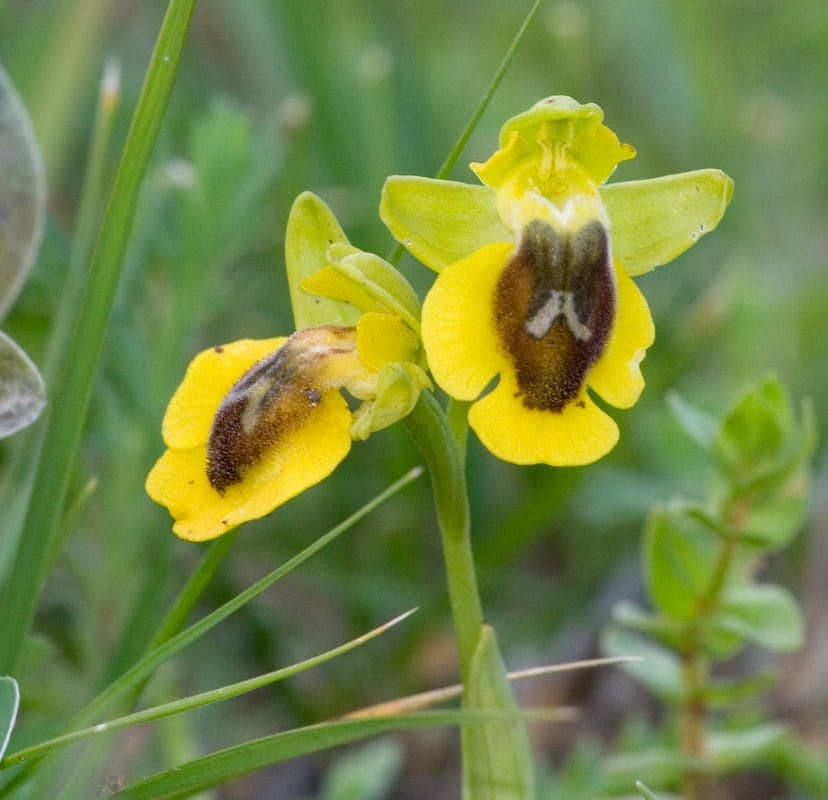
Carlo Columba http://www.columba.it uploaded by Esculapio / CC BY-SA 2.5, via Wikimedia Commons
Ophrys lutea: complete guide
Ophrys lutea
¿Quieres ver Ophrys lutea: complete guide en tu jardín?
1 minuto, sin tarjeta de crédito
Overview
Ophrys lutea, known as the yellow bee-orchid, is a fascinating wild orchid from the Orchidaceae family. This rare and legally protected species throughout many nations is native to western and central Mediterranean regions, from southern Spain through Turkey. The unique flowers mimic female bees to encourage pollination by deceived male bees.
This delicate orchid typically reaches 20 to 40 centimeters in height and represents a true natural wonder for botanists.
Appearance and Bloom
Ophrys lutea displays yellow flowers with intricate form strikingly resembling a female bee. The lower lip of the flower features a velvety pattern and sticky secretions where insects deposit pollinia. The upper petals show pink to purple tinting.
The blooming period spans April through May, when male bees visit the flower in a fascinating attempt at copulation - the essential mechanism through which this orchid becomes pollinated.
Ideal Location
Ophrys lutea grows best in warm, dry, rocky terrain with chalky soils. Choose a location with full sun and excellent drainage. The plant is naturally found on hillsides, dry meadows, and Mediterranean scrub vegetation.
In gardens, select a similar site with good visibility where you can monitor the plant.
Soil
This orchid prefers dry, chalky soils with pH between 8.0 and 9.0. The plant maintains special relationships with underground fungi (mycorrhiza) essential for nutrient uptake. Sparse, excellently draining soil proves necessary.
Sand, gravel, and limestone must comprise the soil composition.
Diseño gratis
¿Quieres ver Ophrys lutea: complete guide en tu jardín? Crea un diseño gratis ahora.
Watering
Water minimally once water is provided. The plant requires dry conditions, especially after flowering when the plant disappears. During the growing season, light misting may prove beneficial, but standing water must be completely avoided.
This orchid flourishes without supplemental water if naturally well-drained.
Pruning
Pruning is unnecessary. Allow the plant to naturally wilt and disappear after the season. Remove only dead flower stems once they turn yellow and desiccated.
Maintenance Calendar
Spring (April-May): Blooming period. Summer: Plant goes dormant. Autumn: No activity. Winter: Plant underground.
Winter Hardiness
Ophrys lutea shows reasonable winter hardiness, tolerating temperatures down to approximately -10°C. In more northern climates, protection or potted cultivation may prove necessary.
Companion Plants
In the wild, it grows alongside other Mediterranean species. In gardens, combine it with other drought-tolerant Mediterranean plants such as lavender, sage, and origanum. Other wild orchids also work excellently together.
Preserving natural communities contributes to threatened species protection.
Conclusion
Ophrys lutea represents a true biological wonder legally protected in most nations. If you have the fortune of growing this orchid in your garden, treat it with respect and care. Conserving this species contributes to biodiversity and nature protection.
Obtaining seed from specialized nurseries represents the only legal option for garden cultivation.
Gardenworld.app/en/tips/wild-orchids | Gardenworld.app/en/guide/mediterranean-gardens
¿Quieres ver Ophrys lutea: complete guide en tu jardín? Crea un diseño gratis ahora.
Sube una foto, elige un estilo y obtén un diseño fotorrealista con lista de plantas en menos de un minuto.
Más de 10.000 jardines diseñados
Sin tarjeta de crédito


Plantas similares
Ram's-head lady's slipper: complete guide
Cypripedium arietinum
Everything you need to know about growing Cypripedium arietinum, a rare woodland orchid for cool, moist garden settings. Soil, care and planting tips.
Sparrow's-egg lady's slipper: complete guide
Cypripedium passerinum
Everything about growing Cypripedium passerinum, a cold-hardy subarctic orchid suited to cool, moist, shaded garden spots. Soil, care and companion plants.
Algerian Butterfly-orchid: complete guide
Platanthera algeriensis
Everything about Platanthera algeriensis, the rare Mediterranean orchid with greenish flowers native to Algeria, Morocco, Corsica and Spain.