
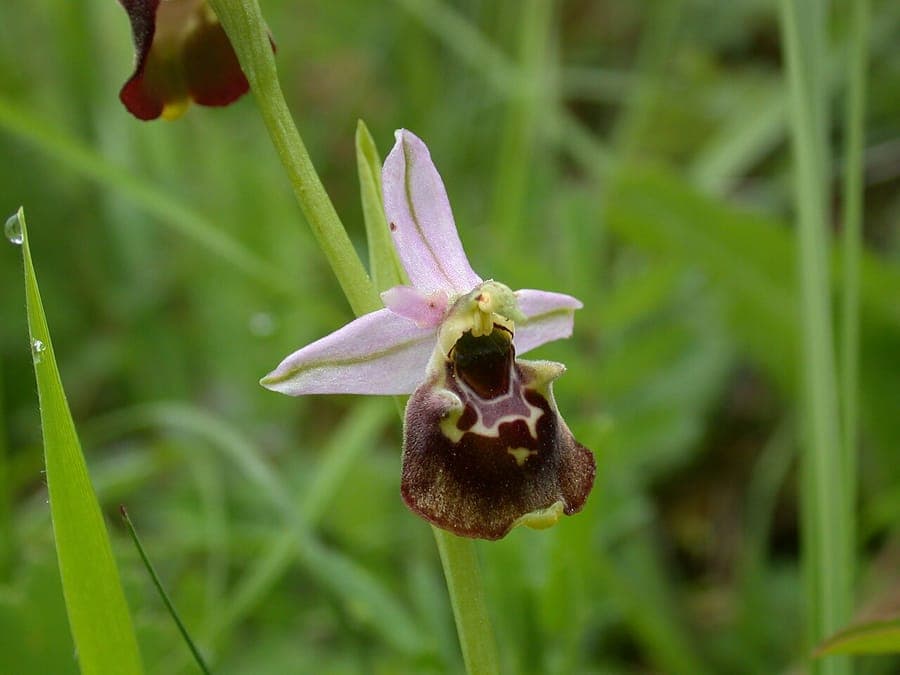
MurielBendel / CC BY-SA 4.0, via Wikimedia Commons
Ophrys fuciflora: complete guide
Ophrys fuciflora
¿Quieres ver Ophrys fuciflora: complete guide en tu jardín?
1 minuto, sin tarjeta de crédito
Overview
Ophrys fuciflora, known as late spider-orchid or bee orchid, is a fascinating small wild plant from Southwestern Europe. This orchid is renowned for its striking flowers that mimic insects (specifically certain bee species). This is an extraordinary adaptation technique called pseudocopulation. This is a very rare, protected species - treat this plant with care.
Appearance and Bloom
Ophrys fuciflora reaches a height of only 20-40 cm. What truly makes this plant unique are its flowers - they look like small brown bees or bumblebees. The flowers have a striking, brown lip (labellum) that resembles the body of a bee, complete with a shiny zone and velvety appearance. This is an evolutionary adaptation to attract pollinators. The blooming period is May-June. This is a plant for true orchid enthusiasts.
Ideal Location
This plant grows best in full sun to partial shade. The plant belongs to a group of terrestrial (ground-dwelling) orchids that in the wild require very specific conditions. In gardens, they do best in protected locations with good ventilation.
Soil
This is the most challenging aspect of this plant. It requires very well-draining soil, ideally with plenty of humus and a pH of approximately 7-7.5 (neutral). In many gardens, you'll need to grow this plant in pots with special orchid substrate. Mix orchid bark with some perlite.
Diseño gratis
¿Quieres ver Ophrys fuciflora: complete guide en tu jardín? Crea un diseño gratis ahora.
Watering
Watering must be done carefully. This orchid likes to be dry in winter (rest) and moderately moist during growth. Overwatering is the greatest enemy. Water only when the top layer is dry. Use soft water (rainwater) preferably.
Pruning
Pruning is not necessary. Let the plant retain its natural form. Remove only withered parts.
Maintenance Calendar
- April: Plant begins to grow
- May-June: Blooming
- July-October: Late foliage growth
- November-March: Winter dormancy
Winter Hardiness
Ophrys fuciflora is somewhat winter-hardy (zones 6-8) but requires protection in cold areas. In many regions, it's best to grow this plant in a pot that you can bring indoors.
Companion Plants
To showcase this orchid properly, combine with:
- Other Ophrys species
- Low-growing Mediterranean plants
- Other orchids (each in their own pot)
Final Thoughts
Ophrys fuciflora is a very special plant that requires much patience and care. This is truly for the specialized gardener. The flowers are extraordinary and watching how pollinators are deceived is fascinating. At gardenworld.app, you can plan this rare orchid in your collection. Available through specialized orchid nurseries.
¿Quieres ver Ophrys fuciflora: complete guide en tu jardín? Crea un diseño gratis ahora.
Sube una foto, elige un estilo y obtén un diseño fotorrealista con lista de plantas en menos de un minuto.
Más de 10.000 jardines diseñados
Sin tarjeta de crédito


Plantas similares
Ram's-head lady's slipper: complete guide
Cypripedium arietinum
Everything you need to know about growing Cypripedium arietinum, a rare woodland orchid for cool, moist garden settings. Soil, care and planting tips.
Sparrow's-egg lady's slipper: complete guide
Cypripedium passerinum
Everything about growing Cypripedium passerinum, a cold-hardy subarctic orchid suited to cool, moist, shaded garden spots. Soil, care and companion plants.
Algerian Butterfly-orchid: complete guide
Platanthera algeriensis
Everything about Platanthera algeriensis, the rare Mediterranean orchid with greenish flowers native to Algeria, Morocco, Corsica and Spain.