
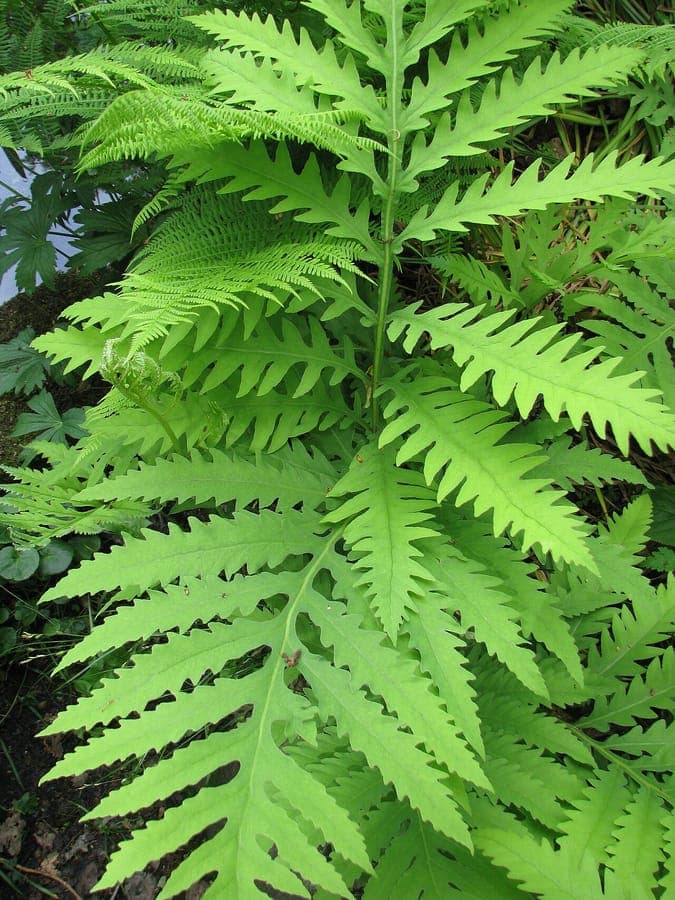
peganum / CC BY-SA 2.0, via Wikimedia Commons
Sensitive fern: complete guide
Onoclea sensibilis
¿Quieres ver Sensitive fern: complete guide en tu jardín?
1 minuto, sin tarjeta de crédito
Overview
The sensitive fern (Onoclea sensibilis) is an elegant foliage plant belonging to the Aspleniaceae family. This species originates from North America and grows from Canada to the southeastern United States, and even from East Siberia to Japan and China. The plant is known for its fine, delicate green leaves that become copper-red in autumn. The sensitive fern is one of the most elegant ferns for moist, shady locations in the garden.
The sensitive fern grows from underground rhizomes that spread slowly, making it suitable for larger areas under trees. It disappears in winter and emerges again in spring. This is actually an advantage because your garden looks clean in winter without dead leaves. The combination of elegance and low maintenance makes it a gardener's favorite.
Appearance and bloom
The sensitive fern reaches a height of 30 to 60 centimeters, depending on growing conditions. The leaves (fronds) are elegantly divided twice (bipinnate), making them very delicate and fine-meshed. The leaves are yellowish-green in summer and become more magnificent in autumn: copper-red tones appear. The delicate structure is truly a work of botanical art.
Unlike flowering plants, the sensitive fern does not produce flowers, but spore-forming structures on the underside of special closed leaves (sporocarps). These sporangia look interesting and give the plant extra texture. The fern dies off in fall and disappears completely above ground, making the plant particularly suitable for mixed borders and shady corners.
Ideal location
The sensitive fern loves shade to partial shade. The plant grows best under trees or in other shaded spots in your garden. Make sure the plant does not stand in direct sunlight, especially not in the afternoon. In very warm climates, full shade is better.
The fern grows well along ponds, in marsh-like places, or in moist forested areas. Plant it under deciduous trees where it receives sufficient moisture. The plant is ideal for areas of your garden where many other plants struggle. It thrives where others fail.
Soil
The sensitive fern thrives best on nutrient-rich, humus-rich, very moist soil. The plant loves acidic to neutral pH (4.5-7.0). Work in humus and leaf mold well before planting the fern. The soil should never dry out, even briefly.
If your soil is not naturally very moist, you can improve it with plenty of compost and organic material. The fern grows best in almost marsh-like conditions, so give your plant sufficient moisture without stagnation. Creating the right environment is key to success.
Diseño gratis
¿Quieres ver Sensitive fern: complete guide en tu jardín? Crea un diseño gratis ahora.
Watering
The sensitive fern is very moisture-loving and requires regular watering. Make sure the soil is always moist, but not wet (no waterlogging). In dry periods, water daily. In summer you must be extra careful with watering, especially in warm climates.
In winter, when the plant has disappeared, you no longer need to water. But as soon as growth begins in spring, you resume watering at full capacity. If you grow your fern in a pot, ensure regular watering and good drainage. Consistency is more important than quantity.
Maintenance
The sensitive fern does not require much maintenance. The plant dies off in fall, which you can simply let happen. You do not need to remove dead leaves unless you find it aesthetically unpleasant. In spring, when new growth appears, you can gently remove any remaining material from the previous year.
The plant spreads slowly through underground rhizomes. If it becomes too large, you can dig out divisions and move or remove them. Otherwise the plant requires very little attention and care.
Maintenance calendar
Throughout the year, the sensitive fern has different needs:
- January to February: The plant has disappeared, no maintenance needed.
- March: New growth begins, ensure regular water.
- April to May: The leaves unfold more fully.
- June to August: Full growth, ensure very moist soil.
- September to October: Leaves color beautifully, growth slows.
- November to December: Leaves die back, no maintenance needed.
Winter hardiness
The sensitive fern is very winter hardy (hardiness zone 4-9). The plant even tolerates very severe winters with temperatures down to minus 25 degrees Celsius. It always dies back above ground, but the rhizome survives easily underground.
The natural frost protection provided by ground cover helps protect the roots. In very northern regions you can add extra mulch for additional protection, but this is usually not necessary. The plant is naturally equipped to handle winter conditions.
Companion plants
The sensitive fern goes well with other moisture-loving shade plants. Combine it with other ferns like ostrich fern and lady fern, and with flowering plants like astilbe and rodgersia. Also works well with hosta and hellebores.
Plant it together with other marsh and moisture-loving plants to create a natural, woodland effect. The plant does not compete aggressively with other plants and respects its neighbors. Create harmonious plant communities.
Closing
The sensitive fern deserves a place in every moist, shady garden. It is elegant, reliable, and very decorative. You can buy young plants at garden centers where they are usually available in spring. Visit gardenworld.app for more garden inspiration and designs with ferns and moisture-loving plants. With the sensitive fern you get an enchanting element that transforms your garden into a sealed forest corner. Visit also gardenworld.app to completely equip your moist garden with the right combinations.
¿Quieres ver Sensitive fern: complete guide en tu jardín? Crea un diseño gratis ahora.
Sube una foto, elige un estilo y obtén un diseño fotorrealista con lista de plantas en menos de un minuto.
Más de 10.000 jardines diseñados
Sin tarjeta de crédito


Plantas similares
Mountain spleenwort: complete guide
Asplenium montanum
Everything about mountain spleenwort fern: cultivation, care, growing conditions and proper maintenance for your garden
Western spleenwort: complete guide
Asplenium vespertinum
The Western spleenwort (Asplenium vespertinum) is a delicate fern from California with fine, feathery fronds. Learn about care, location, and overwintering in this comprehensive guide.
Asplenium cirrhatum: complete guide
Asplenium cirrhatum
Discover the chestnut scale spleenwort, a tropical fern full of elegance. Learn how to care for this exotic plant at home.