
Hectonichus / CC BY-SA 3.0, via Wikimedia Commons
Creeping-forget-me-not: complete guide
Omphalodes verna
¿Quieres ver Creeping-forget-me-not: complete guide en tu jardín?
1 minuto, sin tarjeta de crédito
Overview
The creeping-forget-me-not (Omphalodes verna) is a delightful little plant belonging to the Boraginaceae family. This species hails from the Alps and reaches its natural habitat from the Southeast Alps to northern Italy and central Romania. The plant owes its name to the beautiful sky-blue flowers that appear as early as March and bloom through May. It is often used as a ground cover in shady parts of the garden, where it forms an incredibly resilient carpet.
This hardy plant is ideal for gardens where you want something beautiful in early spring. The creeping-forget-me-not grows from creeping stems that slowly expand and provide a natural, wild appearance. It has established itself in European gardens for hundreds of years and remains a favorite among gardeners who love spring flowers. It is one of those perfect transitions between winter and summer.
Appearance and bloom
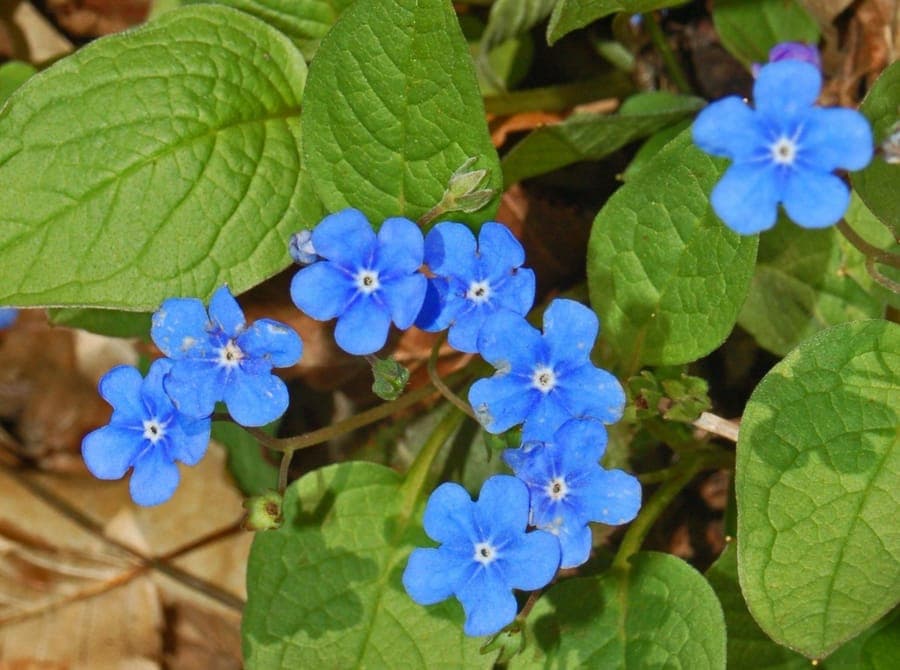
The creeping-forget-me-not reaches a height of approximately 15 to 20 centimeters and forms a low-growing mat. The leaves are slightly hairy, dark green, and have a striking vein pattern. What really makes the plant special are its flowers: perfect little sky-blue florets with a yellow heart, just like real forget-me-nots. The blooming period runs from March to May, making the plant a real spring magnet.
The flowers appear in clusters at the tops of the stems. They are about 1 to 1.5 centimeters in diameter and have an unforgettable charm. After flowering, small seeds form that spread on their own. This is actually how the plant reproduces and why it becomes larger after a few years. The entire flowering display lasts weeks and provides consistent spring color.
Ideal location
The creeping-forget-me-not prefers a spot in shade to partial shade. The plant thrives under trees, between shrubs, and even under hedges where many other plants give up. This makes it incredibly valuable for gardens with dark corners. Make sure the plant is protected from direct afternoon sun, especially in warm climates.
Despite preferring shade, it can also grow reasonably well in partial shade, provided it receives sufficient moisture. Plant it under deciduous trees so that in spring it receives plenty of sunlight before the trees fully leaf out. This promotes luxuriant flowering and healthy foliage development.
Soil
The creeping-forget-me-not prefers nutrient-rich, humus-rich soil. Work the soil before planting with compost or leaf mould. The plant loves slightly moist soil but dislikes waterlogging. Well-draining soil is therefore essential. The pH should be between 7.0 and 7.5, so more neutral to slightly alkaline.
If your soil is very heavy (lots of clay), add a good amount of leaf mould and sand. This helps improve drainage. Mulch around the plant with leaf mould, which not only retains moisture but also enriches the soil over time with organic matter.
Diseño gratis
¿Quieres ver Creeping-forget-me-not: complete guide en tu jardín? Crea un diseño gratis ahora.
Watering
The creeping-forget-me-not loves moist soil, especially during the growth period and flowering. In spring, provide regular watering, especially if weather is dry. If the soil begins to dry out, water. In summer the plant can better tolerate drought, especially under trees where shade provides natural cooling.
Overwatering is much worse than underwatering. Ensure good drainage in potted versions. If you plant it in the ground under trees, the natural moisture under the trees will often be sufficient for healthy growth year-round.
Maintenance
The creeping-forget-me-not is very low maintenance. The plant does not ask for much attention. After flowering, you can remove the spent flowers, although this is not really necessary. The plant will self-seed if you allow it, providing you with natural regeneration.
Make sure you do not disturb the plant too much. It grows slowly and simply wants to be left alone. Remove dead leaves in fall to prevent fungal issues. Apart from this basic care, the plant is very self-sufficient and trouble-free.
Maintenance calendar
Throughout the year, the creeping-forget-me-not has different needs:
- January to February: The plant is still dormant, no action needed.
- March: Growth begins, provide regular water.
- April to May: Flowering period, keep the plant moist.
- June to August: Growth continues, less water needed.
- September to October: Preparation for dormancy, seeding can occur now.
- November to December: Rest, minimal maintenance needed.
Winter hardiness
The creeping-forget-me-not is very winter hardy (hardiness zone 4-9). This means the plant can grow almost anywhere in Europe without special winter protection. The plant does not disappear above ground (usually), but grows early in spring. The green foliage can remain visible throughout winter, making the plant also interesting for the winter garden landscape.
In severe winters, leaves may be damaged, but the plant will recover once temperatures rise in spring.
Companion plants
The creeping-forget-me-not goes well with other shade-loving plants. Combine it with Hellebores, English ivy, and Christmas rose. Also works well with little lily-of-the-valley and bergenia. Plant it under deciduous trees together with other spring ephemerals for a complete shade gallery.
Avoid planting it with aggressive growers like wild strawberry, as they will eventually outcompete it. Give the plant some space and companion plants of equal footing and growth vigor.
Closing
The creeping-forget-me-not deserves a place in every shady garden. It is reliable, enchanting, and very low maintenance. Purchase your plants at garden centers where they are usually available in spring. Visit gardenworld.app for more garden inspiration and designs with this beautiful ground cover. With the creeping-forget-me-not, you need no growing security - it does all the work for you. Also visit gardenworld.app to completely transform your garden with the right plant combinations and expert design guidance.
¿Quieres ver Creeping-forget-me-not: complete guide en tu jardín? Crea un diseño gratis ahora.
Sube una foto, elige un estilo y obtén un diseño fotorrealista con lista de plantas en menos de un minuto.
Más de 10.000 jardines diseñados
Sin tarjeta de crédito


Plantas similares
Western waterleaf: complete guide
Hydrophyllum occidentale
Full growing guide for western waterleaf (Hydrophyllum occidentale): shade tolerance, soil needs, watering, winter hardiness and naturalistic garden use.
Limestone phacelia (Phacelia affinis): complete guide
Phacelia affinis
Full guide to Phacelia affinis, the limestone phacelia: sowing tips, purple-blue bee flowers, drought tolerance and uses in dry or wildlife gardens.
Pyrenean viper's bugloss: complete guide
Echium asperrimum
Echium asperrimum is a striking biennial from the western Mediterranean with rough bristly stems and vivid blue flowers. A magnet for bees and a bold border plant.