
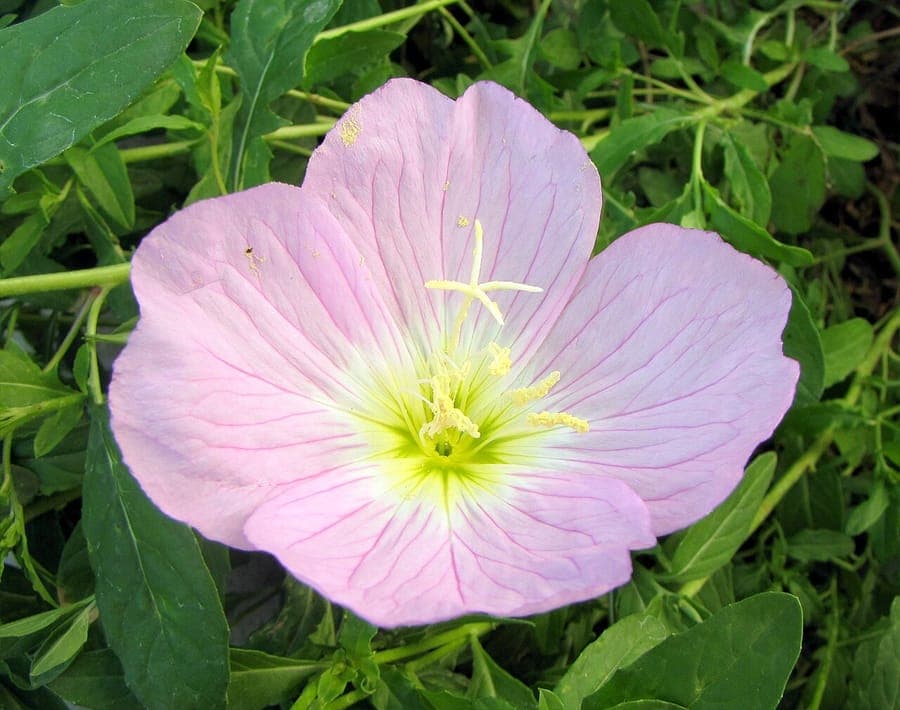
ZooFari / CC BY-SA 3.0, via Wikimedia Commons
Oenothera speciosa: complete guide
Oenothera speciosa
¿Quieres ver Oenothera speciosa: complete guide en tu jardín?
1 minuto, sin tarjeta de crédito
Overview
Oenothera speciosa, commonly called Showy Evening Primrose or Pink Evening Primrose, is a stunning groundcover from the Onagraceae family. This North American performer produces bright pink and white flowers from May to October, thrives without supplemental feeding, and attracts butterflies and other pollinators throughout the growing season. The plant's ability to flourish in lean soils and harsh conditions makes it invaluable for water-conscious gardeners.
This is an ideal plant for low-maintenance gardens, drought-prone regions, and sunny spots throughout Europe. Oenothera speciosa grows low (maximum to 60 cm height) and spreads to 90 cm wide, making it perfect for borders, rock gardens, or as a colorful carpet under larger plants. Once established, it requires minimal attention and rewards patient gardeners with consistent floral displays.
Appearance & Bloom
The flowers of Oenothera speciosa are spectacular: large, four-petaled blossoms with pink outer surfaces and white inner petals creating striking contrast. Each bloom opens in the evening, explaining the common name, and may remain open into the morning hours. The flowering season extends from May through October, with peak blooms in summer months July and August.
The plant grows low and spreading, with fine, lance-shaped foliage that is blue-green in color. During the growing season, Oenothera speciosa forms a dense carpet of green, covered with hundreds of blooms when in full flower. The overall effect is cheerful and abundant. After blooming, small seed capsules form, allowing plants to self-seed in suitable locations.
Ideal Location
Oenothera speciosa thrives in full sun locations where it receives minimum six hours of direct sunlight daily. The plant handles intense solar exposure well and flowers most prolifically in bright conditions. In shaded areas, flowering will be reduced and growth patterns become looser and less attractive.
Plant in garden corners where other plants struggle: against warm south-facing walls, on raised beds with excellent drainage, or in rock gardens. Drainage must be excellent. The plant will not tolerate waterlogging or standing water situations.
Soil
Oenothera speciosa is not fussy about soil type but strongly prefers well-draining substrates. Heavy clay soils should be amended with sand or gravel for better permeability. The better the drainage, the better the plant performs throughout the seasons.
Optimal pH ranges from neutral to slightly alkaline, between 7.0 to 8.0. Poor soils pose no problem - this plant thrives on nutrient-poor ground. When planting, work in sand to further improve drainage, especially if you have heavy clay. This small effort rewards itself with years of reliable blooms.
Diseño gratis
¿Quieres ver Oenothera speciosa: complete guide en tu jardín? Crea un diseño gratis ahora.
Watering
Oenothera speciosa is a true drought-resistant plant once the root system is fully established. Water only during extreme heat or extended dry spells after establishment. For newly planted specimens, water regularly until the root system is well-developed, usually four to six weeks.
In wet regions and areas with high moisture can experience problems. In such areas, ensure excellent drainage and consider raised beds. Once established, Oenothera speciosa easily survives summer periods without additional water in mixed European climates. This trait makes it perfect for water conservation.
Pruning
Pruning is minimal for this easygoing plant. After flowering, spent flower stems can be removed for neater appearance. In spring around March-April, the plant can be lightly trimmed to encourage a more compact growth habit.
If the plant oversteps its bounds, excess outer shoots can be carefully removed without harm. The plant spreads via runners in the soil; these can be cut back without problem. The plant rarely becomes unmanageable if properly sited initially.
Maintenance Calendar
March: Preparation phase. Light trimming if needed, weed removal, add compost.
April-May: Growing season begins. Plant new specimens. Water regularly for first weeks.
June-August: Flowering period at peak. Minimal maintenance required. Deadhead spent blooms if desired for neatness.
September-October: Late blooms. Adjust watering if rainfall increases substantially.
November-February: Winter dormancy. Plant is fully hardy in Europe.
Winter Hardiness
Oenothera speciosa is winter hardy to -15 to -20 degrees Celsius, meaning it safely overwinters throughout most of Europe including the UK, Germany, and northern France. The plant retreats below ground in severe winters and regrows in spring with vigor.
In extremely cold or wet winters, good drainage prevents root rot problems. Snow provides natural insulation for dormant roots. No winter protection is needed under normal conditions in most of Europe.
Companion Plants
Oenothera speciosa works well with:
- Lavandula: drought loving, similar water requirements
- Stipa species: ornamental grass, fine texture contrast
- Salvia nemorosa: blue flowers, color contrast
- Thymus: creeping growth, excellent combination
- Helianthemum: rock rose, comparable soil and nutrient needs
Avoid heavy water drinkers or plants requiring rich, fertile soils.
Conclusion
Oenothera speciosa is an easy-care North American groundcover offering reliable blooms for decades with minimal intervention. Perfect for gardeners with limited time but who want pink flowers and butterfly visitors. Plant in a sunny, dry spot and enjoy years of colorful flowers and natural beauty.
Available at most garden centers in the UK and Europe. Visit gardenworld.app for inspiration on your garden projects. Discover more plants with similar requirements on gardenworld.app!
¿Quieres ver Oenothera speciosa: complete guide en tu jardín? Crea un diseño gratis ahora.
Sube una foto, elige un estilo y obtén un diseño fotorrealista con lista de plantas en menos de un minuto.
Más de 10.000 jardines diseñados
Sin tarjeta de crédito


Plantas similares
Shortfruit evening primrose: complete guide
Oenothera brachycarpa
Everything about Oenothera brachycarpa - the shortfruit evening primrose from the American Southwest. Growing tips, placement and care for your garden.
Sundrops (Oenothera tetragona): complete guide
Oenothera tetragona
Everything about Oenothera tetragona - the cheerful daytime-blooming sundrops perennial. Growing tips, placement, pruning and care for a long summer display.
Seabeach evening primrose: complete guide
Oenothera humifusa
Full guide to Oenothera humifusa, the seabeach evening primrose native to the US Atlantic coast. Yellow blooms, silvery foliage, drought-tolerant.