
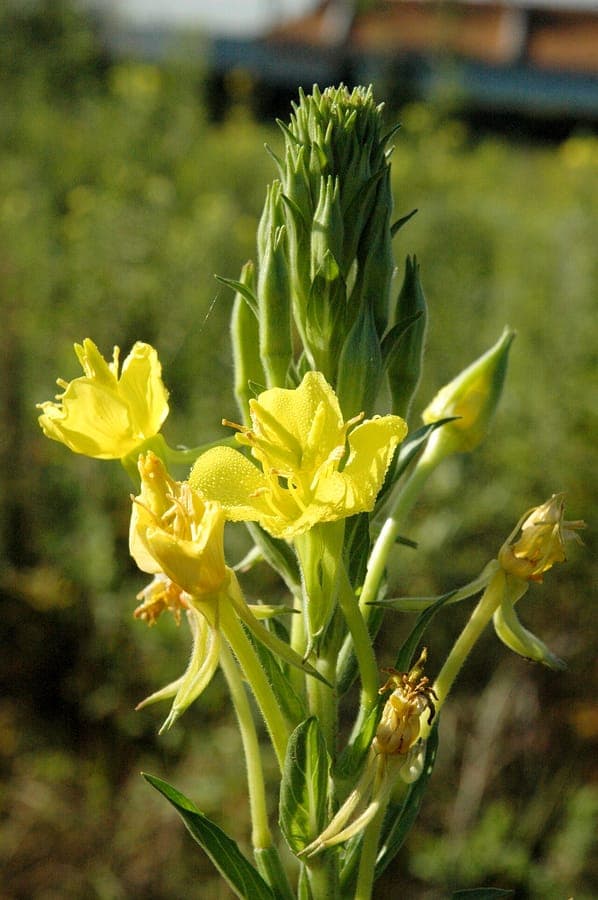
Frank Mayfield from Chicago area, USA / CC BY-SA 2.0, via Wikimedia Commons
Oenothera parviflora: complete guide
Oenothera parviflora
¿Quieres ver Oenothera parviflora: complete guide en tu jardín?
1 minuto, sin tarjeta de crédito
Overview
Oenothera parviflora, commonly known as northern evening primrose or small-flower evening primrose, is an elegant biennial plant from the evening primrose family (Onagraceae). This plant is native to East Canada and the North and East of the United States. In the first growing year, the plant forms a compact rosette of leaves, in the second year a strong stem grows with yellow flowers. The plant is known for its yellow flowers and medicinal applications.
Northern evening primrose is less known than other Oenothera species but highly valuable for gardeners seeking a compact, elegant plant. The plant grows well in temperate climates and tolerates diverse soil types.
Appearance and bloom
In the first growing year, northern evening primrose forms a low rosette of linear to elongated leaves. These leaves are gray-green, somewhat hairy and have a narrow form. The leaves can reach 10-20 cm long and form a compact shrub.
In the second year, a sturdy, upright stem grows 60-120 cm tall. The stem is partially red-tinted and lightly hairy. Flowers appear from July to September in terminal clusters. The flowers are yellow, approximately 1.5-2.5 cm across, smaller than large species but very charming. The flowers open in late afternoon and close in the morning. They are fragrant. After pollination, elongated seed pods develop.
Ideal location
Northern evening primrose thrives in full sun. The plant requires at least 5-6 hours of direct sunlight daily for optimal growth. In warm climates, some afternoon shade may be acceptable, but full sun is recommended.
Position this plant in a sunny, warm location with good air circulation. The plant also grows well in semi-shade if full sun is not available. Avoid very moist or shaded locations where the plant grows poorly.
Soil
Northern evening primrose grows in diverse soil types but prefers well-drained soils. The plant accepts sandy, loamy and heavy soils as long as drainage is adequate. The plant also grows in poor soils without special feeding.
The plant thrives in acidic to neutral soils with pH 5.5-7.0. Avoid highly alkaline soils. The soil must be well-draining. In containers, universal potting soil works well. Add no extra fertilizer unless soil is very poor.
Diseño gratis
¿Quieres ver Oenothera parviflora: complete guide en tu jardín? Crea un diseño gratis ahora.
Watering
Northern evening primrose is a moderately drought-tolerant plant. Water regularly in the first growing year for root development. In the second year, water only if soil feels dry. Once established, the plant may require less water.
Avoid waterlogging that can lead to rotting. Let the soil dry somewhat between waterings. In very dry periods, watering is helpful. Usually water at the base of the plant to prevent leaf disease.
Pruning and maintenance
Northern evening primrose requires minimal maintenance. Remove withered flowers regularly, although this is not strictly necessary. Remove dead or severely damaged leaves. Dead stems can be removed in spring.
The plant is a moderate self-seeder. If you want to harvest seed, let several seed pods ripen on the plant. Harvest the brown, dry seed pods for seeding or allow natural seeding to occur.
Maintenance calendar
May-June: Sow seeds directly or grow seedlings for transplanting. June-July: Growth begins, regularly remove dead parts. July-September: Flowering period, ensure regular water supply. October-April: Dormancy period, minimal maintenance. Next year: Second growing year with bloom.
Winter hardiness
Oenothera parviflora is winter hardy in temperate and cold climates to USDA zone 4 (-25 to -30 degrees Celsius). The plant is highly frost tolerant. In the first year, protective basal rosette forms, in the second year heavy frosts can cause damage.
In very cold areas, a layer of mulch of 5-10 cm can be helpful. The plant is, however, reasonably frost hardy and can usually thrive without protection.
Companion plants
Excellent plant companions for northern evening primrose include other elegant biennial flowers such as forget-me-not (Myosotis), alchemilla (Alchemilla mollis) and chamomile (Chamaemelum nobile). These plants share the same growth preferences.
Combine with herbaceous plants and grasses for natural garden effect.
Conclusion
Northern evening primrose is an elegant, unobtrusive plant that grows considerately each season. With minimal care, this plant grows healthy and produces yellow flowers. The fragrant flowers create evening pleasure in the garden.
For gardeners seeking elegant, easy-growing biennial plants, Oenothera parviflora is a perfect choice. Available through specialized nurseries across Europe. Consult local retailers for availability.
More information is available on gardenworld.app with thousands of plant knowledge articles and garden design ideas.
¿Quieres ver Oenothera parviflora: complete guide en tu jardín? Crea un diseño gratis ahora.
Sube una foto, elige un estilo y obtén un diseño fotorrealista con lista de plantas en menos de un minuto.
Más de 10.000 jardines diseñados
Sin tarjeta de crédito


Plantas similares
Shortfruit evening primrose: complete guide
Oenothera brachycarpa
Everything about Oenothera brachycarpa - the shortfruit evening primrose from the American Southwest. Growing tips, placement and care for your garden.
Sundrops (Oenothera tetragona): complete guide
Oenothera tetragona
Everything about Oenothera tetragona - the cheerful daytime-blooming sundrops perennial. Growing tips, placement, pruning and care for a long summer display.
Seabeach evening primrose: complete guide
Oenothera humifusa
Full guide to Oenothera humifusa, the seabeach evening primrose native to the US Atlantic coast. Yellow blooms, silvery foliage, drought-tolerant.