
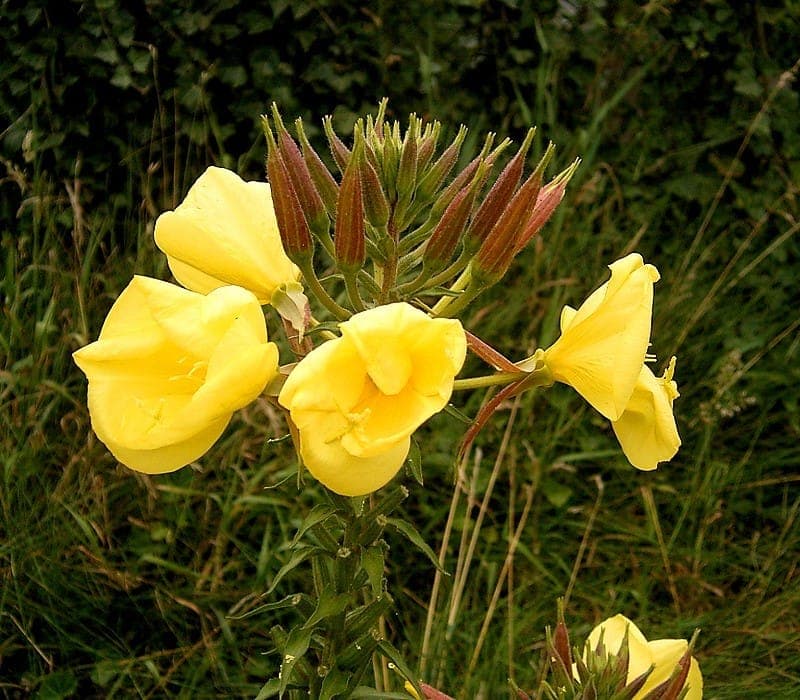
Frank Vincentz / CC BY-SA 3.0, via Wikimedia Commons
Oenothera glazioviana: complete guide
Oenothera glazioviana
¿Quieres ver Oenothera glazioviana: complete guide en tu jardín?
1 minuto, sin tarjeta de crédito
Overview
Oenothera glazioviana, commonly known as large-flower evening-primrose or giant evening primrose, is a spectacular biennial plant from the evening primrose family (Onagraceae). This plant is a cultigen (cultivated variety) that originated from crosses of Oenothera elata and Oenothera grandiflora in Europe. The plant is known for its enormous, brilliant yellow flowers that open in early evening. The flowers are likely the largest of all Oenothera species, up to 6-7 cm across.
Large-flower evening-primrose is a favorite in ornamental gardens due to its dramatic appearance. The plant is highly tolerant of dry terrain and grows excellently in sandy, poor soils. The flowers are strongly fragrant, especially in late afternoon and evening.
Appearance and bloom
In the first growing year, large-flower evening-primrose forms a low rosette of elongated leaves with red-tinted veins. These leaves are hairy and have a somewhat coarse appearance. In the second year, a strong, thick stem grows, 100-180 cm tall, which is strongly hairy and thick-walled. The stem is red to brownish in color.
The flowers are most striking: large, open, four broad yellow petals, up to 6-7 cm across. The flowers open in the late afternoon and close the next morning. They are highly fragrant, especially in the evening. The flowers appear from July to September in a long-lasting bloom period. After pollination, long, thick seed pods develop.
Ideal location
Large-flower evening-primrose thrives in full sun. The plant requires at least 7-8 hours of direct sunlight daily. In warm climates, the plant accepts some afternoon shade, but full sun is strongly recommended for maximum bloom.
Position the plant in a warm, dry, sunny location with good air circulation. The plant grows excellently along walls, in flower borders and on south-facing slopes. Avoid shaded locations or poor drainage where moisture problems may develop.
Soil
Large-flower evening-primrose prefers well-drained, sandy to very poor soils. The plant accepts sandy, stone-poor soils where many other plants do not grow. Rich soils can lead to excessive leaf growth at the expense of flowers. The soil must be very well-draining.
The plant thrives in very acidic to neutral soils with pH 4.5-7.0. Avoid heavy, clayey soils or soils with poor drainage. In containers or built-in beds, use sandy mixture without extra feeding. Add no compost unless soil is extremely poor.
Diseño gratis
¿Quieres ver Oenothera glazioviana: complete guide en tu jardín? Crea un diseño gratis ahora.
Watering
Large-flower evening-primrose is a highly drought-tolerant plant. Once established, the plant can survive long periods without water by rooting deeply into the soil. Water regularly in the first growing year for root development. In the second year, water only during very dry periods.
Excessive water and rich soils harm the plant and cause poor flowering. Less water and poorer soil lead to better-formed, more pleasant plants. In very dry periods, limited watering may be helpful for flowering.
Pruning and maintenance
Large-flower evening-primrose requires minimal maintenance. Do not remove withered flowers, let them fall naturally. This helps seed formation. Remove only dead or severely damaged leaves. Dead stems can be removed in early spring.
The plant is a self-seeder and will naturally regrow in following years if you allow some seeds to fall in the soil. Harvest seed pods in October when they are dry and brown for controlled seeding.
Maintenance calendar
April-May: Sow seeds directly or grow seedlings for transplanting. June-July: Growth active, minimal maintenance. July-October: Spectacular bloom, use water sparingly. November-March: Dormancy period, remove dead stems in March. Next year: Second growing year, seed production.
Winter hardiness
Oenothera glazioviana is winter hardy in temperate climates to USDA zone 5 (-15 to -20 degrees Celsius). In the first year, the plant forms a protective rosette, in the second year severe frost can damage the stem. The plant usually does not survive the first winter in very cold areas.
In colder climates, mulch around the plant in November can be helpful. In severe winters, it is likely the plant will grow once and then die out. This is, however, normal and the plant can regenerate itself from seed.
Companion plants
Excellent plant companions for large-flower evening-primrose include other drought-tolerant, sunny plants such as sedum (Sedum species), houseleek (Sempervivum), sage (Salvia) and blazing star (Liatris). These plants share the same preference for dry, sunny terrain.
Combine large-flower evening-primrose with gray- and silver-leaved plants for beautiful contrast effects.
Conclusion
Large-flower evening-primrose is a spectacular, low-maintenance plant that offers magical evening pleasure each year. The enormous yellow flowers and pleasant fragrance create an unforgettable garden experience. With minimal watering and poor soil, this plant thrives optimally.
For gardeners seeking spectacular, durable, drought-tolerant plants, Oenothera glazioviana is a perfect choice. Available through specialized nurseries across Europe. Consult local retailers for availability.
More information is available on gardenworld.app with thousands of plant knowledge articles and garden design ideas.
¿Quieres ver Oenothera glazioviana: complete guide en tu jardín? Crea un diseño gratis ahora.
Sube una foto, elige un estilo y obtén un diseño fotorrealista con lista de plantas en menos de un minuto.
Más de 10.000 jardines diseñados
Sin tarjeta de crédito


Plantas similares
Shortfruit evening primrose: complete guide
Oenothera brachycarpa
Everything about Oenothera brachycarpa - the shortfruit evening primrose from the American Southwest. Growing tips, placement and care for your garden.
Sundrops (Oenothera tetragona): complete guide
Oenothera tetragona
Everything about Oenothera tetragona - the cheerful daytime-blooming sundrops perennial. Growing tips, placement, pruning and care for a long summer display.
Seabeach evening primrose: complete guide
Oenothera humifusa
Full guide to Oenothera humifusa, the seabeach evening primrose native to the US Atlantic coast. Yellow blooms, silvery foliage, drought-tolerant.