
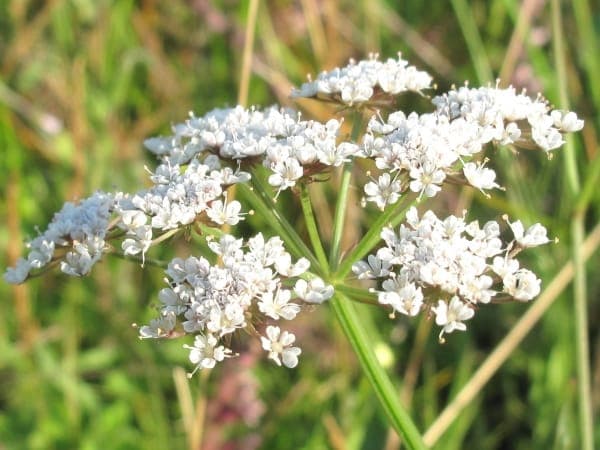
portas@... / CC BY-SA 2.5, via Wikimedia Commons
Oenanthe silaifolia: complete guide
Oenanthe silaifolia
¿Quieres ver Oenanthe silaifolia: complete guide en tu jardín?
1 minuto, sin tarjeta de crédito
Overview
Oenanthe silaifolia, known as narrow-leaved water-dropwort, is an elegant herbaceous plant from the Apiaceae family. Native to Europe through the Mediterranean and northern Iran, this plant performs best in moist, well-drained environments. The fine foliage and delicate flowers make this an intriguing choice for gardeners seeking to establish aquatic habitats.
This wetland plant typically reaches 30 to 60 centimeters in height and grows in dense clusters attractive to insect life.
Appearance and Bloom
Oenanthe silaifolia displays extremely fine, parsley-like foliage highly aesthetically pleasing. The leaves possess delicate, feathery structure that moves gracefully in wind. During spring and early summer, plants produce numerous small white flowers in umbel-like clusters.
These delicate blooms attract butterflies and pollinating insects, contributing to garden biodiversity and ecosystem health.
Ideal Location
Plant Oenanthe silaifolia along water feature banks, in wet meadows, or in gardens with high water tables. The plant thrives in full sun to light shade with at least four hours daily sunlight beneficial.
Ensure the plant receives consistent water, though it tolerates some drought once established.
Soil
This plant prefers moist, nutrient-rich soils with high organic matter content. A pH between 7.0 and 7.5 remains ideal for optimal growth. The plant grows well on heavy clay soils provided moisture remains constant.
Adding organic matter such as leaf-mold or composted manure improves soil structure and aids moisture retention significantly.
Diseño gratis
¿Quieres ver Oenanthe silaifolia: complete guide en tu jardín? Crea un diseño gratis ahora.
Watering
Water requirements remain high for this wetland plant. Maintain consistently moist root systems without waterlogged conditions. During growing season, daily watering may prove necessary.
Give particular attention during dry summers where supplemental irrigation becomes critical for plant health and flowering.
Pruning
Pruning is not essential for this herbaceous plant. However, removing spent flowers after fading encourages continued blooming and maintains plant neatness.
Also remove damaged or diseased foliage to prevent disease spread.
Maintenance Calendar
Spring: Prepare growing areas. Check water levels. Summer: Water regularly. Remove spent flowers. Autumn: Monitor plant health. Clear fallen debris. Winter: Minimal activity required.
Winter Hardiness
Oenanthe silaifolia shows reasonable winter hardiness in temperate zones, tolerating winters with temperatures down to -15°C. In colder regions, protection may prove necessary. In most European gardens, normal survival is expected.
Companion Plants
Combine with other aquatic plants such as iris, sedges, and marsh herbs. It works excellently along water features with other wetland plants. Other Apiaceae family members can be planted together.
Surround with moisture-loving groundcover plants for authentic wetland habitat assemblage.
Conclusion
Oenanthe silaifolia represents an underrated herbaceous plant adding elegance and water habitat value to gardens. With attention to moisture needs and proper plant placement, this delicate specimen flourishes. Perfect for gardeners seeking water-feature habitats.
Available through specialized nurseries and aquatic plant centers across Britain and Europe.
¿Quieres ver Oenanthe silaifolia: complete guide en tu jardín? Crea un diseño gratis ahora.
Sube una foto, elige un estilo y obtén un diseño fotorrealista con lista de plantas en menos de un minuto.
Más de 10.000 jardines diseñados
Sin tarjeta de crédito


Plantas similares
Whorled carrot: complete guide
Daucus involucratus
Daucus involucratus is a Mediterranean umbellifer with white flower heads framed by lacy bracts. Growing this gravel garden gem.
Daucus muricatus: complete guide
Daucus muricatus
Daucus muricatus, the spiny wild carrot, grows wild on Mediterranean coasts. Discover sowing, June-July bloom, and wildflower meadow use.
Daucus pumilus: complete guide
Daucus pumilus
Daucus pumilus is a dwarf wild carrot relative with white lacy umbels, thriving on dunes and coastal rock in poor, fast-draining soil.