
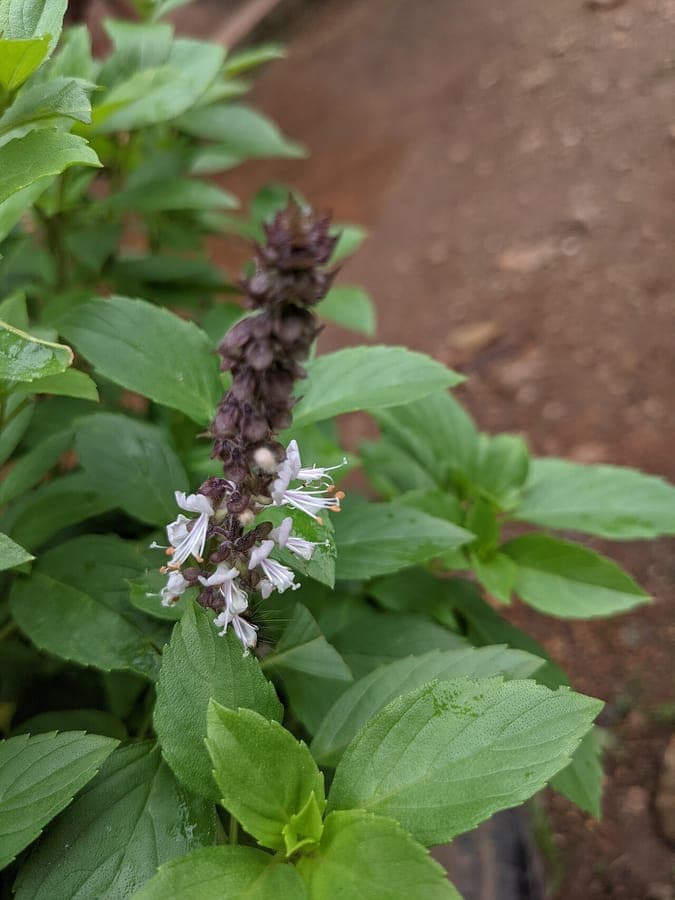
Vinayaraj / CC BY-SA 4.0, via Wikimedia Commons
Ocimum kilimandscharicum: complete guide
Ocimum kilimandscharicum
¿Quieres ver Ocimum kilimandscharicum: complete guide en tu jardín?
1 minuto, sin tarjeta de crédito
Overview
Ocimum kilimandscharicum, better known as camphor basil or hoary basil, is an aromatic herb plant native to East Africa. This unique basil species is known for its strong camphor scent and taste, quite different from common basil. The plant is valued in traditional medicines and kitchens worldwide.
Appearance and bloom
Camphor basil grows into a shrubby plant reaching 60 to 90 centimeters tall and approximately 45 centimeters wide. The plant has hairy, greenish-gray leaves with a characteristic camphor scent when touched. Small purple to blue flowers appear in loose spikes along the stems from June to October. These flowers attract pollinators and are highly decorative.
Ideal location
Place camphor basil in a sunny location with at least six hours of direct sunlight daily. The plant grows best in warm conditions and does not perform well in cold, damp places. Shelter from strong winds is recommended but not essential. The plant can grow both in ground and in pots.
Soil
Camphor basil prefers well-draining, fertile soil. Ensure soil with adequate organic matter by adding compost. The plant is not fussy about pH but thrives best on lightly acidic to neutral soil. Ensure good drainage - stagnant water leads to root rot.
Watering
Water regularly, especially during dry periods. The plant enjoys moist soil but does not tolerate stagnant water. Check the soil regularly - it should feel moist but not wet. In rainy periods, extra water may not be needed, but in warm summers, regular watering is necessary.
Diseño gratis
¿Quieres ver Ocimum kilimandscharicum: complete guide en tu jardín? Crea un diseño gratis ahora.
Pruning
Pruning stimulates leaf growth and prevents flowering, which helps retain flavor and aroma. Pinch the top of young plants to encourage bushy formation. Remove flowers as soon as they appear if you want only foliage. In fall, remove dead stems.
Maintenance calendar
Spring: Plant seedlings in April-May. Water regularly and add fertilizer. Summer: Monitor humidity levels. Pinch tops regularly. Harvest leaves. Fall: Harvest leaves before frost comes. Prepare for winter. Winter: In cold regions, protect or bring indoors.
Winter hardiness
Camphor basil is not hardy in cold climates. In zones 9-11, the plant can remain outdoors, but in temperate climates, it must be protected or grown indoors. The plant cannot tolerate frost and dies back at temperatures below 5 degrees Celsius.
Companion plants
Combine camphor basil with other aromatic herbs such as lavender, marjoram, and oregano. Other basil species form an interesting collection. In borders, it works well with other low-growing aromatic plants. In potting schemes, it works well in combination with other African plants.
Closing
Ocimum kilimandscharicum adds unique flavor, scent, and medicinal values to gardens and kitchens. With minimal care and maximum harvest possibilities, this plant is ideal for those seeking traditional medicines and unique culinary experiences. Plant in plant pots or in borders for continuous harvesting.
Looking for seeds or seedlings? Check local garden centers or specialty seed shops. For more information about herb gardens, visit gardenworld.app/nl or gardenworld.app/en.
¿Quieres ver Ocimum kilimandscharicum: complete guide en tu jardín? Crea un diseño gratis ahora.
Sube una foto, elige un estilo y obtén un diseño fotorrealista con lista de plantas en menos de un minuto.
Más de 10.000 jardines diseñados
Sin tarjeta de crédito


Plantas similares
Apple mint (Mentha x villosa): complete guide
Mentha x villosa
Meet apple mint (Mentha x villosa): a fruity-scented kitchen herb with woolly leaves, perfect for tea and mojitos.
Salvia peyronii: complete guide
Salvia peyronii
Discover Salvia peyronii, a rare Lebanese mountain sage. Growing tips, hardiness, and companion planting for a Mediterranean gravel garden.
Bigleaf mint (Mentha x rotundifolia): complete guide
Mentha x rotundifolia
Discover bigleaf mint: cultivation, care tips, and garden uses. Learn how to grow this aromatic herb with soft, hairy leaves.