
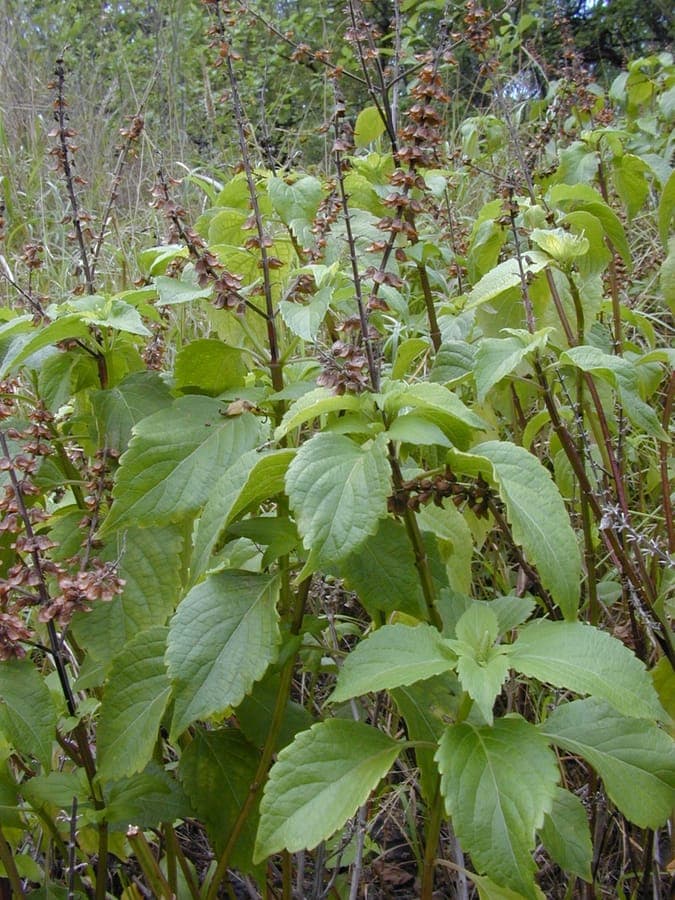
Forest & Kim Starr / CC BY 3.0, via Wikimedia Commons
Ocimum gratissimum: complete guide
Ocimum gratissimum
¿Quieres ver Ocimum gratissimum: complete guide en tu jardín?
1 minuto, sin tarjeta de crédito
Overview
Ocimum gratissimum, commonly known as African basil or tree basil, is a herbaceous to shrubby plant from the Lamiaceae family. This tropical to subtropical species originates from Africa, India, and other warm regions worldwide. It is renowned for its highly aromatic leaves with a strong, unique fragrance resembling cloves with citrus overtones. In tropical regions it grows as a perennial shrub; in temperate climates as an annual plant.
Appearance and Bloom
African basil grows as an upright, compact shrub reaching 60-100 cm tall. The leaves are small, dark green, lance-shaped with robust texture and highly aromatic. They contain a strong essential oil. The flowers are small, white to light purple, grouped in long spikes, appearing from summer to fall. The entire plant is strongly fragrant, especially when leaves are touched.
Ideal Location
Ocimum gratissimum thrives best in full sun with 6-8 hours direct sunlight daily. The plant is thermophilic and grows best in warm to hot climates. In temperate climates it can grow in containers and move indoors during frost periods. Provide shelter from strong winds.
Soil
This plant grows best in well-draining, moist but not waterlogged soil. A pH range of 6.5 to 7 is ideal. Add organic matter at planting time. The plant doesn't require special feeding but will thrive with regular balanced fertilizer applications. Avoid heavy, waterlogged soils.
Watering
Water regularly during the growing season, especially in hot periods. Soil should remain consistently moist but not waterlogged. Allow soil to dry between waterings. In extreme heat daily watering may be needed. Reduce watering in winter or when growth slows.
Diseño gratis
¿Quieres ver Ocimum gratissimum: complete guide en tu jardín? Crea un diseño gratis ahora.
Pruning
Pruning helps maintain a compact, full form. Regularly pinch off growing tips to encourage branching. This also makes the plant more productive for leaf production. Remove flowers if you're only interested in leaf production. In tropical climates pruning can occur year-round; in temperate climates especially in summer.
Maintenance Calendar
Spring: Start from seedlings or purchase young plants; plant after last frost. Summer: Water regularly, prune weekly for productive growth. Fall: Harvest leaves for drying or storage; reduce watering. Winter: In cold climates move indoors or treat as annual.
Winter Hardiness
Ocimum gratissimum is not cold-hardy and tolerates no frost. In zones colder than 10 it must be grown as an annual or moved indoors in containers during winter. The plant can overwinter in mild climates and will regrow in the next season.
Companion Plants
African basil combines well with other aromatic herbs such as rosemary, lavender, and oregano in an herb garden. The fine white flowers harmonize with purple and blue flowers. Plant it near seating areas to enjoy the fragrance.
Conclusion
Ocimum gratissimum is a fascinating addition to herb gardens, especially in warm climates. Its strong fragrance, attractive form, and potential uses make it a valuable plant for culinary and medicinal purposes, as well as an ornamental addition.
Available at: Specialized herb nurseries and garden centers focusing on exotic and tropical plants.
¿Quieres ver Ocimum gratissimum: complete guide en tu jardín? Crea un diseño gratis ahora.
Sube una foto, elige un estilo y obtén un diseño fotorrealista con lista de plantas en menos de un minuto.
Más de 10.000 jardines diseñados
Sin tarjeta de crédito


Plantas similares
Apple mint (Mentha x villosa): complete guide
Mentha x villosa
Meet apple mint (Mentha x villosa): a fruity-scented kitchen herb with woolly leaves, perfect for tea and mojitos.
Salvia peyronii: complete guide
Salvia peyronii
Discover Salvia peyronii, a rare Lebanese mountain sage. Growing tips, hardiness, and companion planting for a Mediterranean gravel garden.
Bigleaf mint (Mentha x rotundifolia): complete guide
Mentha x rotundifolia
Discover bigleaf mint: cultivation, care tips, and garden uses. Learn how to grow this aromatic herb with soft, hairy leaves.