
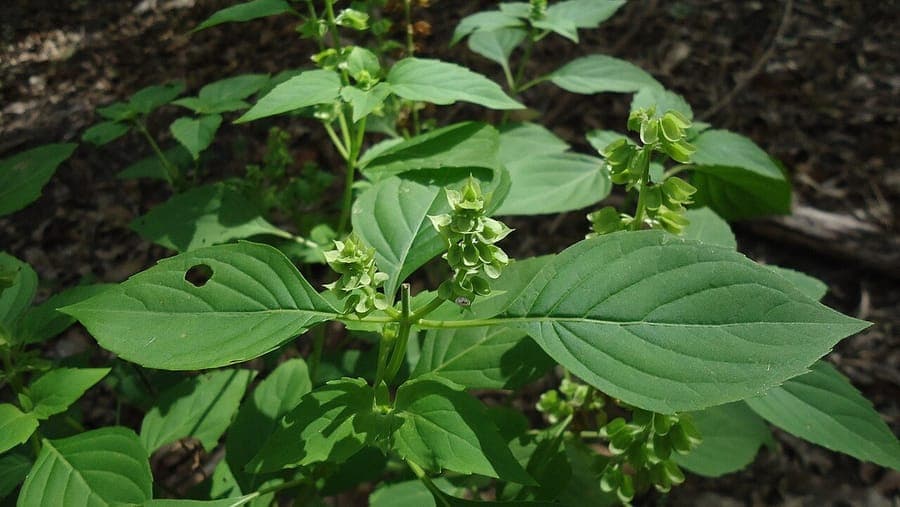
Alex Popovkin, Bahia, Brazil from Brazil / CC BY 2.0, via Wikimedia Commons
Ocimum campechianum: complete guide
Ocimum campechianum
¿Quieres ver Ocimum campechianum: complete guide en tu jardín?
1 minuto, sin tarjeta de crédito
Overview
Ocimum campechianum, known as Least basil, Mosquito basil, or Grand basilic (French), is an aromatic tropical plant native to Central and South America. This member of the Lamiaceae (mint) family grows as an herb and is known for its fragrant leaves and medicinal properties. The plant reaches 30-60 centimeters tall and is used in traditional medicine for various applications. The leaves contain essential oils and have a warm, spicy flavor.
Appearance and Bloom
Ocimum campechianum grows as an upright, lightly hairy herb with opposite green leaves that are gently fragrant. The leaves are greener than classic Genovese basil and somewhat larger. The plant bears small purple to pink flowers in spikes at the branch tips, especially in summer. The flowers attract pollinators. The entire plant releases a warm, aromatic fragrance when touched.
Ideal Location
Ocimum campechianum thrives best in very sunny locations with at least six to eight hours of direct sunlight daily. While it tolerates partial shade, it produces more essential oils and better flavor in full sun. Protection from strong winds is beneficial. In cooler climates, a south-facing wall is ideal. The plant loves warmth and grows excellently in tropical and subtropical environments.
Soil
Ocimum campechianum grows in virtually all well-draining soils, preferring fertile, loamy to sandy types. The plant tolerates moderate fertility. Add compost or leaf mold for better results. Neutral to slightly alkaline pH is acceptable, though slightly acidic is better. Drainage is essential; waterlogging causes root problems. The plant can grow in poor soil if well-drained.
Watering
Once planted, this plant needs regular water until well-established. Keep soil moist but not waterlogged in the first season. Water regularly in summer, especially during dry periods. The plant becomes more drought-tolerant as it ages but enjoys regular watering. Avoid waterlogging. In containers water much more regularly, especially in warm seasons. Mulch helps retain moisture.
Diseño gratis
¿Quieres ver Ocimum campechianum: complete guide en tu jardín? Crea un diseño gratis ahora.
Pruning
Regular pruning encourages bushy growth and prevents flowering (which improves leaf quality). Pinch the growing tips regularly to promote bushiness. Pinch the tops of young plants early. Remove flowers if you want to maintain fragrant leaf production. In containers, pruning also helps maintain shape.
Maintenance Calendar
Spring (March-May): Plant young plants after last frost. Plant in warm soil. Provide extra water and mulch. Summer (June-August): Pinch regularly; water regularly. Harvest leaves for use. Autumn (September-October): Gradually reduce water in cold regions. Possible seed harvest. Winter (November-February): In cold zones plant dies back. Protect from frost.
Winter Hardiness
Ocimum campechianum is not cold-hardy. The plant is only hardy for zones 10-12 and dies at frost. In cold climates grow as summer annual or cultivate indoors. In mild zones (zones 9-10) the plant may overwinter in sheltered locations. Container growing allows you to bring the plant indoors in winter in cold regions.
Companion Plants
Ocimum campechianum grows well with other heat-lovers. Partner with other Ocimum varieties, oregano, and marjoram for an herb garden. Grow together with tomatoes and peppers in a vegetable garden. Combination with other aromatic plants like lavender and rosemary creates a fragrant garden.
Summary
Ocimum campechianum is a valuable tropical herb with medicinal value and culinary applications. With its warm, aromatic leaves and adaptation to warmth, it's a perfect herb for sunny spots in warm climates. Easy to grow and care for once planted, this plant rewards with months of fragrant leaves. For culinary and medicinal purposes, this basil type is a great addition to the garden.
Find basil seeds at local nurseries. Consult gardenworld.app/en for more herb advice. Visit gardenworld.app/en for daily gardening tips.
¿Quieres ver Ocimum campechianum: complete guide en tu jardín? Crea un diseño gratis ahora.
Sube una foto, elige un estilo y obtén un diseño fotorrealista con lista de plantas en menos de un minuto.
Más de 10.000 jardines diseñados
Sin tarjeta de crédito


Plantas similares
Apple mint (Mentha x villosa): complete guide
Mentha x villosa
Meet apple mint (Mentha x villosa): a fruity-scented kitchen herb with woolly leaves, perfect for tea and mojitos.
Salvia peyronii: complete guide
Salvia peyronii
Discover Salvia peyronii, a rare Lebanese mountain sage. Growing tips, hardiness, and companion planting for a Mediterranean gravel garden.
Bigleaf mint (Mentha x rotundifolia): complete guide
Mentha x rotundifolia
Discover bigleaf mint: cultivation, care tips, and garden uses. Learn how to grow this aromatic herb with soft, hairy leaves.