
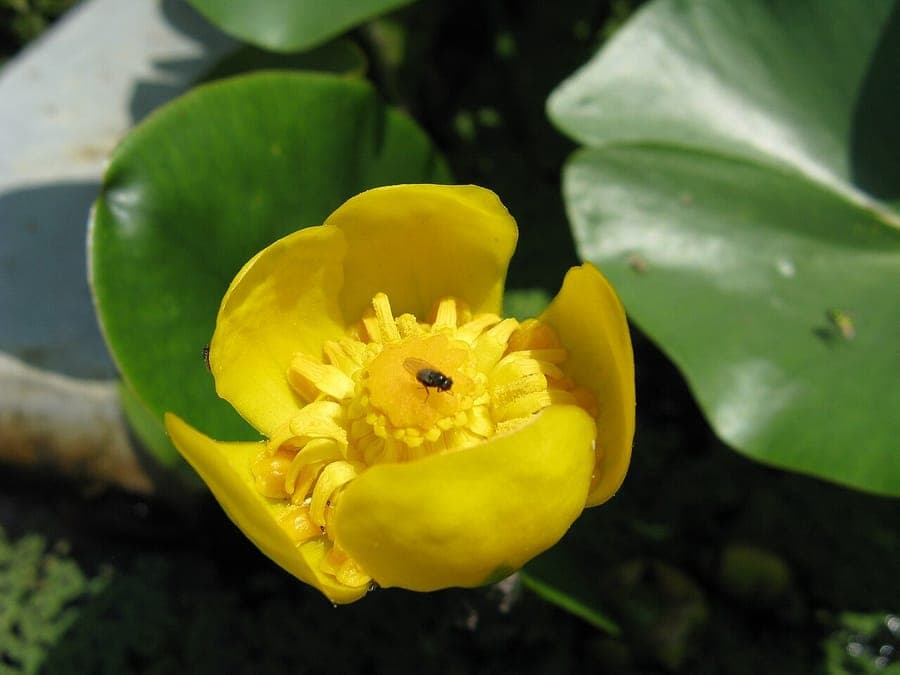
KENPEI / CC BY-SA 3.0, via Wikimedia Commons
Least Water-lily: complete guide
Nuphar pumila
¿Quieres ver Least Water-lily: complete guide en tu jardín?
1 minuto, sin tarjeta de crédito
Overview
Least water-lily (Nuphar pumila), also known as smallest water-lily or subarctic water-lily, is a compact aquatic plant from the water-lily family (Nymphaeaceae), originating from subarctic and temperate Eurasia. This is a perfect plant for small water features, shallow ponds, and wetlands where larger nuphar species would be too dominant. The plant grows more slowly than its larger relatives and reaches a maximum of 0.5 to 1.5 meters floating leaf coverage.
Nuphar pumila is exceptionally winter-hardy and grows in extremely cold waters where other water plants would not survive. This makes it valuable for arctic and subarctic gardens. The plant also blooms in shorter growing season, making it suitable for northern regions.
Appearance and bloom
Nuphar pumila is much more compact than its larger relatives, with floating leaf sizes of only 3 to 8 centimeters in length. The leaves are heart-shaped but much smaller and have the typical mid-slit. The flowers are very small, only 1.5 to 2 centimeters in diameter, with yellow petals in a cup shape. Blooming starts later in season (July-August) and lasts into September.
The plant has long, thin, very flexible stems allowing it to grow in very shallow waters (20-50 centimeters). This distinguishes it from nuphar lutea which prefers deeper waters.
Ideal location
Nuphar pumila grows best in full sun to partial shade with at least 4 to 6 hours of direct sunlight daily. The plant can also grow in shadier conditions, though blooming becomes weaker. In very shaded waters, growth will be very slow.
The plant grows optimally in water depths of 0.2 to 1 meter, making it ideal for shallow ponds, pools, and wetland margin habitats. In deeper water it can also grow but will be less effective.
Water quality requirements
Nuphar pumila is very flexible about water quality. The pH can range between 6.0 and 8.0. Water temperature can be very cold - in fact, it grows better in cold waters (around 10 to 20 degrees Celsius) than in warm waters. This makes it the perfect choice for arctic and alpine water systems.
The plant grows in both soft and hard waters and can also grow in slightly brackish water. The plant tolerates nutrient-poor waters well.
Diseño gratis
¿Quieres ver Least Water-lily: complete guide en tu jardín? Crea un diseño gratis ahora.
Planting requirements
Nuphar pumila grows best in water soil containing organic matter. Plant in large plastic baskets (at least 30 liters) or directly in pond soil with sufficient soil depth. The rhizomes should be planted horizontally.
The plant establishes very easily and begins growing quickly.
Maintenance and growth control
Nuphar pumila requires minimal maintenance. The plant grows slowly enough that it rarely causes overgrowth even in small ponds. Remove dead or diseased leaves regularly. If baskets are used, divide the plant every 3 to 4 years.
Maintenance calendar
April to May: Plant begins growth in spring. Check water depth. Plant may still be under ice in colder waters.
June to July: Growth begins to build. Check for disease.
July to September: Plant blooms. Bloom is modest but constant.
September to October: Growth begins to decline. Plant prepares for winter dormancy.
November to March: Plant rests underwater/under ice. Can survive the entire winter.
Winter hardiness
Nuphar pumila is fully hardy to very low temperatures and can survive under ice. In fact, it grows better in arctic conditions than in warm waters. This makes it invaluable for northern gardens.
Special combinations
Nuphar pumila combines well with other small aquatic plants in shallow ponds. Plant it together with small floating plants like Azolla, Lemna, or small Nymphaea cultivars. Add underwater vegetation like Potamogeton or Isoetes for complete aquatic ecosystem.
In arctic and alpine water systems, nuphar pumila is one of the few water plants that grow effectively - combine with other arctic water species.
Closing thoughts
Least water-lily is an essential plant for cold climates and shallow water bodies. With its hardiness, compact growth, and ability to bloom in very cold waters, it offers unparalleled value for arctic and alpine gardens. At gardenworld.app you will find more guides for cold-water gardens and arctic ecosystems.
¿Quieres ver Least Water-lily: complete guide en tu jardín? Crea un diseño gratis ahora.
Sube una foto, elige un estilo y obtén un diseño fotorrealista con lista de plantas en menos de un minuto.
Más de 10.000 jardines diseñados
Sin tarjeta de crédito


Plantas similares
Rocky Mountain pond-lily: complete guide
Nuphar polysepala
Everything about Rocky Mountain pond-lily (Nuphar polysepala): pond placement, soil, water care, pruning and winter hardiness tips.
Dotleaf Waterlily: complete guide
Nymphaea ampla
Nymphaea ampla, known as Dotleaf Waterlily, is a tropical aquatic plant from the Americas. Learn how to cultivate and maintain this beautiful water lily in your pond.
Roundleaf Waterlily: complete guide
Nymphaea conardii
Nymphaea conardii is a unique tropical waterlily with distinctive round leaves from Central and South America. Discover care tips for this specialized aquatic plant.