
Wikimedia Commons / CC BY-SA 2.0 de, via Wikimedia Commons
Yellow Water-lily: complete guide
Nuphar lutea
¿Quieres ver Yellow Water-lily: complete guide en tu jardín?
1 minuto, sin tarjeta de crédito
Overview
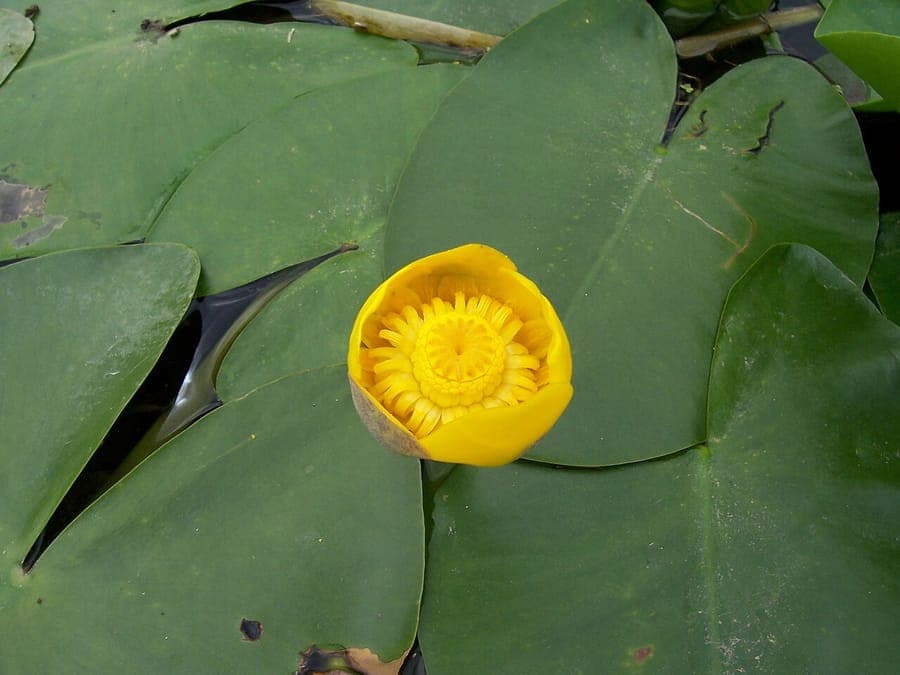
Yellow water-lily (Nuphar lutea), also known as spatterdock or European yellow water-lily, is a robust aquatic plant from the water-lily family (Nymphaeaceae), widely distributed through Europe to Siberia and North Africa. This is one of the most winter-hardy water plants for temperate climates and a primary plant for natural water gardens and ponds. The plant grows continuously from spring to autumn with floating leaves and yellow flowers that protrude above the water surface.
Nuphar lutea can become very large in favorable conditions, sometimes reaching 2 to 3 meters diameter floating leaf coverage in deep waters. This makes it a significant crop in waterfowl habitats, offering shade and protection for fish and birds. The plant also grows in moderate water currents and can tolerate strong growth.
Appearance and bloom
Nuphar lutea has two types of leaves - underwater leaves that are fine and upright, and floating leaf types that are large, heart-shaped with a slit to the leaf edge. The floating leaf types reach 10 to 30 centimeters in length and have a deep green color. The stems are very long and flexible, allowing the leaves to float on the water surface.
The flowers are small for water plants, about 3 to 5 centimeters in diameter, with yellow petals forming an interesting cup shape. The flowers protrude several centimeters above the water surface and bloom from June to September. The scent is subtle and slightly aromatic. After blooming, seeds develop in seed pods underwater.
Ideal location
Nuphar lutea grows best in full sun, with at least 6 to 8 hours of direct sunlight daily. The plant can also grow reasonably well in partial shade, though blooming will be less abundant. In very shaded ponds, nuphar lutea can grow but will be very slow and weak blooming.
The plant grows in water depths of 0.5 to 3 meters and prefers deeper waters where it has plenty of space to expand. In shallow ponds, plant it in deeper zones. The plant can also grow in quiet streams and brooks.
Water quality requirements
Nuphar lutea is very flexible regarding water quality. The pH can range between 6.5 and 8.0, though it grows best around pH 7.0. Water temperature can be from very cold (around freezing) to about 30 degrees Celsius. This plant is very hardy and can survive under ice.
The plant grows in both soft and hard waters and can grow in brackish to salty water. Nutrient enrichment of water helps growth, but nuphar lutea also grows well in nutrient-poor waters. The plant helps reduce water pollution by absorbing nutrients.
Diseño gratis
¿Quieres ver Yellow Water-lily: complete guide en tu jardín? Crea un diseño gratis ahora.
Planting requirements
Nuphar lutea grows best in water soil rich in organic matter. Plantings are recommended in large plastic baskets (at least 45 liters) filled with water soil mixed with nutrient-rich soil. Plant the rhizomes (underground stems) horizontally in baskets, not vertically.
If you plant it directly in pond soil (possible in natural ponds), ensure sufficient soil depth (at least 30 centimeters) and no heavy clay that hampers growth. The plant establishes easily.
Maintenance and growth control
Nuphar lutea requires minimal maintenance once established. The plant grows aggressively and can overgrow ponds - cut back excessive leaf coverage if it covers more than 50 percent of the water surface. Remove dead or diseased leaves regularly.
If you keep it in a basket, remove it every 2 to 3 years and divide the rhizomes if it becomes too crowded. This helps control growth and stimulates vigor.
Maintenance calendar
April to May: Plant begins growth. Ensure good water depth. Check for disease after overwintering. Begin fertilizing if desired.
June to August: Plant grows vigorously. Check overgrowth - cut back if needed. Blooming is at its most abundant.
September to October: Growth begins to decline. Remove dead leaves. Feeding can be reduced.
November to March: Plant rests underwater/under ice. No maintenance needed. Plant can survive the entire winter under ice.
Winter hardiness
Nuphar lutea is fully hardy to very low temperatures, can survive under ice, and will return in spring when temperatures rise. This makes it one of the most winter-hardy water plants. In very shallow ponds (under 1 meter), ensure enough water so the entire bottom doesn't freeze.
Special combinations
Nuphar lutea combines beautifully with other aquatic plants. Plant it together with water lilies (Nymphaea) for bloom variety - spatterdock flowers are generally closer to water level while water lily flowers lie within the water. Also add underwater plants like Myriophyllum and floating plants like Azolla.
With waterfowl focus, grow nuphar lutea in larger ponds as part of the whole ecosystem - the floating leaves provide breeding sites and shelter for birds.
Closing thoughts
Yellow water-lily is an indispensable plant for natural water gardens, lakes, and ponds in temperate climates. With its hardiness, robustness, and bird-friendly values, it offers one of the most practical aquatic plant choices for high latitudes. Start with one plant and watch it expand - it will provide enjoyment for years with little effort. At gardenworld.app you will find more guides for water gardens and pond ecosystems.
¿Quieres ver Yellow Water-lily: complete guide en tu jardín? Crea un diseño gratis ahora.
Sube una foto, elige un estilo y obtén un diseño fotorrealista con lista de plantas en menos de un minuto.
Más de 10.000 jardines diseñados
Sin tarjeta de crédito


Plantas similares
Rocky Mountain pond-lily: complete guide
Nuphar polysepala
Everything about Rocky Mountain pond-lily (Nuphar polysepala): pond placement, soil, water care, pruning and winter hardiness tips.
Dotleaf Waterlily: complete guide
Nymphaea ampla
Nymphaea ampla, known as Dotleaf Waterlily, is a tropical aquatic plant from the Americas. Learn how to cultivate and maintain this beautiful water lily in your pond.
Roundleaf Waterlily: complete guide
Nymphaea conardii
Nymphaea conardii is a unique tropical waterlily with distinctive round leaves from Central and South America. Discover care tips for this specialized aquatic plant.