
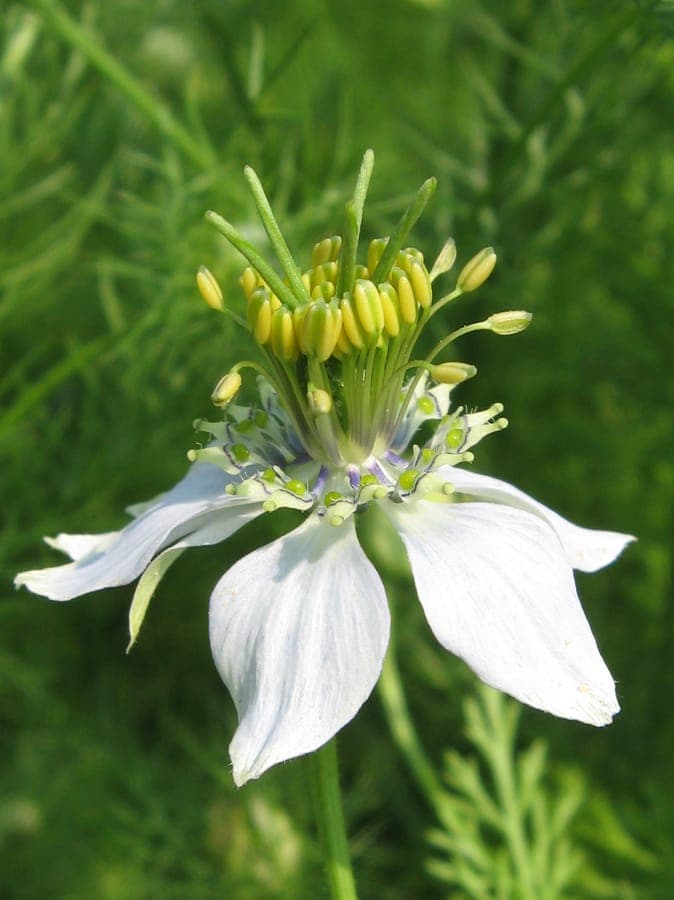
AndreHolz at English Wikipedia / CC BY-SA 3.0, via Wikimedia Commons
Black Cumin: complete guide
Nigella sativa
¿Quieres ver Black Cumin: complete guide en tu jardín?
1 minuto, sin tarjeta de crédito
Overview
Black cumin (Nigella sativa) is an elegant, compact plant from the buttercup family (Ranunculaceae), originating from the Middle East and Southwest Asia. This plant is renowned for its aromatic seeds, used in food and traditional medicine for thousands of years. The plant grows perfectly in dry gardens, full sun, and requires minimal maintenance. With its delicate, feathery foliage and intriguing seed pods, nigella sativa adds visual interest to border plantings and groupings.
The plant typically reaches 30 to 60 centimeters in height and blooms from June to August with soft blue, pink, or white flowers. The striking seed pods that follow are a distinctive feature, appearing almost exotic with their inflated form and fine striping. This makes black cumin interesting for both the flowering phase and seed-pod beauty. The plant can self-seed after the pods mature and dry.
Appearance and bloom
Nigella sativa has an upright growth pattern with thin, much-branched stems reaching up to 60 cm high. The leaves are exceptionally fine and feathery, giving the plant an airy appearance that does not feel heavy. The flowers are small, about 2 to 3 centimeters in diameter, with regularly spread petals in pastel shades of blue, pink, white, or yellow.
The most characteristic feature is the seed pods - inflated, almost balloon-like structures with fine ribbing. These pods begin green, turn brown as they ripen, and contain tiny black seeds that are extremely aromatic. The seed pods remain attractive for a long time on the plant and dry naturally, making them interesting for cutting dried flowers.
Ideal location
Nigella sativa thrives excellently in full sun, at least 6 to 8 hours of direct sunlight daily. In the South with extreme heat, afternoon partial shade can be useful, but overall the plant prefers complete sun exposure. The plant also grows reasonably well in light shade, though blooming will be less abundant and stems more inclined to flop.
Plant nigella sativa in groups of three to five for best visual effect. It combines beautifully in mixed borders with other tall-growing plants as backup or in front plantings. It can also grow very well in pots, especially in container displays on balconies or terraces.
Soil requirements
Nigella sativa is not critical about soil quality, but prefers very well-draining soil. The plant can grow in poor, sandy, or even fractured soils, making it very suitable for experimental gardens. The plant tolerates heavy clay poorly without amendments - add sand, peat, or other drainage material if your soil is clay-heavy.
The pH can be very flexible, from slightly acidic to neutral to slightly alkaline (pH 6.0 to 7.5). Nigella sativa grows on marginal soils better than many garden plants. No extra feeding is usually needed - in fact, feeding can lead to excessive foliage growth at the expense of flowers.
Diseño gratis
¿Quieres ver Black Cumin: complete guide en tu jardín? Crea un diseño gratis ahora.
Watering
Once established, nigella sativa is very drought-tolerant. During the first growing season, water regularly until the plant is established (about 4 to 6 weeks). After that, water only during extremely dry periods. Over-watering is the main threat to the plant - it dislikes wet feet.
In container cultivation, check moisture more regularly since pots dry out faster. Let the top 2 to 3 centimeters of potting soil dry between waterings.
Pruning and maintenance
Nigella sativa requires very little pruning. Let the plant maintain its natural form. If you want to collect seeds, let the seed pods ripen on the plant until they turn brown and begin to open. Then carefully cut entire seed pods with several centimeters of stem and hang them upside down in a dry place.
Remove dead flowers to encourage blooming over a longer period, though this is not essential. At the end of the season, pull the plant if annual, or cut it back to 15 centimeters in early spring if perennial.
Maintenance calendar
April to May: Sow seeds directly in ground after last frost. Water regularly until germination. Thin seedlings to 20 centimeters apart.
June to August: Plant blooms profusely. Check watering only in extreme drought. Begin seed ripening in late August. Cut seed pods and hang to dry.
September to October: Bloom declines. Collect remaining seeds. Begin cleanup planning.
November to March: Plant disappears (annual) or rests (perennial). No maintenance needed. Plan location for next year's sowing.
Winter hardiness
Nigella sativa is a tender annual in temperate climates. It will die at the first hard frost. In mild climates with freezes above 0 degrees Celsius, the plant can sometimes survive more than one season. In extremely mild zones (USDA 10-11), it can sometimes repeat as a perennial through self-seeding.
To ensure year-round availability, collect seed at the end of the season and store in a cool, dry place. Resow each spring.
Special combinations
Nigella sativa combines beautifully with other drought-tolerant, sun-loving plants. Plant it next to lavender, salvias, catananche, or cosmos for a Mediterranean-like effect. For contrast, add silver-leaved plants like artemisia or senecio. The fine texture of nigella balances large, bolder leaf forms.
With a cut-flower focus, plant nigella in rows with other summer bloomers. The seed pods are very valuable for dried flower arrangements and remain attractive for months. For herb gardens, grow nigella next to other aromatic plants - both the seeds and whole plant add aroma.
Closing thoughts
Black cumin is an under-used jewel in many gardens. With minimal maintenance requirements, stunning blooms, and useful aromatic seeds, it offers incredible value. Sow it directly in the garden in spring or early fall for immediate results. The plant will self-seed in favorable conditions, meaning you can enjoy its elegance for years with little effort. At gardenworld.app you will find more guides for herb gardens and drought-tolerant cultivation.
¿Quieres ver Black Cumin: complete guide en tu jardín? Crea un diseño gratis ahora.
Sube una foto, elige un estilo y obtén un diseño fotorrealista con lista de plantas en menos de un minuto.
Más de 10.000 jardines diseñados
Sin tarjeta de crédito


Plantas similares
Drummond's anemone: complete guide
Anemone drummondii
Discover Drummond's anemone (Anemone drummondii): a silvery-grey mountain plant for cool rock gardens and alpine troughs.
Korean clematis: complete guide
Clematis serratifolia
Clematis serratifolia is a hardy climber with fragrant yellow bell flowers in August-September. Pruning group 3, location and care tips.
Aquilegia brevistyla: complete guide
Aquilegia brevistyla
Discover Aquilegia brevistyla, the elegant North American columbine. Growing tips, shade tolerance, and design ideas for woodland and shadowed gardens.