
Wikimedia Commons / CC BY-SA 3.0, via Wikimedia Commons
Ball mustard: complete guide
Neslia paniculata
¿Quieres ver Ball mustard: complete guide en tu jardín?
1 minuto, sin tarjeta de crédito
Overview
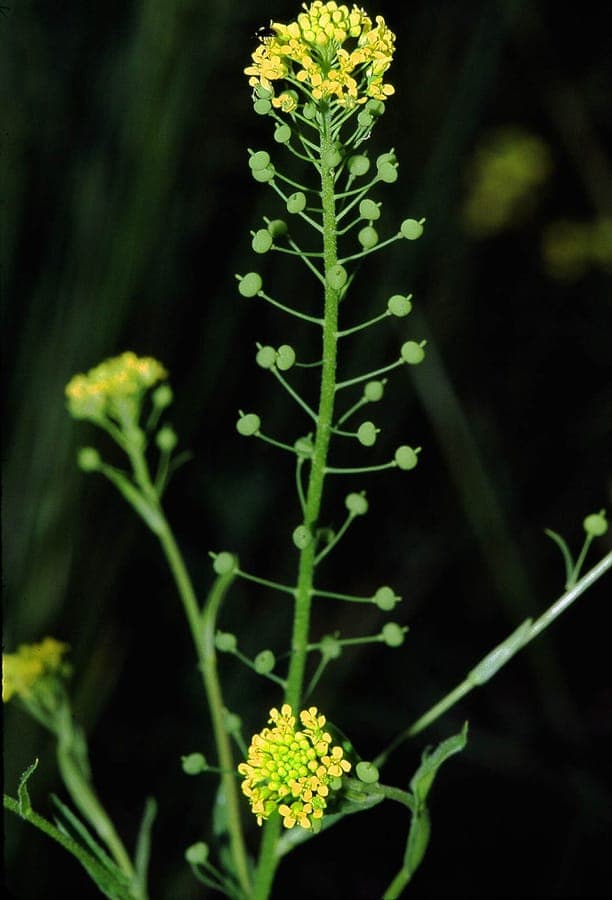
Ball mustard, scientifically Neslia paniculata, is a small, unassuming member of the mustard family (Brassicaceae) native to the steppes of Central Asia. This plant has spread widely across Europe, western Asia, and North America, establishing itself as a common wildflower in fields, waste areas, and along roadsides. The common name references its distinctive round seed pods resembling tiny balls. While ball mustard is classified as an agricultural weed in many regions, it is simultaneously a fascinating wildflower that plays an important ecological role in supporting insect populations and providing seed for songbirds.
Ball mustard originally inhabited the grasslands of Central Asia but has naturalized across Europe and North America through seed contamination and bird dispersal. In some regions it is considered invasive because of its prolific seed production and vigorous establishment. For gardeners appreciating wildflowers and ecological gardens, however, ball mustard is a compelling plant because it attracts birds, feeds insects, and requires virtually no maintenance. The plant grows rapidly, is extremely cold-hardy, and essentially thrives on neglect.
What makes ball mustard interesting for gardeners? Not primarily its ornamental appeal, but rather its ecological function. Ball mustard feeds insects and provides winter food for finches and other seed-eating birds. The plant grows quickly, is extremely hardy, and requires virtually no care once established.
Appearance and bloom cycle
Ball mustard reaches heights of 20 to 60 centimeters depending on growing conditions and location. The plant begins with a rosette of basal leaves that are highly variable: entire to sharply toothed. Stem leaves become progressively smaller and more lobed toward the inflorescence. The plant develops a single or few branched stems if conditions are favorable.
The flowers are small and whitish to pale yellow, approximately 2 to 4 millimeters across, arranged in dense, panicle-like flower clusters at the stem tips. This paniculate growth habit gives the plant its scientific name "paniculata." The flowering period is broad, spanning April through October depending on sowing time and climate, with peak bloom May through June. Following flowering, the plant develops its distinctive characteristic: small, spherical or slightly flattened seed pods approximately 3 to 4 millimeters in diameter.
Each plant produces hundreds to thousands of seeds, explaining the species' efficient dispersal. The seeds themselves are tiny, approximately 1 millimeter, with a hard seed coat that persists in the soil for years, allowing populations to fluctuate. Seeds are readily consumed by finches, larks, and other seed-eating birds.
Diseño gratis
¿Quieres ver Ball mustard: complete guide en tu jardín? Crea un diseño gratis ahora.
Ideal location
Ball mustard thrives in full sun, requiring minimum 6 hours of direct sunlight daily. The plant tolerates half-shade reasonably well, though flowering is reduced. The plant is extremely cold-hardy through USDA zone 3, growing from sea level to 2000 meters in mountain regions. Ball mustard strongly prefers dry to very dry locations over moist habitats. This makes it an excellent choice for bare, sometimes arid corners of gardens where little else grows.
Soil requirements
Ball mustard is extremely undemanding. It grows in sandy, loamy, and clay soils with pH between 4.5 and 7.5. The plant tolerates poor, nutrient-poor soils and thrives in mountain regions with minimal soil depth. Excellent drainage is essential; the plant prefers dry to moderately moist conditions, never waterlogged. Excessive fertilization should be avoided as it promotes leafy growth at the expense of flowering.
Watering
Once established, ball mustard essentially requires no supplemental watering. The plant is very drought-tolerant and thrives on rainfall alone. During very dry periods, occasional watering may be beneficial, but it is not essential. In containers, watering must be more cautious as moisture excess is problematic.
Pruning
No pruning is required. The plant grows well independently without intervention. For seed collection, flower stems can be harvested before seed is dispersed naturally, though this is optional. Allowing the plant to set seed supports local bird populations.
Maintenance calendar
April-May: Flowering period June-July: Seed ripening August-October: Seed dispersal November-March: Dormancy and seed stratification
Winter hardiness
Ball mustard is exceptionally cold-hardy through USDA zone 3, tolerating extreme cold without protection. In Netherlands and Belgian winters, the plant dies after seed set, with new plants emerging from seed the following spring. Ball mustard is typically annual or occasionally winter-annual depending on sowing time.
Companion plants
Ball mustard grows well alongside other wildflower species including cornflower, poppy, and chamomile. In wild corners of the garden, these plants combined with ball mustard create interesting wildflower meadow mixtures attracting bees and butterflies. The plant is particularly valuable in bird gardens for seed production. Combine with millet, amaranth, and cosmos for a complete bird seed garden.
Closing
Ball mustard is an unassuming but ecologically valuable wildflower for gardeners appreciating wild flora and wanting to support bird populations. The plant is remarkably low-maintenance, completely winter-hardy, and produces enormous quantities of bird seed. For information about wildflower meadows and bird-supportive gardens, consult gardenworld.app. For additional resources about managing weedy species and ecological gardening, visit gardenworld.app for comprehensive regional guides.
¿Quieres ver Ball mustard: complete guide en tu jardín? Crea un diseño gratis ahora.
Sube una foto, elige un estilo y obtén un diseño fotorrealista con lista de plantas en menos de un minuto.
Más de 10.000 jardines diseñados
Sin tarjeta de crédito


Plantas similares
Brassica cretica: complete guide
Brassica cretica
Brassica cretica, the Cretan cabbage, grows wild on Aegean cliffs. Discover how to grow this drought-tolerant, yellow-flowered Mediterranean perennial.
Corsican cabbage: complete guide
Brassica insularis
Corsican cabbage is a rare Mediterranean rock cabbage with white flowers and blue-green leaves. Location, soil and winter protection.
Prostrate cabbage: complete guide
Brassica procumbens
Prostrate cabbage is a creeping North African cliff plant with yellow flowers. Discover location, soil type and winter protection.