
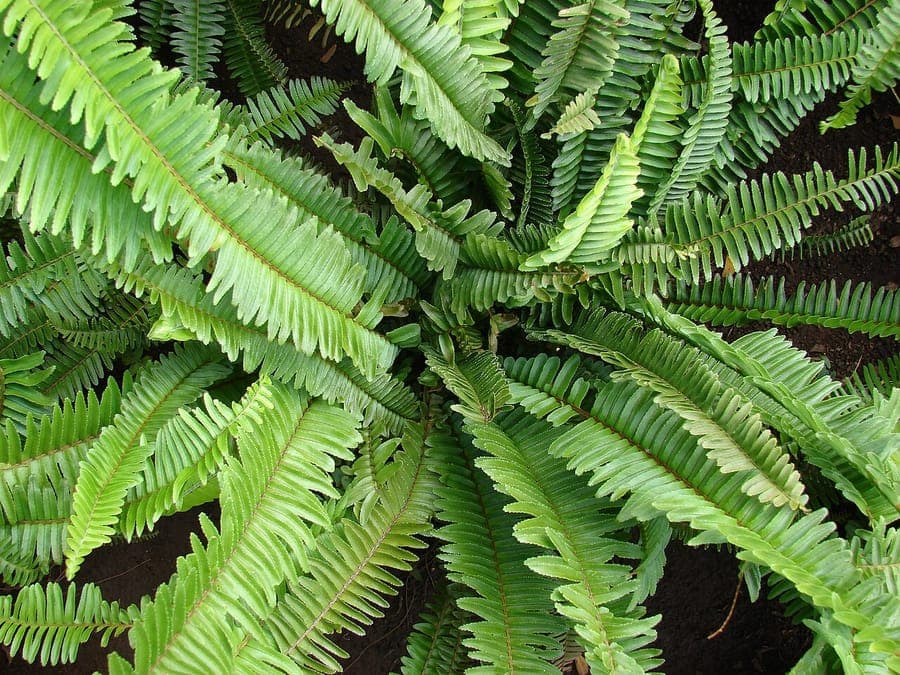
Forest & Kim Starr / CC BY 3.0, via Wikimedia Commons
Nephrolepis cordifolia: complete guide
Nephrolepis cordifolia
¿Quieres ver Nephrolepis cordifolia: complete guide en tu jardín?
1 minuto, sin tarjeta de crédito
Overview
Nephrolepis cordifolia, also known as Ladder Fern or Boston Fern, is an elegant fern from the Polypodiaceae family. This plant grows naturally in tropical and subtropical regions, from South Asia to Australia and Pacific islands.
The plant is known for its graceful, ladder-shaped fronds and compact growth habit. With its attractive appearance and modest requirements, Nephrolepis cordifolia is ideal for indoor rooms, bathrooms, and shaded corners. The plant grows slowly to moderately and forms dense growth mats.
Appearance and Properties
Nephrolepis cordifolia reaches a height of 30 to 60 centimeters, sometimes more. The plant forms dense growth mats with numerous graceful, light green fronds.
The fronds have a characteristic ladder-shaped arrangement with many smaller leaflets. The plant grows via underground runners and can self-propagate through plantlets.
The plant remains green year-round and has no distinct rest period.
Ideal Location
Nephrolepis cordifolia grows best in indirect light or partial shade. Direct sunlight can burn the foliage.
The plant is well-suited for indoor rooms, bathrooms with soft light, and shaded corners in gardens. Moderate temperatures between 15 and 25 degrees Celsius are ideal.
The plant appreciates air circulation but not strong winds.
Soil
Nephrolepis cordifolia requires moisture-retaining, well-drained soil. A mixture of garden soil, leaf mold, and sand in a 2:2:1 ratio is ideal.
The plant also grows well in pure leaf mold. Regular additions of organic matter help maintain soil structure.
A pH value between 5.5 and 7.0 is acceptable.
Diseño gratis
¿Quieres ver Nephrolepis cordifolia: complete guide en tu jardín? Crea un diseño gratis ahora.
Watering
Nephrolepis cordifolia requires regular moisture. The soil should remain slightly moist at all times, without waterlogging.
During the growing period (spring and summer), water regularly. In winter, reduce watering but do not stop completely.
Overhead spraying is beneficial to increase air humidity levels, which the plant appreciates.
Pruning
Nephrolepis cordifolia requires minimal pruning. Remove yellowed or damaged fronds.
The plant forms itself into an attractive shape. Let runners grow or trim as preferred.
Maintenance Calendar
January to March: Minimal watering. Control temperature. Remove damaged fronds.
April to May: Growing period begins. Increase watering. Begin monthly fertilization.
June to August: Peak growth. Regular watering and humidity increase. Continue fertilization.
September to October: Growth declining. Gradually reduce watering.
November to December: Prepare for winter rest. Reduce watering. Stop fertilization.
Winter Hardiness
Nephrolepis cordifolia is sensitive to frost. The plant tolerates only light frost, down to about minus 5 degrees Celsius.
In temperate climates, the plant should be overwintered indoors. Protect from temperatures below 10 degrees Celsius.
Companion Planting
Nephrolepis cordifolia works well with other shade-loving plants:
- Hostas for contrasting leaf forms
- Farfugium for yellow markings
- Aspidistra for dark green foliage
- Ferns of other species for similar requirements
Conclusion
Nephrolepis cordifolia is an elegant choice for indoor rooms and shaded gardens. Its graceful fronds, modest requirements, and long lifespan make it valuable in home decor and garden design.
With attention to humidity requirements and indirect light, this plant will grow into a mature specimen. For beginners in plant cultivation, it is an ideal choice.
Visit gardenworld.app for more interior design inspiration with plants.
¿Quieres ver Nephrolepis cordifolia: complete guide en tu jardín? Crea un diseño gratis ahora.
Sube una foto, elige un estilo y obtén un diseño fotorrealista con lista de plantas en menos de un minuto.
Más de 10.000 jardines diseñados
Sin tarjeta de crédito


Plantas similares
Dryopteris sieboldii: complete guide
Dryopteris sieboldii
Discover Dryopteris sieboldii (Siebold's Buckler Fern), an elegant evergreen fern from Asia. Growing tips, care, and uses in shade gardens.
Dryopteris tyrrhena: complete guide
Dryopteris tyrrhena
Discover Dryopteris tyrrhena (Mediterranean Buckler-fern), a rare and exquisite fern species. Growing tips, care, and shade garden design.
Dryopteris villarii: complete guide
Dryopteris villarii
Dryopteris villarii, known as rigid buckler fern, is a shade-loving fern form from the Alps. Discover how to grow and maintain this elegant alpine fern in your garden.