
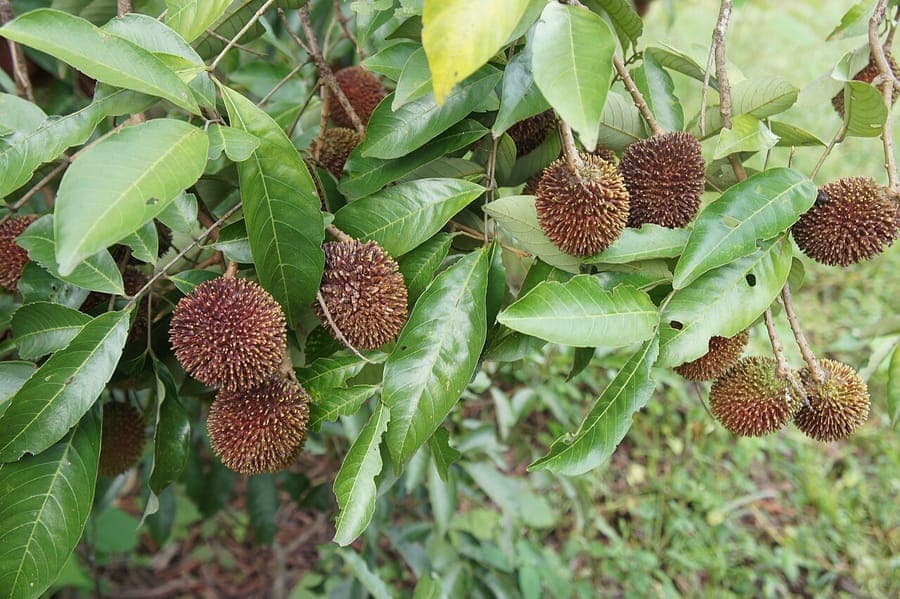
Michael Hermann www.CropsfortheFuture.org / CC BY-SA 3.0, via Wikimedia Commons
Nephelium ramboutan-ake: complete guide
Nephelium ramboutan-ake
¿Quieres ver Nephelium ramboutan-ake: complete guide en tu jardín?
1 minuto, sin tarjeta de crédito
Overview
Nephelium ramboutan-ake, commonly known as Pulasan or Kapoelasan, is a remarkable tropical fruit tree from the Sapindaceae family. Native to the eastern Himalaya and western Malaysia, this tree thrives in humid tropical rainforest conditions. Though less famous than its relatives Rambutan and Longan, this species offers unique characteristics worth exploring for serious fruit cultivators.
The tree reaches 15-25 meters in its natural habitat, developing a dense, well-formed canopy. It produces abundant red fruits covered in distinctive hairy outgrowths, earning its name in local languages. The flesh is sweet and succulent, highly valued in Southeast Asian cuisine.
For Western gardeners, this fruit tree remains relatively unknown but increasingly appreciated for sustainable cultivation and exotic fruit production. At gardenworld.app, you'll find expert guidance on successfully growing this unique specimen in your garden or greenhouse.
Appearance and Bloom
The Nephelium ramboutan-ake develops into a medium-sized tree with a compact, densely-foliated crown. The leaves are pinnately compound, consisting of 8-12 small leaflets arranged symmetrically. Mature foliage reaches 15-25 centimeters in length, displaying a deep, glossy green coloration.
Small yellowish flowers appear in dense clusters. Though inconspicuous, these blooms prove highly attractive to pollinators, particularly bees and hover flies. The tree typically flowers two to three times annually, depending on climate and moisture conditions.
Following pollination, the distinctive round fruits develop. These measure 2-3 centimeters across, covered with short, fine reddish to orange hairs. The flesh is creamy-white, sweet and juicy, encasing a single large seed. Fruit maturation occurs over 3-4 months after flowering.
Ideal Location
The Kapoelasan performs best in warm, tropical to subtropical climates with year-round warmth. This tree demands 6-8 hours of direct sunlight daily for optimal growth and fruiting. In temperate regions, greenhouse or conservatory cultivation becomes essential.
Positioning matters significantly. Wind-resistant placement is crucial due to the tree's heavy fruit load. First-year trees benefit from support stakes to develop strong architecture. Protected microclimates within gardens or glasshouses prove invaluable.
High ambient humidity supports optimal growth. In greenhouse conditions, adequate ventilation prevents fungal diseases while maintaining moisture levels. Grouping the tree with other humidity-loving plants creates beneficial microclimates.
Soil
The Kapoelasan requires rich, well-draining soil. Optimal conditions feature slightly acidic pH (5.5-6.5) with abundant organic matter. Heavy clay soils must be amended significantly or containerization employed.
When planting, incorporate 30% compost or well-rotted leaf mold. This improves nutrient availability, water retention, and drainage simultaneously. Container growing works excellently with a mix of garden soil, coco-fiber, and perlite in equal proportions.
Drainageproof is critical; waterlogging causes root rot and tree death. Raised beds or containers offer solutions in poorly-draining situations. Mulching around the base with 5-8 centimeters of organic material conserves moisture and moderates soil temperature.
Diseño gratis
¿Quieres ver Nephelium ramboutan-ake: complete guide en tu jardín? Crea un diseño gratis ahora.
Watering
Consistent moisture proves essential, especially during growth and fruiting phases. Growing season watering (May-October) should maintain moist but not waterlogged conditions. Water when the top 3 centimeters of soil feel dry.
Winter moisture requirements decrease substantially. However, avoid prolonged waterlogging at any season. Container plants need thorough watering until water drains from the base, preventing salt accumulation.
Rainwater collection is strongly preferable to tap water, particularly in mineral-rich regions. Soft water or distilled water suits highly calciferous tap water areas. High-humidity environments may require less supplemental watering but increased foliar misting.
Drip irrigation systems prove valuable for consistent moisture delivery without wastage. Mulching beneath the canopy reduces evaporation and moderates root temperature.
Pruning
Lightweight pruning maintains the Kapoelasan's natural habit. Early shaping (year one-two) establishes strong branching architecture. Remove excessively long or thin branches to encourage bushiness and productive form.
Post-harvest pruning (November) removes nonproductive, crossing, or damaged wood gently. Aggressive cutting delays fruiting and invites disease entry. The tree heals slowly in tropical conditions.
Sterilize cutting tools between cuts, as the tree produces significant sap. Remove all pruning debris promptly. Smooth cut surfaces with a sharp knife rather than using wound dressing, which often promotes rot in humid conditions.
Maintenance Calendar
January-March: Winter rest. Minimal watering, remove only dead growth. April-May: Growth initiation. Increase watering gradually, begin balanced fertilizer biweekly. June-July: Vigorous growth and flowering. Weekly balanced feeding, consistent moisture. August-September: Fruit development. Shift to potassium-rich fertilizer weekly. October-November: Harvest mature fruits carefully to encourage further production. December: Prepare dormancy. Reduce feeding, allow soil to dry slightly.
Winter Hardiness
This species is extremely frost-sensitive. Temperatures below 10 degrees Celsius cause significant leaf and branch damage. In temperate climates, greenhouse cultivation becomes mandatory.
Container cultivation allows indoor overwintering in cold regions. Maintain minimum nighttime temperatures of 15 degrees Celsius for optimal growth and fruiting. Group plants together to create warmer microclimates within the greenhouse.
Even in subtropical Mediterranean regions, frost protection proves essential. Temporary shelters and mulching prevent winter damage.
Companion Plants
The Kapoelasan grows wonderfully alongside other tropical fruits like Mangosteen, Calamansi, and Passion fruit. This combination creates authentic tropical fruit garden atmosphere while sharing comparable care requirements.
Smaller ornamental plants such as Bromeliads or flowering Anthurium thrive beneath the tree canopy, increasing humidity while utilizing vertical space efficiently.
Other excellent companions include Guava, Papaya, and Dragon Fruit for comprehensive tropical cultivation.
Closing Thoughts
Nephelium ramboutan-ake represents an exceptional choice for adventurous gardeners. The combination of food production, botanical interest, and aesthetic appeal makes this tree increasingly popular. With proper attention to warmth, humidity, and nutrition, you'll enjoy many years of this remarkable tree.
For potting soil, fertilizers, and growing supplies suited to tropical fruit trees, visit your local garden center. For climate management advice and expert cultivation guidance, consult gardenworld.app, where specialists help realize your tropical fruit garden dreams.
Adding this Kapoelasan to your collection guarantees conversation and admiration from visitors. It's an investment in unique botany and delicious fruits combined.
¿Quieres ver Nephelium ramboutan-ake: complete guide en tu jardín? Crea un diseño gratis ahora.
Sube una foto, elige un estilo y obtén un diseño fotorrealista con lista de plantas en menos de un minuto.
Más de 10.000 jardines diseñados
Sin tarjeta de crédito


Plantas similares
Acer pycnanthum: complete guide
Acer pycnanthum
Acer pycnanthum, the Japanese swamp maple, is a fast-growing tree with early red flowers and brilliant autumn color, ideal for damp garden settings.
Freeman maple: complete guide
Acer × freemanii
Everything about the Freeman maple (Acer x freemanii): a fast-growing shade tree with spectacular autumn colour for large gardens.
Wild ackee: complete guide
Cupania americana
A comprehensive guide to Cupania americana, a tropical tree from the Sapindaceae family with conspicuous white flowers and brown fruits, native to tropical America.