
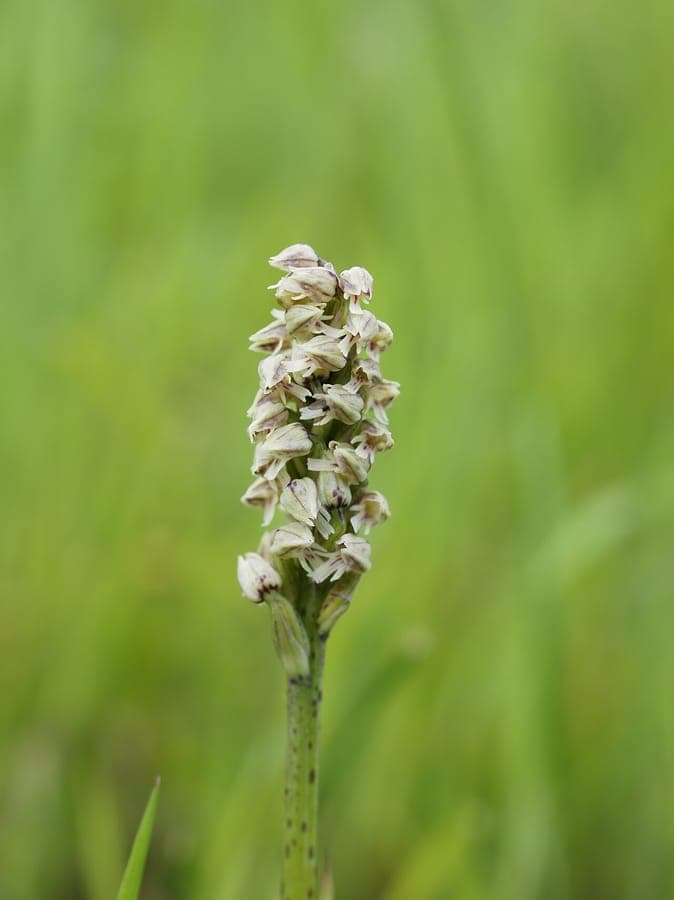
(Hans Hillewaert) / CC BY-SA 3.0, via Wikimedia Commons
Dense-flowered orchid: complete guide
Neotinea maculata
¿Quieres ver Dense-flowered orchid: complete guide en tu jardín?
1 minuto, sin tarjeta de crédito
Overview
The Dense-flowered Orchid, scientifically known as Neotinea maculata, is a captivating small orchid native to the Mediterranean and other parts of southern Europe. This wild orchid is recognized for its dense clusters of small pink to purple flowers and is a true gem for orchid enthusiasts. In nature, it grows on grasslands and rocky slopes at various altitudes, preferring dry, nutrient-poor soils.
Appearance and bloom
The Dense-flowered Orchid grows to approximately 30 centimeters tall, forming basal leaf rosettes with narrow, lance-shaped green leaves often marked with brown or purple spots. Between April and May, an upright flower spike emerges bearing a dense, ball or cylinder-shaped cluster of small flowers varying from white to pink and purple. Each flower is small but remarkably detailed with a characteristic lobed lip. The blooms are lightly scented and attract small pollinators.
Ideal location
The Dense-flowered Orchid thrives in a very sunny location with at least 6 to 8 hours of direct sunlight daily. Place in a largely unshaded alpine garden or in pots on a sunny patio. Protection from intense midday sun in very hot areas can be beneficial. Good air circulation is essential to prevent fungal diseases.
Soil
This orchid requires special attention to soil preparation. When growing in pots, use a mix of alpine grit, fine gravel, and organic matter. In gardens, prefer very well-drained, nutrient-poor soil with a pH around 6.5-7.0. Heavy clay and moist conditions must be avoided at all costs.
Diseño gratis
¿Quieres ver Dense-flowered orchid: complete guide en tu jardín? Crea un diseño gratis ahora.
Watering
Watering must be done carefully. During growth and flowering periods (March to June), keep moderately moist, but ensure water does not remain on foliage. After flowering in June, gradually reduce watering. During dormancy (July to February), water minimally; dry is better than wet. Drip irrigation is preferred.
Pruning
Pruning is not necessary for this orchid. Remove dead flower spikes after blooming is complete. Allow the plant to naturally decline into dormancy. Basal leaf rosettes will prepare for next season. No heavy pruning measures.
Maintenance calendar
March: Monitor for diseases and pests. April-May: Keep moderately moist, no feeding. June: Decreasing watering after blooming. July-August: Dormancy period, minimal watering. September: Gentle feeding for new growth. October-February: Rest with minimal watering.
Winter hardiness
The Dense-flowered Orchid is hardy to -10C in well-drained soil and tolerates zones 7-9. In cold climates, prefer pot cultivation in a cool greenhouse or protected location. Protection from wet winter conditions is essential.
Companion plants
In alpine gardens, combine well with other small bloomers such as pasqueflower and other small orchids. Plant with bellflowers and saxifrages for interesting groupings. In pots, pairs well with succulents and small conifers.
Closing remarks
The Dense-flowered Orchid is a fascinating and rewarding plant for patient orchid enthusiasts. While it requires special growing conditions, the plant rewards with unforgettable blooms each spring. With proper drainage and careful water management, you can successfully cultivate this delicate orchid. Visit gardenworld.app/nl and gardenworld.app/en for more inspiration.
¿Quieres ver Dense-flowered orchid: complete guide en tu jardín? Crea un diseño gratis ahora.
Sube una foto, elige un estilo y obtén un diseño fotorrealista con lista de plantas en menos de un minuto.
Más de 10.000 jardines diseñados
Sin tarjeta de crédito


Plantas similares
Ram's-head lady's slipper: complete guide
Cypripedium arietinum
Everything you need to know about growing Cypripedium arietinum, a rare woodland orchid for cool, moist garden settings. Soil, care and planting tips.
Sparrow's-egg lady's slipper: complete guide
Cypripedium passerinum
Everything about growing Cypripedium passerinum, a cold-hardy subarctic orchid suited to cool, moist, shaded garden spots. Soil, care and companion plants.
Algerian Butterfly-orchid: complete guide
Platanthera algeriensis
Everything about Platanthera algeriensis, the rare Mediterranean orchid with greenish flowers native to Algeria, Morocco, Corsica and Spain.