
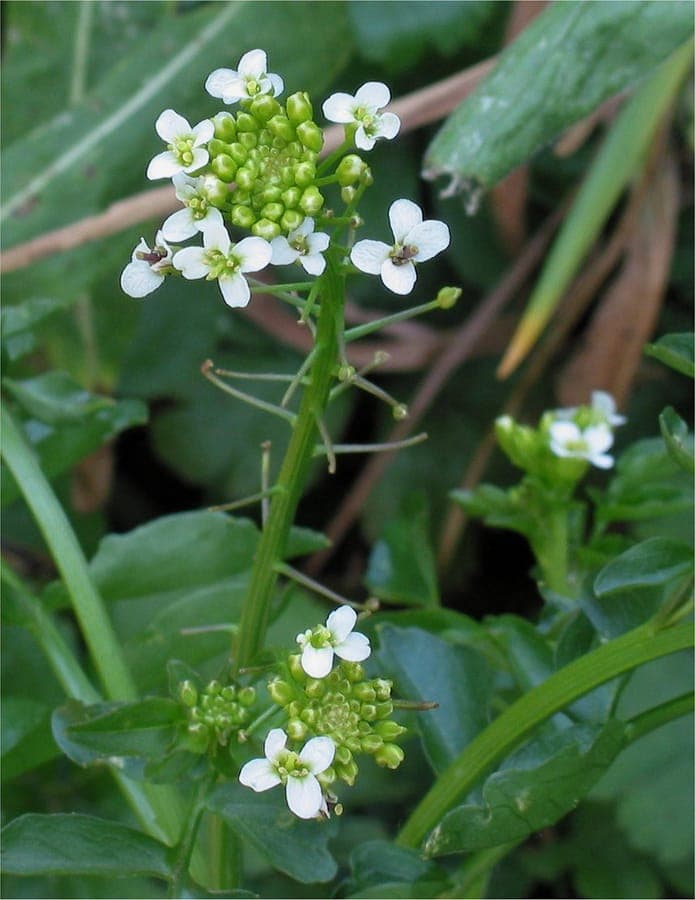
Rasbak / CC BY-SA 3.0, via Wikimedia Commons
Onerow yellowcress: complete guide
Nasturtium microphyllum
¿Quieres ver Onerow yellowcress: complete guide en tu jardín?
1 minuto, sin tarjeta de crédito
Onerow yellowcress, scientifically designated Nasturtium microphyllum, is an elegant, moisture-loving trailing plant from the Brassicaceae family. This native European aquatic herb is valuable for water habitats, streams, banks and other wet gardens. The plant is characterized by extremely small, fine leaves and thin, heavily branched stems that can tolerate water floods. The plant typically reaches 10-25 cm in length but can extend longer in flowing water.
Appearance and bloom
Onerow yellowcress presents itself as a finely branched plant with extremely small, pinnate leaves often just 5-8 mm long. The stems are thin, succulent green and highly flexible, perfectly adapting to water floods. From May through September, small, discrete flowers appear with four white or very pale pink petals, approximately 3-4 mm in diameter. After flowering, small elongated seed pods develop. The plant remains green and actively growing year-round.
Ideal location
Onerow yellowcress thrives exclusively in very wet environments, preferring flowing water such as streams, brooks and artificial water channels. Still water is also tolerated as long as deep enough for water circulation. At least 4-5 hours direct sunlight daily is ideal, although the plant also grows in partial shade. The plant grows poorly on completely dry sites.
Soil and planting hole
The plant does not really grow in soil but in water or highly saturated sand/mud. Plant close to water margins at a depth of 2-5 cm below water level. The underlying substrate should be relatively clean without heavy pollution. The plant can also grow as true aquatic plant directly in water without potting.
Diseño gratis
¿Quieres ver Onerow yellowcress: complete guide en tu jardín? Crea un diseño gratis ahora.
Water management
Water is not so much food as it is essential for this plant. It grows naturally only in water or very wet conditions. In streams, the plant grows optimally where water stays cold and reasonably clean. Stagnant water must be avoided - flowing water or regular water circulation is desired. Plant directly along waterline in locations where the plant mingles with water.
Pruning and maintenance
Onerow yellowcress requires minimal pruning. Remove only dead or very long stems in spring. The plant can be cut back if growing too vigorously, but this is usually not needed in its natural environment.
Maintenance calendar
March to April: check plant health. May through September: flowering and growth period. October to February: winter rest, minimal activity.
Winter hardiness
Onerow yellowcress is fully hardy and grows naturally in much of Europe, including Great Britain, Netherlands, France, Germany and Scandinavia. The plant survives temperatures to minus 10 Celsius in water. Because water is often insulating, the plant can survive under thin ice sheets.
Ecological importance and nutrition
Onerow yellowcress is a larval food plant for caterpillars of certain butterfly species and provides microhabitat for water insects. The plant also slightly purifies water, useful in natural water courses.
Companion plants
Onerow yellowcress grows well with other aquatic plants such as water-plantain, round-leaved sundew and watermeal. Combinations with bank-side plants are also beneficial.
Availability
Onerow yellowcress is not always available in regular garden centers. Search specialized water plant suppliers. Some retailers occasionally stock it. Prices vary from 5-12 euros per bundle.
Closing remarks
Onerow yellowcress is ideal for owners of natural streams, ponds or other water-based gardens who wish to increase native aquatic biodiversity. The plant offers value both ecologically and visually.
¿Quieres ver Onerow yellowcress: complete guide en tu jardín? Crea un diseño gratis ahora.
Sube una foto, elige un estilo y obtén un diseño fotorrealista con lista de plantas en menos de un minuto.
Más de 10.000 jardines diseñados
Sin tarjeta de crédito


Plantas similares
Brassica cretica: complete guide
Brassica cretica
Brassica cretica, the Cretan cabbage, grows wild on Aegean cliffs. Discover how to grow this drought-tolerant, yellow-flowered Mediterranean perennial.
Corsican cabbage: complete guide
Brassica insularis
Corsican cabbage is a rare Mediterranean rock cabbage with white flowers and blue-green leaves. Location, soil and winter protection.
Prostrate cabbage: complete guide
Brassica procumbens
Prostrate cabbage is a creeping North African cliff plant with yellow flowers. Discover location, soil type and winter protection.