
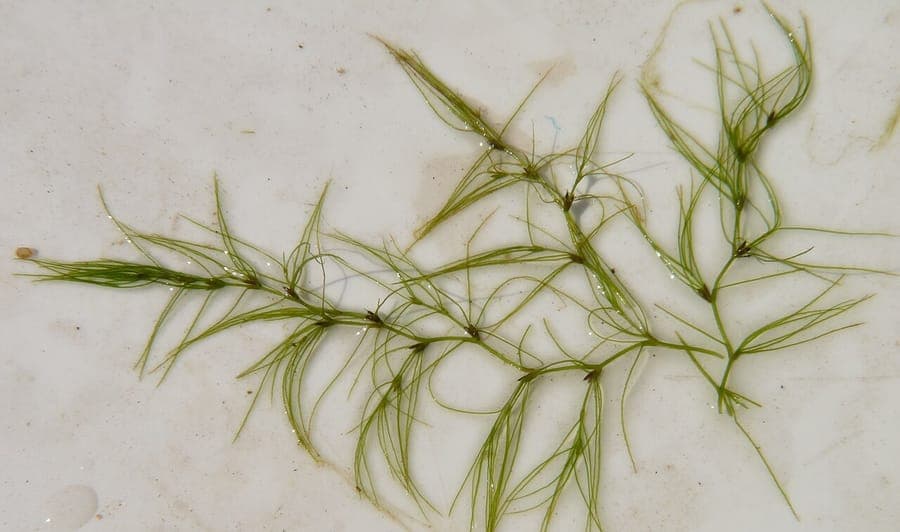
Show_ryu / CC BY-SA 3.0, via Wikimedia Commons
Najas gracillima: complete guide
Najas gracillima
¿Quieres ver Najas gracillima: complete guide en tu jardín?
1 minuto, sin tarjeta de crédito
Overview
Najas gracillima, the Slender Waternymph, is an elegant aquatic plant belonging to the Hydrocharitaceae family. This species originates from Iran through the Russian Far East and also from East Canada to eastern United States. Today it is invasive in Europe, where it has naturally established in lakes and rivers. Despite its invasive potential in some ecosystems, Najas gracillima is popular in home aquaria due to its fine foliage and simple cultivation requirements.
On gardenworld.app, we focus on terrestrial front yard design, but waterscapes form essential elements around homes, and Najas gracillima offers beautiful integration for aquatic features in gardens. For gardeners integrating ponds and water features, this plant provides vital habitat and aesthetic value.
Appearance and growth
Najas gracillima is aptly named: it displays extremely fine, thread-like leaves arranged along slender stems. The plant is nearly transparent green, making it almost invisible in clear water. Leaves are small, just millimeters long, arranged in opposite pairs along the stem.
The plant grows rapidly when conditions are favorable, potentially reaching several meters in length in large aquaria or water bodies. In confined habitats, it remains more compact. Flowers are tiny and inconspicuous, as this plant reproduces primarily asexually via fragmentation.
Growth is unbounded vertically; without trimming, stems can become very long. This makes it ideal for background planting in aquaria but requires regular maintenance.
Ideal location
Najas gracillima thrives in clear water with moderate sunlight. For pond use in a front yard, choose a location receiving at least 4 to 6 hours of direct sunlight daily. Too much shade severely inhibits growth.
The plant grows in both static ponds and flowing water. In nature it inhabits ditches, marshes, and slow-moving rivers. For aquarium use, place plants in background corners where they do not obstruct views.
Soil
Najas gracillima requires no traditional soil for growth; it grows entirely aquatically without conventional roots. Instead, it absorbs nutrients directly from the water column. For pond use, plants can be anchored in sand substrate underwater, but this serves stability rather than nutrition.
In aquaria, use fine sand or aquarium-grade gravel. This helps support plants without blocking nutrient uptake. Plants can also float freely, though with less stability.
Diseño gratis
¿Quieres ver Najas gracillima: complete guide en tu jardín? Crea un diseño gratis ahora.
Watering
For pond integration: water quality is critical. Najas gracillima thrives best in clean, neutral to slightly acidic water with pH between 6.5 and 7.5. Water hardness to 15 dGH is acceptable. The plant tolerates temperatures between 10 to 28 degrees Celsius, though it grows fastest around 20-25 degrees.
In aquaria, regular water changes (30% weekly) help manage waste and nutrients. For pond use, natural rainfall supplementation and biological filtration suffice.
Pruning
Najas gracillima requires regular trimming to keep growth manageable. Cut stems at the top; basal sections rarely break apart, so removed upper segments won't regrow. Instead, trimmed stems will form side shoots.
In aquaria, removing excessively long stems and managing waste helps maintain water clarity. In ponds, perform trimming in early spring and again in July.
Maintenance calendar
April: First inspection. Remove any decayed material. Begin trimming for new growth.
July: Peak growth month. Trim as needed.
September: Check nutrient levels; add liquid aquatic plant fertilizer if water appears nutrient-poor.
November: Winter preparation. Reduce aquarium temperature to slow growth.
Winter hardiness
Najas gracillima tolerates mild winters in temperate zones (USDA zones 8-10), especially in deeper ponds where water does not freeze solid. In colder climates, treat as an annual or overwinter indoors in tanks.
Companion plants
In pond ecosystems, plant Najas gracillima alongside:
- Ludwigia (Red-leaf plant) for red foliage contrast
- Sagittaria (Arrowhead) for larger above-water leaves
- Vallisneria (Spiral valley-plant) for similar texture
- Marsilea (Water clover) for ground-level coverage
Gardenworld.app helps with pond integration as part of larger front yard design. These aquatic elements create biodiversity and aesthetic interest.
Closing
Najas gracillima provides elegant aquatic support for small to medium ponds and aquaria. With adequate light, water quality, and trimming, this plant will deliver years of visual interest. Begin aquatic planting today on gardenworld.app and discover how water features enhance front yard beauty.
¿Quieres ver Najas gracillima: complete guide en tu jardín? Crea un diseño gratis ahora.
Sube una foto, elige un estilo y obtén un diseño fotorrealista con lista de plantas en menos de un minuto.
Más de 10.000 jardines diseñados
Sin tarjeta de crédito


Plantas similares
Ottelia alismoides: complete guide
Ottelia alismoides
Learn how to grow Duck-lettuce in aquariums and water gardens. Tips for growth, water conditions and care of this aquatic plant.
Hydrilla verticillata: complete guide
Hydrilla verticillata (L.f.) Royle
Discover Florida elodea, a fascinating submerged aquatic plant for ponds and aquariums. Complete growing and care guide.
Najas guadalupensis: complete guide
Najas guadalupensis
Discover this aquatic plant with fine foliage for water gardens. Excellent oxygen producer and water purifier. Easy to grow.