
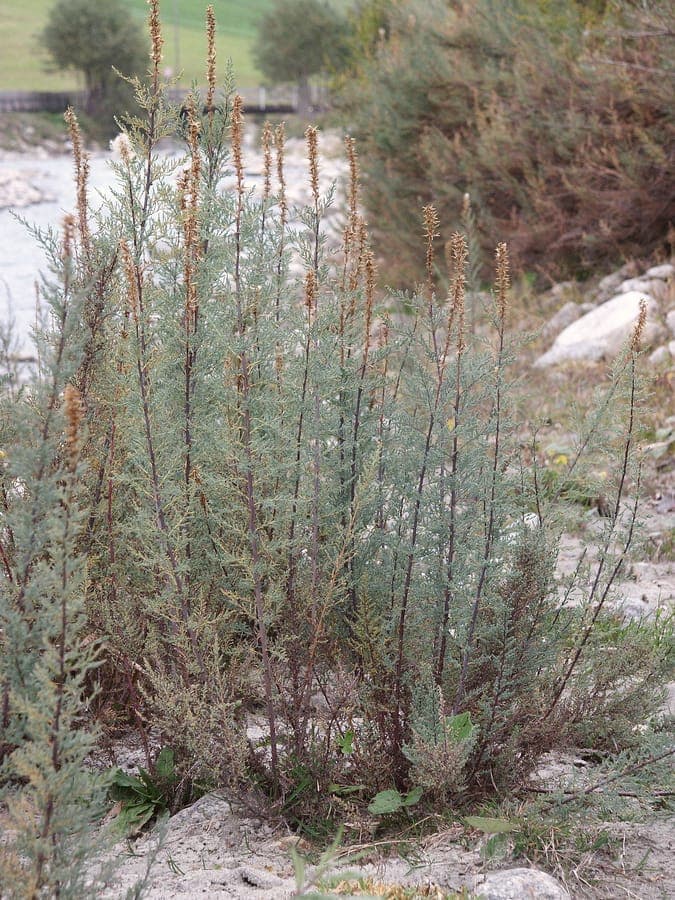
Bernd Haynold / CC BY 2.5, via Wikimedia Commons
German False Tamarisk: complete guide
Myricaria germanica
¿Quieres ver German False Tamarisk: complete guide en tu jardín?
1 minuto, sin tarjeta de crédito
Overview
The German false tamarisk (Myricaria germanica) is a versatile and elegant shrub that thrives along waterfronts and in well-drained soils. This plant belongs to the Tamaricaceae family and is particularly valued for its delicate, feathery needle-like foliage and spectacular pink flowers.
Native to Europe from Scandinavia to Pakistan, this species is ideal for gardens where a light, airy aesthetic is desired. It tolerates drought once established and requires minimal maintenance.
Appearance and Bloom
Myricaria germanica grows into a shrub reaching 1 to 3 meters in height, depending on growing conditions. The plant features very fine, needle-like leaves that have an almost feathery structure, giving it an exceptionally light and elegant appearance.
Flowers appear from May to July, forming long, dense flower spikes. These blooms are typically pink to purple in color and attract numerous pollinators. The flowering period is abundant and lasts several weeks as new flowers continuously emerge.
Ideal Location
German false tamarisk thrives in a sunny position, requiring at least 6 hours of direct sunlight daily. Full sun is ideal for maximum flowering.
Relation to water: This plant naturally grows along riverbanks, making it perfect for the edge of a pond, a flowing stream, or a wet garden area. It tolerates regular flooding well.
Wind tolerance: The plant is quite wind-resistant when properly established.
Soil
German false tamarisk thrives in virtually all soil types but prefers well-drained ground. It tolerates both sandy and clay soils, though it performs best in soil with low to moderate nutrient content.
PH level: The plant is flexible regarding pH, growing well in acidic (6-7) and neutral soils (7-8).
Drainage: In poorly drained soil, root rot may occur. In heavy soils, work in organic matter and ensure good drainage.
Watering
As mentioned, this plant is extremely drought-tolerant once established. Young plants, however, require regular watering during their first growing season.
During growth: Water moderately, only when the soil feels dry.
Summer: In very dry conditions, watering can stimulate flowering, though it is not essential.
Winter: Hardly any water is needed unless there is a frost-free period with very dry weather.
Diseño gratis
¿Quieres ver German False Tamarisk: complete guide en tu jardín? Crea un diseño gratis ahora.
Pruning
German false tamarisk benefits from light pruning, especially after flowering (August-September). This encourages a compact form and more flowers the following spring.
Pruning advice: Prevent overgrowth by shortening one-third of the branches.
Heavy pruning: If the plant is severely overgrown, heavy pruning in early spring (March) can be done, though the plant tolerates this less well.
Avoid severe pruning: This plant does not tolerate hard pruning well.
Maintenance Calendar
Spring (March-April): Check for frost damage, prune to shape, prepare for the new growing season.
Late Spring (April-May): Fertilize with organic manure or light artificial fertilizer. Begin regular watering if dry.
Summer (May-July): Monitor for pests, enjoy the blooms, water during dry spells.
Late Summer (July-August): Light pruning after flowering.
Autumn (September-October): Remove dead wood, prepare for winter.
Winter (November-February): Minimal maintenance unless snow is heavy on branches.
Winter Hardiness
German false tamarisk is very winter hardy, tolerating temperatures to approximately -15 to -20 degrees Celsius. In most temperate regions, winter protection is hardly needed, though young plants can be protected in their first winter.
In severe winters, branches may die back, but the plant will regrow in spring.
Companion Plants
German false tamarisk grows well alongside:
Waterside: Rodgersia, Hosta, ornamental grasses like Miscanthus and Calamagrostis
Drier areas: Lavender, Senecio, Sambucus
Front plantings: Low-growing plants like Sedum and Heuchera
Trees: Willows and birches create beautiful combinations
Conclusion
The German false tamarisk is an incredibly beautiful and practical choice for any garden. Whether you have a water feature or simply need to clothe dry ground, this plant offers beauty without much effort. The fine needles and light, pink blooms give any garden a feathery elegance that is hard to achieve.
Purchase your German false tamarisk from quality retailers. This plant is well worth the investment. Discover more inspiration on gardenworld.app for ideas for your own garden.
¿Quieres ver German False Tamarisk: complete guide en tu jardín? Crea un diseño gratis ahora.
Sube una foto, elige un estilo y obtén un diseño fotorrealista con lista de plantas en menos de un minuto.
Más de 10.000 jardines diseñados
Sin tarjeta de crédito


Plantas similares
Athel tamarisk: complete guide
Tamarix aphylla
Discover the Athel tamarisk, a remarkable desert tree with delicate feathery foliage and pink flowers. Highly drought and salt-tolerant, ideal for challenging landscapes and coastal gardens.
Four-Stamen Tamarisk: complete guide
Tamarix tetrandra
Tamarix tetrandra is an elegant shrub with fine, feathery white and purple flowers. Ideal for dry and salt-tolerant soils, this tamarisk offers year-round interest in gardens.
Tamarix chinensis: complete guide
Tamarix chinensis
Master the care of Tamarix chinensis (Chinese tamarisk) - an elegant shrub perfect for dry gardens with stunning pink flowers and minimal maintenance.