
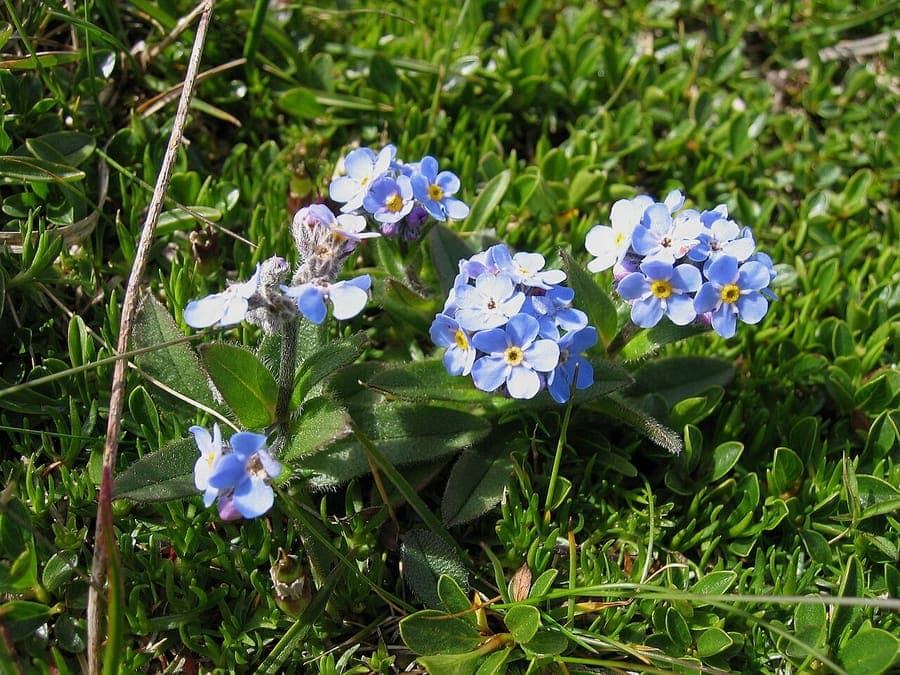
Wikimedia Commons / CC BY-SA 3.0, via Wikimedia Commons
Alpine forget-me-not: complete guide
Myosotis alpestris
¿Quieres ver Alpine forget-me-not: complete guide en tu jardín?
1 minuto, sin tarjeta de crédito
Overview
Myosotis alpestris, commonly known as alpine forget-me-not or mountain forget-me-not, is a charming alpine plant from the Boraginaceae family. This plant naturally occurs throughout Europe, from the Alps to Siberia, always in mountain meadows and alpine grasslands. It is a low-growing, biennial plant famous for its minute, sky-blue flowers.
Alpine forget-me-not is a true classic for alpine gardens, rock gardens and border fronts. The plant feels at home in cool mountainous environments and also grows well in temperate climates. With its fine growth and years-long stability, it is a reliable partner in every garden design.
Appearance and Bloom
Alpine forget-me-not grows in compact, low clumps, merely 15 to 30 centimeters tall. The leaves are narrow, elongated and green, sometimes slightly hairy. The flowers are much smaller than those of other forget-me-nots, barely 5 to 8 millimeters wide, but incredibly numerous.
The flowers are sky-blue with yellow center, gathered in loose, spiral flower spikes. The bloom period runs April through June, as this alpine plant depends on elevation and climate. After flowering, small nutlets develop containing seeds. The whole plant may disappear after bloom, typical of alpine biennials.
Ideal Location
Alpine forget-me-not grows best in sunny to half-shaded locations. At least four to five hours of direct sunlight is ideal. In very warm climates prefer some afternoon shade. The plant loves good air circulation, preventing disease.
This plant is perfect for rock gardens, alpine borders, flower troughs and glasshouses. Also excellent as a border front. It grows beautifully in groups and creates lovely color masses. Essential for alpine-style containers.
Soil
Alpine forget-me-not prefers sharply draining, sandy, somewhat poor soil. The plant cannot tolerate stagnation and feels uncomfortable in dense, rich soils. pH can be neutral to slightly acidic, preferably alkaline-leaning.
Add plenty of sand, gravel and small stones to the planting hole. The plant grows best in poor to semi-rich soils. Organic material like compost or peat must be minimal. Use alpine potting mix with extra coarse sand in pots.
Diseño gratis
¿Quieres ver Alpine forget-me-not: complete guide en tu jardín? Crea un diseño gratis ahora.
Watering
Alpine forget-me-not must never dry out but must also never stay wet. This delicate balance is important. Water when soil surface feels dry, approximately two to three times weekly during growth period.
Water carefully, preferably at roots. Don't spray water over foliage. Wet leaves can develop fungus. In winter, when plant is not growing, severely restrict water.
Pruning
Pruning is not necessary or even undesirable. Let the plant develop its natural form. Spent flowers can be carefully removed for neater appearance. Remove damaged leaves gently.
Leave seed if you want the plant to self-seed. This helps natural rejuvenation. The plant recovers poorly from drastic pruning.
Maintenance Calendar
May: Set out young plants in troughs or borders. June through August: Water regularly, remove spent flowers. September to October: Reduce watering, leave seed. November to April: Plant rests, minimal watering.
Winter Hardiness
Alpine forget-me-not is extremely winter-hardy and survives frosts far below freezing. In arctic and alpine areas it grows without protection. In temperate climates it needs no extra protection. A wet winter is harder than frost - protect against excessive rain.
In warm subtropical areas it will not grow well, as it requires cool growing conditions.
Companion Plants
Alpine forget-me-not grows beautifully with other alpine plants. Combine with alpine phlox, saxifrages, sedums and other low species. Pale or white flowers form nice contrast. Mountain tulips add structure.
From a garden design perspective, this plant works best in groups of five to ten. Mass plantings create the most impressive flowering.
Closing
Myosotis alpestris is an essential plant for all alpine and rock garden lovers. With its minute blue flowers and reliable cultivation, it is a classic that never goes out of style. Seeds and young plants available from garden centers and specialty suppliers. For more inspiration consult gardenworld.app. Discover how this alpine beauty transforms your mountainous garden corner on gardenworld.app.
¿Quieres ver Alpine forget-me-not: complete guide en tu jardín? Crea un diseño gratis ahora.
Sube una foto, elige un estilo y obtén un diseño fotorrealista con lista de plantas en menos de un minuto.
Más de 10.000 jardines diseñados
Sin tarjeta de crédito


Plantas similares
Western waterleaf: complete guide
Hydrophyllum occidentale
Full growing guide for western waterleaf (Hydrophyllum occidentale): shade tolerance, soil needs, watering, winter hardiness and naturalistic garden use.
Limestone phacelia (Phacelia affinis): complete guide
Phacelia affinis
Full guide to Phacelia affinis, the limestone phacelia: sowing tips, purple-blue bee flowers, drought tolerance and uses in dry or wildlife gardens.
Pyrenean viper's bugloss: complete guide
Echium asperrimum
Echium asperrimum is a striking biennial from the western Mediterranean with rough bristly stems and vivid blue flowers. A magnet for bees and a bold border plant.