
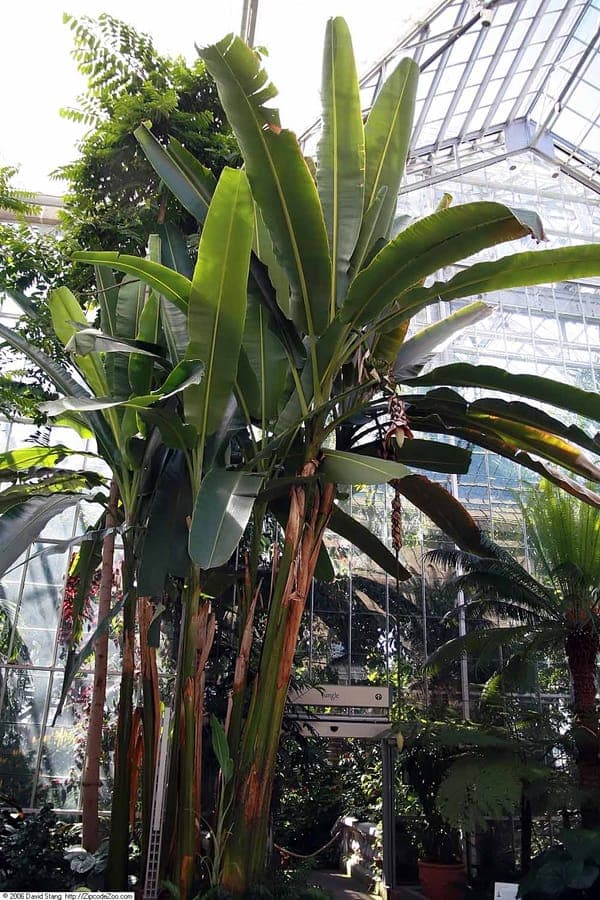
Photo by David J. Stang / CC BY-SA 4.0, via Wikimedia Commons
Abaca: complete guide
Musa textilis
¿Quieres ver Abaca: complete guide en tu jardín?
1 minuto, sin tarjeta de crédito
Overview
Abaca (Musa textilis), also known as Manila-hemp, fiber banana, or chanvre de manille, is a tropical plant native to the Philippines. Despite its resemblance to common bananas, Abaca is primarily cultivated for the strong, golden fibers extracted from the leaf sheaths. These fibers have numerous applications in textiles, rope, and other industrial products. In Europe, it is mainly grown as a decorative tropical plant.
Appearance and Bloom
Abaca grows to a height of 3-6 meters, with very large, elegant green leaves that can reach 3-4 meters long. The plant produces a central flowering stalk with dozens of small, cream-colored yellow flowers followed by small, yellow-green inedible fruits. The plant grows roughly from underground shoots, meaning it does not grow from seeds but from vegetatively propagated pieces.
Ideal Location
Abaca requires a very warm, humid tropical location. The plant must receive at least 6-8 hours of direct sunlight daily. In temperate climates, it can only be grown in a heated greenhouse or in very warm garden conditions. The plant appreciates shelter from strong winds, which can cause leaf tearing.
Soil
Abaca requires very fertile, well-draining soil rich in organic matter. A mixture of garden loam, peat, and compost works well. The plant thrives in soils with pH around 5.5-7.5. Repotting is necessary as the plant grows quickly and requires significant feeding.
Diseño gratis
¿Quieres ver Abaca: complete guide en tu jardín? Crea un diseño gratis ahora.
Watering
Abaca requires regular water and cannot tolerate dry conditions well. The plant prefers constantly moist soil. Water daily in warm seasons, and ensure drainage is good to prevent root rot. In dry weather, daily misting of leaves can be very beneficial for maintaining humidity.
Pruning
Abaca does not require much pruning, but old or damaged leaves should be removed regularly. If the plant becomes too large, the upper parts can be carefully removed. The plant grows rapidly and can reach considerable size, so space for expansion is essential. Damaged leaves should be removed to prevent pest problems.
Maintenance Calendar
Spring: Growth begins again, water regularly. Summer: Water daily, feed monthly. Autumn: Lower feeding and water. Winter: Limited water; very sensitive to cold.
Winter Hardiness
Abaca is very cold-sensitive and cannot be grown outdoors in cold climates. The plant survives only in very warm regions (zones 11-12+). In Europe, it must always be grown in a heated greenhouse. Temperatures below 15 degrees can cause damage.
Companion Plants
In a greenhouse or tropical garden, Abaca can be combined with other strong tropical plants like coconut palm, aroid, and other bold foliage for a lush, dramatic effect.
Closing
Abaca is an impressive, dramatic plant for large warm garden spaces and tropical greenhouses. Although it does not produce true banana fruit, its immense growth and dramatic form provide considerable aesthetic value. However, it requires space, warmth, and regular maintenance.
¿Quieres ver Abaca: complete guide en tu jardín? Crea un diseño gratis ahora.
Sube una foto, elige un estilo y obtén un diseño fotorrealista con lista de plantas en menos de un minuto.
Más de 10.000 jardines diseñados
Sin tarjeta de crédito


Plantas similares
Banana plant: complete guide to growing Musa x paradisiaca outdoors
Musa x paradisiaca
How to grow the banana plant outdoors in a temperate garden: best location, feeding, winter storage, and tropical companion plants.
Musa balbisiana: complete guide
Musa balbisiana
Discover the Balbis banana with large leaves and tropical character. Produces plantains. A true statement plant for your front garden or conservatory.
Scarlet banana: complete guide
Musa coccinea
Discover Musa coccinea, a striking ornamental with brilliant red flower bracts. Cultivation tips, care requirements, and growing zones for this Asian tropical beauty.