
Douglas Goldman / CC BY-SA 4.0, via Wikimedia Commons
Morus rubra: complete guide
Morus rubra
¿Quieres ver Morus rubra: complete guide en tu jardín?
1 minuto, sin tarjeta de crédito
Overview
Morus rubra, also known as red mulberry or American mulberry, is a beautiful native American fruit tree from the Moraceae family. This tree is famous for its delicious, sweet fruits that can be eaten when they are dark red to black. Unlike many fruit trees, the red mulberry is relatively easy to grow and highly productive.
Originally from southeastern Canada and eastern North America, the red mulberry is adapted to temperate climates and grows well in northern Europe. The tree reaches a height of 8-15 meters and produces abundant fruit from June to July.
Appearance and bloom cycle
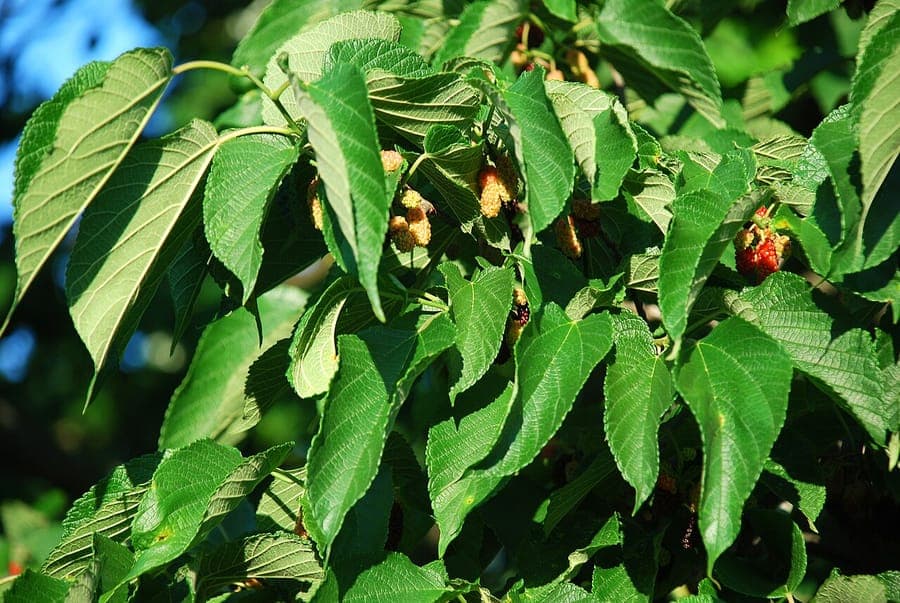
Morus rubra is a medium-sized tree with a broad, rounded crown. The leaves are large, approximately 10-20 centimeters long, and feel rough to the touch. The leaves can take on different shapes on the same tree - some have two or three lobes while others are entire.
The flowers are inconspicuous; they appear in spring before the leaves are fully out. After pollination, long, cylindrical fruits form that start green and redden as they ripen, ultimately becoming dark red to black. The fruits taste deliciously sweet with a slight tart accent.
Ideal location
Red mulberry thrives best in a sunny location with at least 6 hours of direct sunlight per day. The tree is well-suited to temperate climates and grows well in the UK, northern Europe, and North America. Although the tree is tolerant of various light situations, full sun produces the most fruit.
The tree is also suitable for various soil types, although it shows some preference for well-draining soils.
Soil requirements
Red mulberry grows on virtually any soil type, from acidic to basic, with pH 5.0 to 7.0. The tree prefers well-draining soil and does not grow well in very wet, waterlogged soils. When planting, you can mix in some compost to improve soil structure.
The tree is relatively forgiving regarding soil quality and can grow on marginal soils.
Watering
Once established, red mulberry is relatively drought-tolerant. Young trees, however, need regular watering during their first year. Water deeply but infrequently - once per week is usually sufficient during normal growing seasons.
In extremely dry summers, supplemental water may be beneficial, especially for young trees. Mulch around the tree with 5-8 centimeters of organic material to retain moisture.
Diseño gratis
¿Quieres ver Morus rubra: complete guide en tu jardín? Crea un diseño gratis ahora.
Pruning and shaping
Red mulberry needs little maintenance pruning. Remove only damaged, diseased, or dead wood. If you want to shape it, do so in late winter before growth begins. The tree can also be pruned as a small tree with a clear trunk, or as a broader shrub.
The tree responds well to pruning and will recover quickly.
Maintenance calendar
March-April: Prune old trees; Plant new trees. May-June: Check for pests; Flowers appear. June-July: Fruits ripen; Check daily for harvesting. July-August: Harvest fruits; Begin rest period. September-October: Leaves fall; Prepare for winter. November-February: Rest period; No maintenance needed.
Winter hardiness
Red mulberry is very winter-hardy and grows well in temperate climates. In North America, it is native to Minnesota and can survive temperatures down to -35 degrees Celsius. In the UK, northern Europe, and North America, it is completely winter-hardy.
Add a protective mulch layer in temperate climates, but the tree will grow without extra protection.
Harvesting and use
Harvest fruits when they are dark and feel slightly soft. They can be eaten directly from the tree - this is how most people enjoy them. They can also be used for jam, syrup, or frozen.
Note: ripe fruits stain purple and fall easily from the tree, so harvesting under the tree can be a bit messy.
Special benefits
Red mulberry is not only nutritious and delicious, but also ecologically valuable. The fruits are eaten by birds, providing bird habitat support. The tree also produces many leaves that are good for leaf compost.
Propagation
The tree can be grown from seeds or cuttings. Seeds are the easiest method - simply remove from ripe fruits and grow. However, trees grown from seeds may differ slightly from the mother plant.
Closing remarks
Morus rubra is an excellent choice for plant lovers who want a productive fruit tree that requires little maintenance. With full sun and well-draining soil, you will be able to enjoy these delicious fruits for many years.
Find more fruit trees on gardenworld.app, where you'll get advice for selecting and maintaining fruit trees. Visit gardenworld.app for more tips on growing nutritious trees in your own garden.
¿Quieres ver Morus rubra: complete guide en tu jardín? Crea un diseño gratis ahora.
Sube una foto, elige un estilo y obtén un diseño fotorrealista con lista de plantas en menos de un minuto.
Más de 10.000 jardines diseñados
Sin tarjeta de crédito


Plantas similares
Morus macroura: complete guide
Morus macroura
Himalayan mulberry with long fruits. Fast-growing, edible berries, winter hardy. Suitable for large gardens and landscapes.
Brosimum guianense: complete guide
Brosimum guianense
Guiana snakewood: exotic tree from South America with valuable timber. Cultivation and care for warm-climate gardens.
Maclura tinctoria: complete guide
Maclura tinctoria
Learn how to grow Maclura tinctoria or Cubanwood. This beautiful tree offers shade, food and dye possibilities in your garden.