
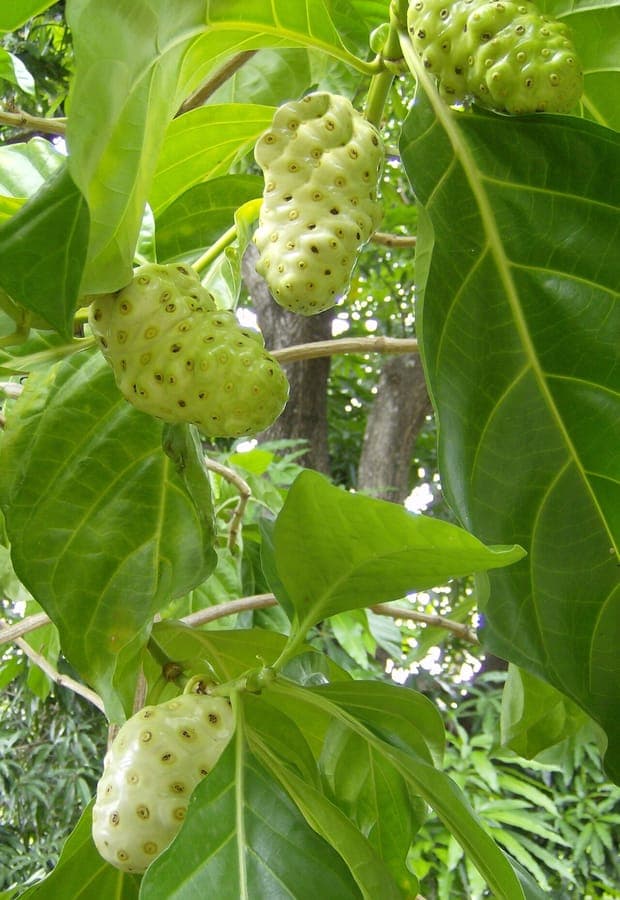
Wilfredor / CC0, via Wikimedia Commons
Morinda citrifolia: complete guide
Morinda citrifolia
¿Quieres ver Morinda citrifolia: complete guide en tu jardín?
1 minuto, sin tarjeta de crédito
Overview
Morinda citrifolia, better known as Indian mulberry, Noni, or Mengkudu, is a fascinating tropical tree from the Rubiaceae family. This plant has been used for centuries in Asia and Polynesia for both nutrition and traditional medicinal purposes. The fruit has a unique aroma and is valued for its potential health benefits.
Although Morinda citrifolia is a tropical plant, it can also be cultivated in warmer regions of temperate climates, provided it is protected from frost. The tree typically reaches 3-10 meters in height and produces white flowers and green fruits year-round.
Appearance and bloom cycle
Morinda citrifolia is a small tree or shrub with glossy, dark green leaves that grow opposite each other. The leaves are large, approximately 15-30 centimeters long, with clearly visible veins. The plant produces white, tubular flowers in clusters that emit a pleasant fragrance.
The fruits are green, approximately 8-10 centimeters long, and resemble small pineapple-like structures with a characteristic bumpy texture. When ripe, they become whitish-yellow. The fruits have a very distinctive, strong smell that many people consider unpleasant, although this is part of the characteristic identity of the plant.
Ideal location
Morinda citrifolia thrives best in a very sunny location with at least 6 to 8 hours of direct sunlight per day. The plant loves warmth and grows optimally at temperatures between 20 and 30 degrees Celsius. In temperate climates, the plant must be kept in a warm, protected location or grown in a pot that can be brought indoors in winter.
Ensure the plant is protected from strong winds and positioned in a place with good air circulation.
Soil requirements
Morinda citrifolia prefers nutrient-rich, well-draining soil with a pH of 6.0 to 7.0. Add plenty of compost or mature manure before planting. The plant is relatively demanding in terms of nutrients and grows better in richer soil.
Ensure good drainage to prevent root rot. In containers, you can use a mixture of potting soil, compost, and sand.
Diseño gratis
¿Quieres ver Morinda citrifolia: complete guide en tu jardín? Crea un diseño gratis ahora.
Watering
Morinda citrifolia needs regular watering, especially during the growing and fruiting period. Water when the top 5-10 centimeters of soil feel dry. Ensure good drainage and avoid stagnant water.
In very dry periods, daily watering may be necessary. Mulch around the plant with 5-8 centimeters of organic material to retain moisture.
Feeding and maintenance
Feed monthly during the growing season (March to October) with a balanced plant fertilizer. The plant responds well to organic fertilizers. Regularly remove damaged or diseased leaves.
Prune the plant carefully to shape it and remove wild growth. This is best done in spring.
Maintenance calendar
March-May: Start feeding; Check for pests. June-August: Water regularly and feed; Flowers and fruits appear. September-October: Reduce feeding; Harvest ripe fruits. November-February: Minimal feeding and water; Protection from frost. Year-round: Check for pests and diseases.
Winter hardiness
Morinda citrifolia is not winter-hardy in temperate climates. In the UK, northern Europe, and North America, the plant must always be protected from frost. The plant can be grown in containers and brought indoors in winter. In very warm parts of Southern Europe it might possibly grow outdoors with protection, but normally indoor protection is needed.
Harvesting and use
Fruits can be harvested when green or waited until they become whitish-yellow. Ripe fruits are softer and have a stronger smell. They can be eaten fresh (although few do due to the smell), processed into juice, or dried.
The fruits are traditionally used in many cultures for their health benefits.
Special uses
The entire plant, including leaves, trunk, and fruits, has traditional applications in Asian medicine. Different parts are used for different purposes.
Closing remarks
Morinda citrifolia is a unique plant suitable for those who want to grow an exotic tree with potential health benefits. While it is necessary to accept the characteristic smell of the fruits, it is valuable to have this plant in your garden or greenhouse.
Discover more tropical fruit trees on gardenworld.app, where you'll get advice for growing exotic plants. Visit gardenworld.app for more tips on cultivating medicinal plants in your own garden or greenhouse.
¿Quieres ver Morinda citrifolia: complete guide en tu jardín? Crea un diseño gratis ahora.
Sube una foto, elige un estilo y obtén un diseño fotorrealista con lista de plantas en menos de un minuto.
Más de 10.000 jardines diseñados
Sin tarjeta de crédito


Plantas similares
Oregon bedstraw: complete guide
Galium oreganum
Everything about Oregon bedstraw (Galium oreganum): shade planting, soil requirements, care and use as a low groundcover in woodland and shade gardens.
Awned woodruff: complete guide
Asperula aristata
Full guide to growing Asperula aristata, the awned woodruff: sunny location, alkaline soil, minimal watering, and companion plants for dry or rock gardens.
Purple woodruff: complete guide
Asperula purpurea
Full guide to Asperula purpurea, purple woodruff: sunny sites, chalky soil, watering, pruning, winter hardiness and companion plants for rock and dry gardens.