
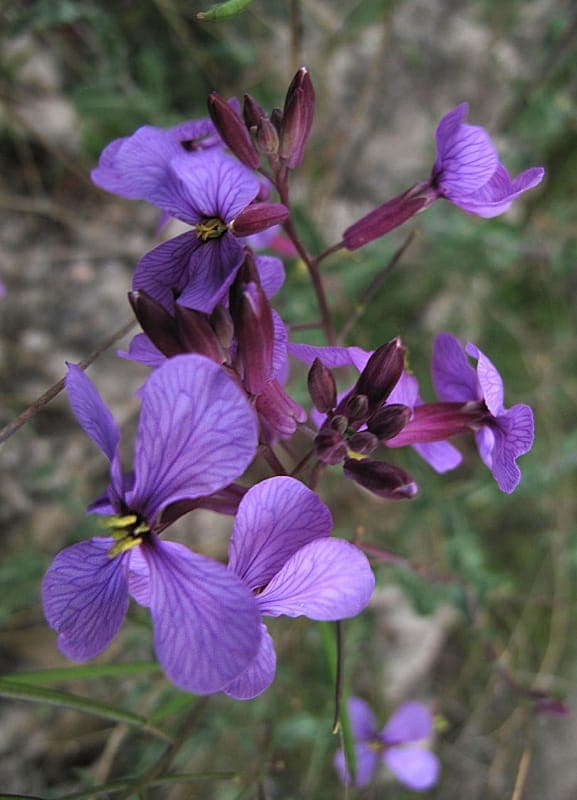
Neojavi2001 / CC BY-SA 3.0, via Wikimedia Commons
Moricandia arvensis: complete guide
Moricandia arvensis
¿Quieres ver Moricandia arvensis: complete guide en tu jardín?
1 minuto, sin tarjeta de crédito
Overview
Moricandia arvensis, known as Violet-cabbage, Purple mistress, or Acker-Morikandie, is a remarkable Brassicaceae of Mediterranean origin. This annual or short-lived plant thrives in warm, dry environments and distinguishes itself through blue flowers and interesting slender growth habit.
Unlike many other Brassicaceae species, Moricandia arvensis grows taller and slimmer, distinguishing it from cabbage-like relatives. The plant is valued for its blue flowers, rare in the Brassica genus.
This plant grows excellently in garden environments where rapid drainage and full sun are available. It suits wild gardens, rock gardens and Mediterranean gravel borders perfectly.
Appearance and Bloom
Moricandia arvensis typically grows 30-60 centimeters tall, with a slender stem and divided foliage. Leaves are grey-green, slightly hairy, with distinctive surface texture.
Flowers are small but striking - purple-blue, clusters of four petals arranged in cross-patterns typical of Brassicaceae. They appear in spirals along flower stems.
Blooming extends April through July in Mediterranean regions. The plant attracts numerous pollinators, especially bees.
Ideal Location
Moricandia arvensis blooms best in full sunlight. Position it where it receives at least six to eight hours of direct sun daily. It grows poorly in shady situations.
The plant suits open borders, slopes, and dry rocky areas. It tolerates wind better than some relatives due to its slender form.
In container cultivation it also thrives provided full sun exposure is given.
Soil
Moricandia arvensis grows best in well-draining soils. It prefers neutral to alkaline soil types (pH 7.5-8.0). It can grow in poor-nutrient soils.
Ensure excellent drainage; waterlogging can be fatal. In clay environments add sand. The plant is undemanding about nutrients.
Diseño gratis
¿Quieres ver Moricandia arvensis: complete guide en tu jardín? Crea un diseño gratis ahora.
Watering
Moricandia arvensis is quite drought-tolerant once established. During growth, regular watering assists, but excessive water must be avoided. The plant tolerates drought well.
In semiarid climates it can grow on natural rainfall alone. During very dry periods, occasional watering helps.
Pruning
Moricandia arvensis requires minimal pruning. If you wish to remove scattered branches, you can do so. Remove spent flowers if preventing seed formation.
The plant can grow naturally without much intervention.
Maintenance Calendar
March-April: Check drainage before planting. Ensure full sun exposure.
April-June: Blooming peaks. The plant attracts numerous insects. Water occasionally.
June-July: Peak flowering. Seed begins ripening. Remove spent flowers if preventing self-seeding.
August-September: Plant begins declining. Seed ripens. Let seed fall naturally.
Winter Hardiness
Moricandia arvensis tolerates temperatures to about -5 degrees Celsius. It grows best in USDA zones 8-11. In cold areas it can be planted as an annual.
In Mediterranean regions it can overwinter outdoors as a lightly-adaptable plant.
Companion Plants
Moricandia arvensis pairs well with:
- Other blue-flowering plants
- Artemisia (silvery foliage)
- Cistus (rock roses)
- Ornamental grasses
- Lavender
Closing Thoughts
Moricandia arvensis is a fascinating addition to dry, sunny gardens. With its unique blue flowers and Mediterranean origin, it brings character and bloom. Plant it in full sun and well-drained soil, and it will bloom satisfyingly.
For UK gardeners, check Mediterranean plant specialists for seeds or young plants.
¿Quieres ver Moricandia arvensis: complete guide en tu jardín? Crea un diseño gratis ahora.
Sube una foto, elige un estilo y obtén un diseño fotorrealista con lista de plantas en menos de un minuto.
Más de 10.000 jardines diseñados
Sin tarjeta de crédito


Plantas similares
Brassica cretica: complete guide
Brassica cretica
Brassica cretica, the Cretan cabbage, grows wild on Aegean cliffs. Discover how to grow this drought-tolerant, yellow-flowered Mediterranean perennial.
Corsican cabbage: complete guide
Brassica insularis
Corsican cabbage is a rare Mediterranean rock cabbage with white flowers and blue-green leaves. Location, soil and winter protection.
Prostrate cabbage: complete guide
Brassica procumbens
Prostrate cabbage is a creeping North African cliff plant with yellow flowers. Discover location, soil type and winter protection.