
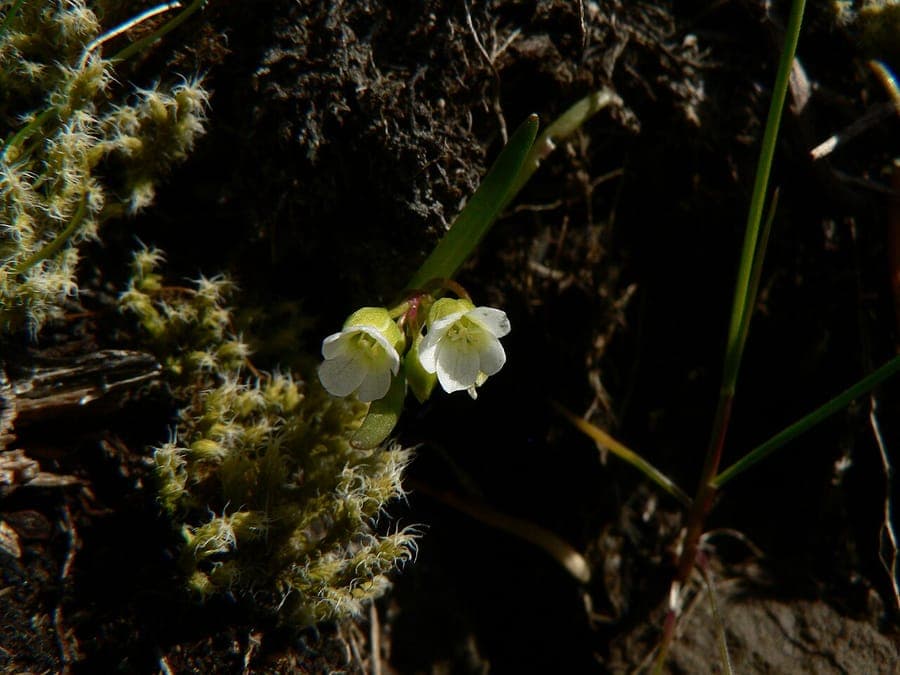
Walter Siegmund (talk) / CC BY 2.5, via Wikimedia Commons
Montia linearis: complete guide
Montia linearis
¿Quieres ver Montia linearis: complete guide en tu jardín?
1 minuto, sin tarjeta de crédito
Overview
Montia linearis, commonly called narrow-leaf montia or narrowleaf miner's lettuce, is an elegant herbaceous plant native to the alpine regions of North America. This diminutive plant is prized for its delicate, thread-like foliage and modest white flowers that appear in late spring. Ideal for rock gardens, alpine troughs, and gardeners seeking understated elegance, Montia linearis is a treasure for those who appreciate subtle botanical beauty. The species name references the plant's characteristic linear leaves that distinguish it from related species.
Appearance and bloom
This plant forms a compact, creeping mat rarely exceeding 15-20 centimeters in height. Narrow, linear leaves create a graceful, almost ethereal appearance. Blooming occurs from May through July, producing tiny white to pale pink flowers that contrast beautifully with the fine foliage. Though small, these blooms are charming and abundant during the season. Following flowering, small seed capsules develop, enabling natural propagation and self-seeding when desired.
Ideal location
Montia linearis thrives in sunny to partially shaded positions. While adaptable to various light conditions, the plant performs best with at least four hours of direct sunlight daily. In hot climates, afternoon shade provides beneficial protection. This delicate species excels in alpine troughs, nestled between rocks, or in container gardens where its fine structure is fully visible. Position the plant where water drains rapidly; waterlogged conditions are detrimental.
Soil
Excellent drainage is paramount for Montia linearis success. Originating from mountainous terrain, this plant cannot tolerate waterlogged, heavy clay soils. Create a well-draining mix of coarse sand, humus-rich potting soil, and small stones (pea gravel works well). An ideal ratio is approximately 40% sand, 30% potting soil, and 30% stones. Target a pH between 6.5 and 7.5. In humid regions, increase the sand proportion further.
Watering
Montia linearis requires moderate but well-controlled moisture. Following planting, water regularly until established (approximately 2-3 weeks). Subsequently, reduce watering frequency. During the growing season (March through October), water when the top 2 centimeters of soil feel dry. In winter, minimize watering as the plant enters dormancy. Never allow water to pool around roots for extended periods.
Diseño gratis
¿Quieres ver Montia linearis: complete guide en tu jardín? Crea un diseño gratis ahora.
Pruning
Pruning is rarely necessary, as Montia linearis grows naturally compact. To encourage denser growth, gently pinch stem tips following blooming to stimulate branching and create a bushier habit. Carefully remove dead or damaged leaves using your fingers or sharp tweezers. This maintenance improves plant health and appearance.
Maintenance calendar
March: Begin growing season; initiate watering. Inspect plants for winter damage. April-May: Increase moisture moderately; blooms emerge. Transplant any seed-propagated seedlings. June-July: Peak flowering period; collect loose seeds if desired. August-September: Gradually reduce watering frequency. October: Prepare for dormancy; drastically reduce moisture. November-February: Winter rest period; minimal to no watering required. Monitor plants weekly for issues.
Winter hardiness
Montia linearis is remarkably hardy, tolerating frost to approximately -10°C when grown in well-drained soil. In severe climates with temperatures below -15°C, cultivate young plants in containers that can be brought indoors for winter. The critical factor is not cold, but winter moisture, which promotes rot. Ensure excellent drainage and sparse winter watering.
Companion plants
Montia linearis pairs beautifully with other alpine species such as Saxifraga, Sedum varieties, and Pulsatilla. In alpine troughs, its fine texture contrasts nicely against larger-leaved plants like Helleborus niger. In containers, combine Montia linearis with Sempervivum or compact Hedera cultivars. Avoid aggressive competitors; this understated plant thrives in quieter garden contexts.
Closing remarks
Montia linearis surely brings grace to any rock garden. This plant demands minimal care and provides years of subtle elegance. Avoid waterlogging, ensure adequate light, and provide a free-draining soil, and success is assured. The plant self-propagates readily from seed, allowing easy multiplication with attentive care. If you appreciate understated beauty over showy blooms, Montia linearis is perfect for your garden. Young plants are available in spring at major garden centers. Discover more alpine treasures on gardenworld.app and transform your front garden into an alpine sanctuary.
¿Quieres ver Montia linearis: complete guide en tu jardín? Crea un diseño gratis ahora.
Sube una foto, elige un estilo y obtén un diseño fotorrealista con lista de plantas en menos de un minuto.
Más de 10.000 jardines diseñados
Sin tarjeta de crédito


Plantas similares
Lewisia rediviva: complete guide
Lewisia rediviva
Lewisia rediviva, known as Bitterroot, is a stunning alpine plant with delicate pink flowers. Learn how to cultivate this rare mountain gem in your garden with expert care tips.
Montia fontana: complete guide
Montia fontana L.
Water-blinks (Montia fontana) is a tiny aquatic plant ideal for pond gardens and water features. Learn care requirements, water parameters, and propagation methods.
Cuban-spinach: complete guide
Claytonia perfoliata
Discover how to grow Cuban-spinach (Claytonia perfoliata): ideal conditions, watering, soil, and companion planting for UK and North American gardens.