
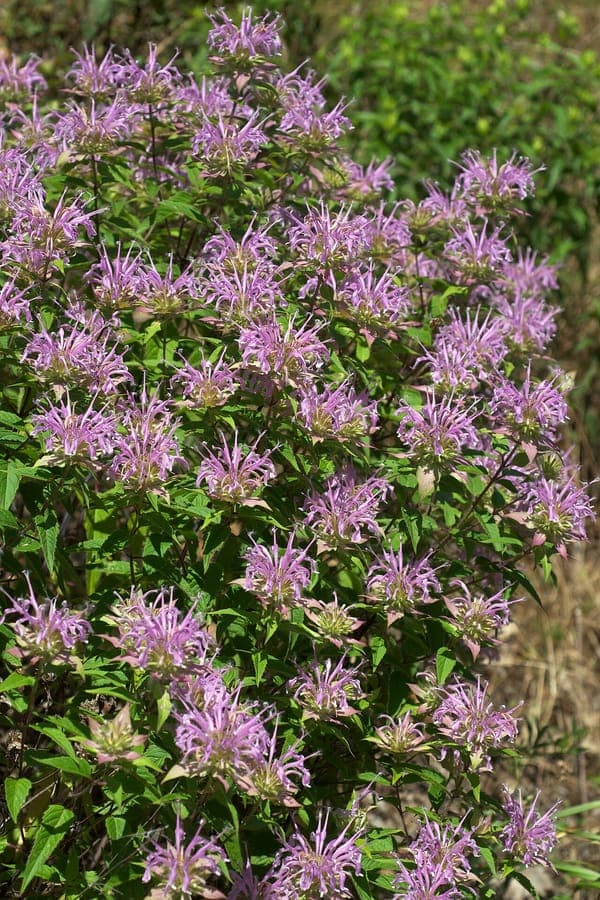
Eric Hunt / CC BY-SA 4.0, via Wikimedia Commons
Monarda fistulosa: complete guide
Monarda fistulosa
¿Quieres ver Monarda fistulosa: complete guide en tu jardín?
1 minuto, sin tarjeta de crédito
Overview
Monarda fistulosa, commonly known as Wild Bergamot, Oswego Tea, or Purple Beebalm, is a robust hardy perennial from the Lamiaceae family (mint family). This North American native is celebrated for its distinctive purple to lavender flowers with characteristic two-lipped structure, and wonderfully aromatic foliage. The plant reaches heights of 60 to 120 centimeters and is among the garden's most valuable pollinator plants.
Monarda fistulosa has become increasingly popular in European gardens due to its exceptional value for beneficial insects and its minimal maintenance requirements. The plant is a workhorse in organic and naturalistic gardens, attracting bees, butterflies, and countless other beneficial insects.
Appearance and Bloom
The plant features upright stems with ovate to lanceolate leaves that are green and powerfully aromatic (distinctly bergamot and minty). The flowers are two-lipped, typical of the Lamiaceae family, in shades of purple to soft lavender. They form in dense, ball-shaped clusters (capitulum) at stem tips.
The blooming period extends from June through September, making Monarda fistulosa a reliable summer to autumn performer. After flowering, seed heads persist for weeks, providing valuable food for overwintering birds.
Ideal Location
Monarda fistulosa thrives in full sun (6-8 hours daily) to part shade. The plant is not location-specific but flowers more abundantly in sunny positions. It tolerates windy conditions well.
Plant in open, well-draining spots where air circulation is excellent. This prevents diseases and encourages abundant flowering.
Soil Requirements
Monarda fistulosa adapts to a broad range of soil conditions, from moderately fertile to less nourished ground. The plant makes no extreme demands and performs well in average garden soil. Good drainage is, however, essential to prevent fungal diseases.
Heavy clay must be improved with sand or compost. A pH between 6.0 and 7.5 is ideal.
Diseño gratis
¿Quieres ver Monarda fistulosa: complete guide en tu jardín? Crea un diseño gratis ahora.
Watering
Once established, Monarda fistulosa is notably drought tolerant. Water regularly during the growing season, especially for newly planted specimens. Mature plants can survive extended periods without water. Avoid waterlogging, particularly in wet winters.
Mulching aids moisture retention during summer droughts.
Pruning
Pruning is not essential, but spring cutback promotes more compact growth. Faded flower heads may be removed to encourage additional flowering. Leave seed heads standing for bird food if desired.
Light formation pruning prevents plants from becoming leggy and lush.
Maintenance Calendar
Spring: Clear around plant. Remove dead material. Begin regular watering. Apply compost mulch.
Summer: Water regularly during dry spells. Deadhead spent flowers. Remove diseased material.
Autumn: Gradually reduce watering. Leave seed heads for bird food. Remove significant dead material.
Winter: Plant dies back and regrows from root crowns. Minimal care needed.
Winter Hardiness
Monarda fistulosa is fully hardy to Zone 4 (-30 degrees Celsius) and thrives throughout northern Europe without issue. The plant regrows vigorously from underground roots after spring frost danger passes.
Companion Plants
Monarda fistulosa combines beautifully with other pollinator magnets such as Echinacea (purple coneflower), Rudbeckia (black-eyed Susan), and Salvia. It works wonderfully with ornamental grasses like Miscanthus and Stipa. In mixed borders, it adds color and interest without overwhelming neighboring plants.
Closing Remarks
Monarda fistulosa is indispensable for organic and nature-loving gardeners. With its purple flowers, aromatic foliage, and generosity to pollinators, it is a true garden treasure. Find this plant at most major garden centers through gardenworld.app. Discover more garden inspiration at gardenworld.app. For additional garden design ideas, visit gardenworld.app.
¿Quieres ver Monarda fistulosa: complete guide en tu jardín? Crea un diseño gratis ahora.
Sube una foto, elige un estilo y obtén un diseño fotorrealista con lista de plantas en menos de un minuto.
Más de 10.000 jardines diseñados
Sin tarjeta de crédito


Plantas similares
Apple mint (Mentha x villosa): complete guide
Mentha x villosa
Meet apple mint (Mentha x villosa): a fruity-scented kitchen herb with woolly leaves, perfect for tea and mojitos.
Salvia peyronii: complete guide
Salvia peyronii
Discover Salvia peyronii, a rare Lebanese mountain sage. Growing tips, hardiness, and companion planting for a Mediterranean gravel garden.
Bigleaf mint (Mentha x rotundifolia): complete guide
Mentha x rotundifolia
Discover bigleaf mint: cultivation, care tips, and garden uses. Learn how to grow this aromatic herb with soft, hairy leaves.