
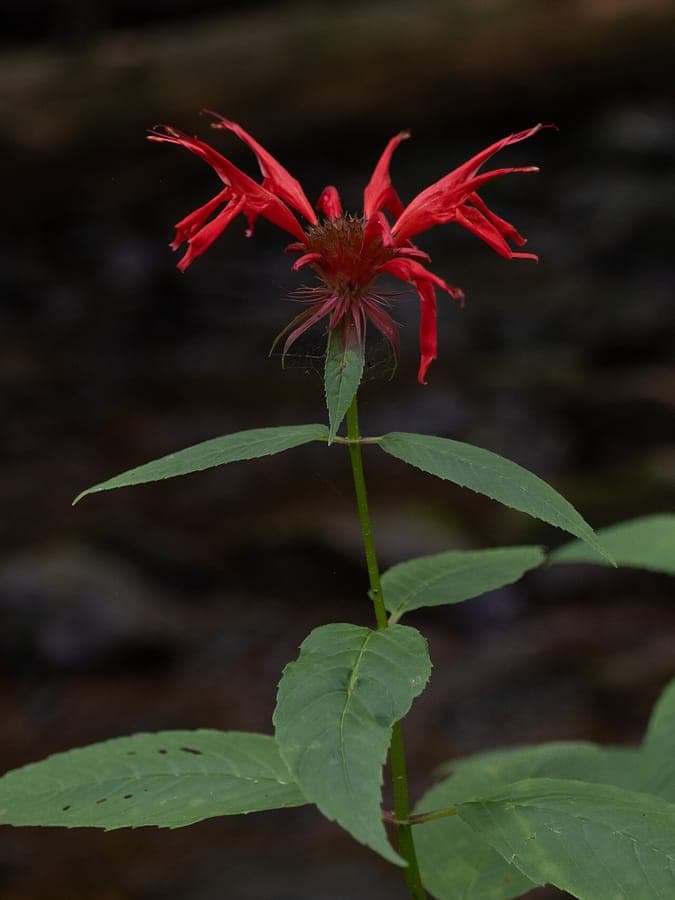
Alex Abair / CC BY 4.0, via Wikimedia Commons
Monarda didyma: complete guide
Monarda didyma
¿Quieres ver Monarda didyma: complete guide en tu jardín?
1 minuto, sin tarjeta de crédito
Overview
Monarda didyma, commonly known as bee balm, Oswego-tea, or bergamot, is a spectacular perennial that transforms gardens with striking, pompon-like flower heads in brilliant reds, pinks, purples, and white. This plant belongs to the Lamiaceae family (mint family) and naturally occurs in eastern North America, inhabiting moist woodlands and meadows. With its aromatic foliage, extended summer blooming, and unparalleled attraction to butterflies, bees, and hummingbirds, Monarda didyma is indispensable for ecologically engaged gardens. Gardenworld.app recognizes this plant as essential for creating dynamic, life-filled borders.
The plant grows in dense, upright clumps reaching 60-90 centimetres in height, depending on cultivar and growing conditions. With its above-ground display, long flowering season from July through September, and moisture-loving nature, Monarda demands thoughtful site selection and consistent care.
Appearance & Bloom Cycle
Monarda didyma establishes itself as a dense, upright plant with square stems - a characteristic feature of the mint family. Stems are reddish-purple and heavily branched. Leaves are elliptical to lance-shaped, 4-8 centimetres long, dark green with prominent veination. When touched, leaves release a strong, pleasantly aromatic fragrance reminiscent of bergamot orange (hence the common name).
Flowers emerge as distinctive, globular pompon-like flower heads at stem tips from July through September, with peak display in August. Each flower head comprises numerous small, tubular florets arranged in concentric rings. Colour varies dramatically by cultivar: 'Jacob Cline' and 'Mahogany' produce deep red, 'Pink Lace' and 'Aquarius' pink shades, 'Purple Lace' deep purple, and 'Snow White' pure white with pink undertones. The blooming period extends 6-8 weeks and can be prolonged through October with regular deadheading.
The plant attracts substantial populations of butterflies, honeybees, bumblebees, and hummingbirds, making it excellent for ecologically responsible gardens.
Ideal Location
Monarda didyma performs best in full sun to partial shade with 4-6 hours of direct daily sunlight. Partial shade is acceptable; full shade should be avoided. The plant appreciates shelter from strong winds, though moderately windy, moist locations prove acceptable (some cultivars may require staking in exposed sites).
In landscape design, this plant features prominently in summer-flowering borders, meadow-like plantings, and in drifts of 3-5 plants for maximum impact. The striking flowers provide beautiful colour contrasts when combined with white, yellow, or blue-flowering perennials. The plant also serves well as a cut flower.
Monarda works equally well in formal borders, prairie-inspired compositions, and naturalistic, ecologically rich planting schemes.
Soil Requirements
Monarda didyma performs best in moist, humus-rich soil with pH 5.5 to 7.5 (acidic to neutral). The plant tolerates average moisture-retentive soils but requires consistent moisture - never allowing complete drying. In drought-prone soils, Monarda grows poorly and flowers minimally.
Organic matter amendment with compost or leaf mould (30-40% by volume) significantly improves moisture retention. In heavy clay, add grit and organic material. Excellent drainage remains essential; waterlogging promotes root rot. A 3-4 centimetre mulch layer of fine organic material helps prevent moisture loss and moderates soil temperature.
Gardenworld.app recommends thorough soil preparation emphasizing moisture-retention capacity. This plant grows poorly in very infertile soils; modest organic enrichment proves helpful.
Watering
Monarda didyma has substantial water requirements. Immediately after planting (first 6 weeks), regular deep watering is essential. Even after establishment, this plant remains moisture-loving; consistent watering ensures optimal growth and flowering.
During the growing season (May-September), maintain soil moisture without creating waterlogged conditions. Check soil regularly; water deeply when the top 2-3 centimetres become dry. In warm weather, twice-weekly watering may be necessary. A 3-4 centimetre mulch layer of fine organic material significantly aids moisture retention.
In autumn (October-November), reduce watering frequency as growth slows. Winter watering is minimal unless unusually dry conditions emerge.
Diseño gratis
¿Quieres ver Monarda didyma: complete guide en tu jardín? Crea un diseño gratis ahora.
Pruning
Monarda didyma requires regular pruning. In May, cut stems back to approximately 15 centimetres to encourage compact, bushy growth and prevent leggy, floppy plants. Repeat in June if desired. Remove spent flower heads (deadheading) regularly to encourage continued blooming throughout summer.
Deadheading can be performed monthly from July through September. Post-bloom tidying in September-October removes dead material. In late autumn (October-November), cut the plant back to approximately 15 centimetres in height in preparation for winter, ideally after the first hard frost.
Maintenance Calendar
April: Growth commences. Monitor moisture management. Third-year plants can be divided.
May: Rapid growth. Perform first pinching around 15 centimetres height for compact form. Consistent watering is critical.
June: Continuous growth. Optional second pinching. Begin increasing watering intensity as temperatures rise.
July: First flowers emerge. Regular watering (twice weekly in hot weather). Commence deadheading.
August: Peak flowering. Maximum watering. Monthly deadheading. Optional feeding for vigorous growth.
September: Blooming continues. Reduce watering as temperatures cool. Continue deadheading.
October: Flowering declines. Cut back to 15 centimetres after first frost. Winter preparation.
November-March: Dormancy period. Plant is resting. Minimal care required. Snow provides natural winter protection; in severe winters without snow, light mulching aids survival.
Winter Hardiness
Monarda didyma demonstrates hardiness to USDA zone 4 (winter minimums approximately -30°C). Throughout the Netherlands, Belgium, and Germany, the plant is completely hardy without protection. The plant dies back in autumn, regrow from underground rhizomes in spring.
In severe winters (below -25°C), rhizomes may occasionally sustain damage, though this remains rare in the referenced regions. Snow cover provides useful insulation. Choose cold-hardy cultivars such as 'Jacob Cline,' which demonstrate exceptional robustness.
The plant performs best in climates with regular winter moisture; very dry winters can cause problems.
Companion Planting
Monarda didyma combines beautifully with other summer-flowering perennials. Blue flowers of Delphiniums, Agapanthus, and Echinops create striking colour contrast. Yellow perennials like Achillea and Rudbeckia establish pleasant colour harmonies.
Fine grasses such as Molinia caerulea and Festuca glauca provide textural contrast. White or cream flowers of Phlox paniculata and Hydrangea create soft harmonic combinations. Rodgersia and Ligularia with their architectural foliage provide structure.
In moist borders, Monarda combines excellently with Astilbe, Hosta, and Carex species. Hummingbirds and butterflies are attracted, so grouping flowering perennials ensures extended pollinator feeding.
Gardenworld.app recommends Monarda in drifts of 3-5 plants with regular spacing (45-60 centimetres) for maximum impact.
Closing
Monarda didyma is a spectacular, ecologically responsible choice for summer gardens. With its brilliant colours, aromatic foliage, extended flowering, and attraction of butterflies, bees, and hummingbirds, it deserves prominent placement in many more gardens. Whether creating meadow-like plantings, composing ecologically rich borders, or simply seeking vivid summer colour, Monarda didyma delivers. With guidance from Gardenworld.app, this plant becomes essential for dynamic, life-filled garden designs. Readily available through garden centres in numerous cultivars, this treasure awaits integration into your landscape.
Note: Monarda is susceptible to powdery mildew in humid, shaded conditions. Ensure good air circulation around plants for optimal health.
¿Quieres ver Monarda didyma: complete guide en tu jardín? Crea un diseño gratis ahora.
Sube una foto, elige un estilo y obtén un diseño fotorrealista con lista de plantas en menos de un minuto.
Más de 10.000 jardines diseñados
Sin tarjeta de crédito


Plantas similares
Apple mint (Mentha x villosa): complete guide
Mentha x villosa
Meet apple mint (Mentha x villosa): a fruity-scented kitchen herb with woolly leaves, perfect for tea and mojitos.
Salvia peyronii: complete guide
Salvia peyronii
Discover Salvia peyronii, a rare Lebanese mountain sage. Growing tips, hardiness, and companion planting for a Mediterranean gravel garden.
Bigleaf mint (Mentha x rotundifolia): complete guide
Mentha x rotundifolia
Discover bigleaf mint: cultivation, care tips, and garden uses. Learn how to grow this aromatic herb with soft, hairy leaves.