
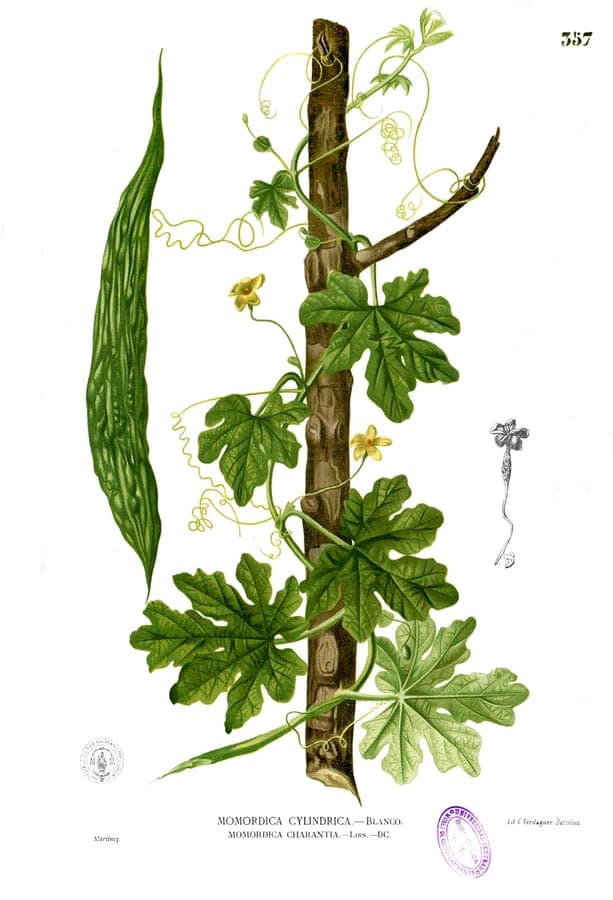
Francisco Manuel Blanco (O.S.A.) / Public domain, via Wikimedia Commons
Momordica charantia: complete guide
Momordica charantia
¿Quieres ver Momordica charantia: complete guide en tu jardín?
1 minuto, sin tarjeta de crédito
Overview
Momordica charantia, commonly known as bitter melon or karela, is a fascinating edible crop from the Cucurbitaceae family. This tropical climbing plant produces green, bumpy fruits with a distinctive bitter taste that is widely used in many Asian cuisines. Beyond its culinary value, bitter melon is also nutrient-rich and valued for its potential health benefits.
Originally from tropical and subtropical Asia and Africa, bitter melon can also be cultivated in temperate climates, albeit with optimal conditions. The plant is a vigorous climber that can easily reach 2 to 3 meters in height, making it ideal for gardeners who want to garden vertically.
Appearance and bloom cycle
Momordica charantia is a herbaceous climbing plant with heart-shaped leaves and strong tendrils. The plant produces small, light yellow flowers that appear in summer. These flowers are dioecious, meaning male and female flowers appear on different parts of the plant.
The characteristic fruits are approximately 15-25 centimeters long and have a bumpy, protruding skin. They start green and turn orange-yellow as they ripen. The fruits contain many seeds surrounded by red pulp. The bitter taste decreases as the fruit ripens.
Ideal location
Bitter melon thrives best in a very sunny location with at least 6 to 8 hours of direct sunlight per day. Place your plant where it receives full sun, as this promotes flowering and fruiting. The plant is heat-loving and grows optimally at temperatures between 21 and 30 degrees Celsius.
Protect young plants against strong winds and ensure you have good climbing support, such as a trellis, pergola, or wire system. A warm, sheltered spot (for example against a warm wall) promotes better growth in temperate climates.
Soil requirements
Bitter melon prefers rich, well-draining soil with plenty of organic material. Ensure your soil has a pH of 6.0 to 6.5. Add 5-10 centimeters of compost or mature manure before planting, as this ensures sufficient nutrients.
The plant can be grown in containers, with a minimum pot size of 20-30 liters. Ensure good drainage with holes in the bottom of your pot.
Diseño gratis
¿Quieres ver Momordica charantia: complete guide en tu jardín? Crea un diseño gratis ahora.
Watering
Bitter melon needs regular watering, especially during the growing and flowering period. Water deeply and regularly, particularly when the top 5 centimeters of soil feel dry. However, avoid stagnant water.
During dry periods, daily watering may be needed. Mulch around the plant with 5-8 centimeters of organic material (straw, leaves) to retain moisture and keep soil temperature more stable.
Pruning and training technique
Bitter melon is a vigorous grower and responds well to training. Ensure the plant grows against a support and pinch off the top growth to encourage side-shoot development, which leads to more flowers and fruits.
Remove damaged or diseased leaves and twigs. Also remove some leaves around fruits so these can ripen better and receive more air circulation.
Maintenance calendar
April-May: Sow seeds indoors and plant seedlings outdoors (after frost danger). June-July: Water regularly and apply fertilizer; First flowers appear. August-October: Harvest fruits; Apply fertilizer regularly. October-November: Growing season ends, plant dies in cold. February-March: Sow new seeds for next season.
Winter hardiness
Bitter melon is not winter-hardy in temperate climates. The plant is an annual grower in the UK, northern Europe, and North America and will die at first frost or when temperatures drop below 10 degrees Celsius. In very warm parts of Southern Europe it might possibly overwinter as a perennial crop, but normally it is replanted annually.
Companion plants
Bitter melon grows well with other climbing plants such as Phaseolus and cucumber, although you should keep these separate to prevent cross-pollination. It also grows well next to basil and other herbs that repel pests.
Harvesting and use
Harvest fruits when still green for the bitterest taste, or wait until they turn yellow-orange for sweeter fruits. Once picked, fruits stay fresh in the refrigerator for several days.
Closing remarks
Momordica charantia is a nutritious and interesting crop that you can grow vertically, saving space. With attention to warmth, full sun, and regular watering, you will be able to enjoy a rich harvest of bitter melons.
Find more vegetable gardening ideas on gardenworld.app, where you'll get advice for vertical gardening and vegetable cultivation. Visit gardenworld.app for more tips on growing exotic vegetables in your own garden.
¿Quieres ver Momordica charantia: complete guide en tu jardín? Crea un diseño gratis ahora.
Sube una foto, elige un estilo y obtén un diseño fotorrealista con lista de plantas en menos de un minuto.
Más de 10.000 jardines diseñados
Sin tarjeta de crédito


Plantas similares
Kiwano: complete guide
Cucumis metuliferus
Everything about growing kiwano: location, soil, watering, and harvesting this striking African horned cucumber with spiny orange fruits.
Sponge gourd: complete guide
Luffa aegyptiaca
Full guide to growing sponge gourd (Luffa aegyptiaca): sowing, care, harvesting edible fruits and drying natural loofah sponges in your garden.
Cucumis prophetarum: complete guide
Cucumis prophetarum
Wild cucumber is a fascinating climbing plant with remarkable spiky fruits. Learn how to grow this exotic annual from seed to harvest for decorative interest.