
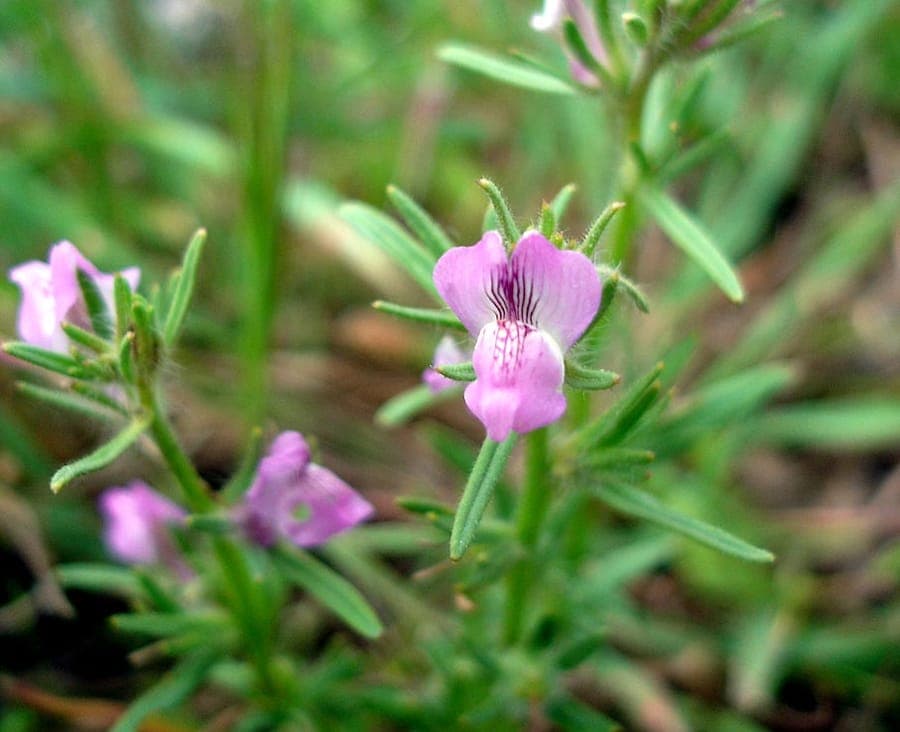
Wikimedia Commons / CC BY-SA 3.0, via Wikimedia Commons
Corn Snapdragon (Misopates orontium): complete guide
Misopates orontium
¿Quieres ver Corn Snapdragon (Misopates orontium): complete guide en tu jardín?
1 minuto, sin tarjeta de crédito
Overview
Corn Snapdragon, scientifically known as Misopates orontium, is a charming annual wildflower from the Plantaginaceae family (plantain family). This elegant plant originates from the Mediterranean region and North Africa, where it naturally inhabits arable lands and rough ground. The plant is known as 'Corn snapdragon' in reference to its visual similarity to snapdragons, though it is a much smaller and more graceful plant.
Corn Snapdragon typically reaches a height of 15 to 45 centimeters and forms slender, elegant specimens with fine flower spikes. Despite its modest dimensions, it is highly productive and blooms over extended periods during the growing season. The plant is particularly valuable for wildflower garden settings and ecological landscapes.
Appearance and Bloom Cycle
Corn Snapdragon is immediately recognizable by its small, slender growth habit. The leaves are very fine, linear to lance-shaped, 2 to 5 centimeters long, and dark green in color. The plant forms slender, unbranched or only lightly branched stems with flower spikes at the tips.
The bloom is the plant's most attractive feature. The flowers are very small, approximately 0.5 to 1 centimeter in diameter, and grow in dense, elegant spikes (racemes) along the stems. The flowers are typically pink to red-colored blooms, though white varieties also occur. The flowers have a characteristic 'snapdragon'-shaped lip, but much smaller than true snapdragons.
Blooming occurs from May through October, with continuous new flowers appearing throughout the season. Following flowering, small seed pods form containing numerous tiny seeds.
Ideal Location
Corn Snapdragon thrives best in sunny to half-shade locations with full sun exposure. The plant also does well in partial shade. A minimum of 4 to 6 hours of direct sun daily is ideal, though the plant can also grow in more shade. In warm climates, some afternoon shade helps prevent the plant from drying excessively.
This wildflower is ideal for wildflower borders, naturalistic plantings, field margins, and untidy gardens. It can also grow between paving stones and in wall crevices. The plant grows excellently in spots where other formal gardens fail.
Soil Requirements
Corn Snapdragon thrives best on well-draining soils with a pH of 6.0 to 7.5. The plant naturally occurs on poor, nutrient-deficient soils and even thrives in very poor soils. This makes it perfect for neglected spots and marginal areas.
The plant even tolerates very dry, gritty soils and can grow in very nutrient-poor sand and gravel beds. In very rich soils, the plant sometimes grows less well, as this leads to excessive leaf growth. No fertilization needed.
Diseño gratis
¿Quieres ver Corn Snapdragon (Misopates orontium): complete guide en tu jardín? Crea un diseño gratis ahora.
Watering
Once established, Corn Snapdragon has very low water requirements. The plant is extremely drought-tolerant and can survive long periods without supplemental water. During seed-setting time and in the first weeks after sowing, regular moisture monitoring can be beneficial.
In normal rainfall areas (>500mm annual precipitation), supplemental watering is typically unnecessary. The plant thrives better with moderate water than with excessive moisture. Avoid waterlogging, as this can lead to root rot.
Pruning and Maintenance
Corn Snapdragon requires minimal maintenance. The plant is typically annual and dies after seed set. Many gardeners allow the plant to self-seed naturally, creating new plants in the following season. This also promotes naturalism in the garden.
Significant pruning is unnecessary. The plant naturally forms an attractive, slender shape. In overly full growth, tangled areas can be removed, but this is rarely needed.
Maintenance Calendar
March/April: Prepare seedbed; direct sowing or pre-sowing in pots.
May: Seedling transplanting; moisture monitoring; begin regular care.
June-August: Full bloom; seed formation begins; monitor for pests.
September-October: Peak seed ripening; seed set; seed drying.
November-February: Rest period; seed overwinters in soil; no maintenance needed.
Winter Hardiness
Corn Snapdragon is a winter annual, meaning the plant survives winter as seed but dies after seed set in autumn. The seed is extremely winter hardy and tolerates temperatures far below USDA zone 6. In temperate climates like the Netherlands and Belgium, the seed virtually always overwinters successfully and automatically produces new plants in the following season.
Companion Plants and Combinations
Corn Snapdragon combines beautifully with other small wildflowers. Plant alongside other arable field plants such as Papaver rhoeas (corn poppy) and Centaurea cyanus (cornflower). The pink flowers of Corn Snapdragon contrast nicely with yellow flowers like Chrysanthemum segetum (corn marigold).
Other good combinations include:
- Erodium: pink and purple flowers
- Silene: small white and pink flowers
- Anagallis: red and orange flowers
- Reseda: yellow-green flowers
- Valerianella: white flowers
In wildflower borders, Corn Snapdragon can be used as a filler plant between larger species. It provides food for small insects and blooms for a very long time.
At local garden centers, Corn Snapdragon seed can be purchased, typically in spring.
Closing Thoughts
Misopates orontium is a valuable addition to ecological gardens and wildflower borders. Despite its modest dimensions, the plant provides extended blooming and insect food. With minimal maintenance and very low water requirements, this charming wildflower deserves attention. For more inspiration on creating wildflower borders and integrating ecological plants into your garden plan, visit gardenworld.app and discover how to include this interesting plant. Gardenworld.app offers advanced design techniques for creating natural, flowering gardens.
¿Quieres ver Corn Snapdragon (Misopates orontium): complete guide en tu jardín? Crea un diseño gratis ahora.
Sube una foto, elige un estilo y obtén un diseño fotorrealista con lista de plantas en menos de un minuto.
Más de 10.000 jardines diseñados
Sin tarjeta de crédito


Plantas similares
White Beardtongue: complete guide
Penstemon albidus
Discover white beardtongue (Penstemon albidus) - elegant perennial with white to cream flowers. Drought-resistant, perfect for prairie and dry gardens.
Longsepal Beardtongue: complete guide
Penstemon calycosus
Discover longsepal beardtongue (Penstemon calycosus) - beautiful perennial with lilac-blue flowers. For partial shade and moist soil. Ideal for naturalized.
Penstemon cusickii: complete guide
Penstemon cusickii
Discover Cusick's beardtongue, a compact alpine flowering plant with violet-pink blooms. Perfect choice for rock gardens and water-wise landscaping.