
Douglal / CC BY-SA 4.0, via Wikimedia Commons
Minuartia verna: complete guide
Minuartia verna
¿Quieres ver Minuartia verna: complete guide en tu jardín?
1 minuto, sin tarjeta de crédito
Overview
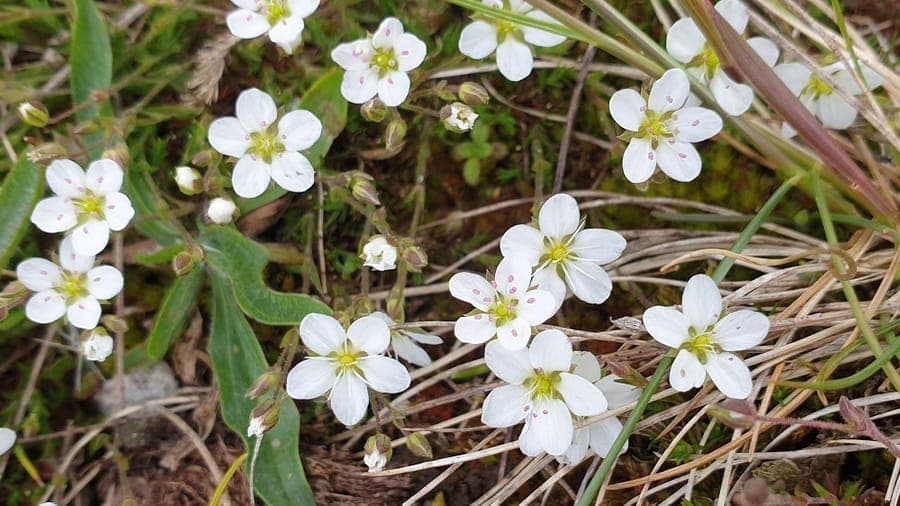
Minuartia verna, better known as spring sandwort or spring chickweed, is a charming alpine dwarf plant from the Caryophyllaceae family. This little wonder occurs naturally in European mountain regions and is beloved by rock garden enthusiasts for its delicate white flowers and compact growth habit.
This plant is also known as Zincveld sandwort because of its ability to grow on zinc-rich soils, which is rare among plants. This makes it botanically very interesting and valuable for special rock gardens.
Appearance and Blooming
Minuartia verna is an extremely dwarf herb that grows only 5 to 15 centimeters tall. It grows in dense tufts or cushions of fine, needle-like leaves. The leaves are small, linear and arranged in clusters, giving a delicate, moss-like appearance.
The flowers are tiny, just a few millimeters in diameter, white or pale pink. They appear in late spring, from April to June. Although individual flowers are small, together they create a beautiful carpet of color.
After flowering, minuscule seeds form in capsules. The plant remains green all year, making it valuable in rock gardens.
Ideal Location
Minuartia verna grows best on rocky places with good sunlight. It requires at least four to six hours of sunlight daily, but can also grow in light shade. Exceptionally good for rock walls, rock slopes, or tufa stone plants.
Provide shelter from strong winds and heavy rainstorms. The plant tolerates windy weather but can suffer from waterlogging.
Plant on slopes or in rocky areas where drainage is perfect.
Soil
This is where Minuartia verna is truly unique. It grows best in zinc-rich soils, although it can also grow in normal rocky ground. The pH should be neutral to slightly acidic (6.0-7.0).
Ensure excellent drainage. Add plenty of gravel or sand to standard potting soil. The plant cannot survive in wet conditions and requires dry, well-draining medium.
Once established, it is very nutrient-poor and can tolerate minimal feeding.
Diseño gratis
¿Quieres ver Minuartia verna: complete guide en tu jardín? Crea un diseño gratis ahora.
Watering
Minimal water after establishment. In the first year water regularly but carefully to prevent waterlogging. Once established, rarely water.
During extremely dry periods, light watering may be beneficial, but preference is for a fairly dry regime. Make sure water drains well and cannot stagnate.
In winter be even more careful with water, as the plant may be dormant.
Pruning
Pruning is practically unnecessary. The plant grows naturally compact. Remove spent flowers after blooming if you want to keep it tidy, but this is optional.
Carefully remove dead leaf parts with a small knife if they occur. The plant will naturally regenerate.
Maintenance Calendar
Spring: Monitor growth. Minimal water. Possible light feeding if desired.
Summer: Enjoy white flowers. Rare watering needed. Monitor for drought.
Autumn: Prepare for winter. Reduce watering.
Winter: Dormant or sleepy. Protect against heavy snow or ice.
Winter Hardiness
Minuartia verna is very winter hardy to USDA zone 4 (-30 degrees C). In fact, it grows best in cold climates where many alpine plants belong. In very warm climates it may suffer.
The plant can withstand snow and frost and will usually recover well.
Companion Plants
Minuartia verna is ideal as underplanting with other alpine plants. It grows well with other low-growing rock garden arrangements such as Saxifrage, Sempervivum, and other dwarf plants.
Combine in rock gardens with gravel, chips and rock blocks. Avoid planting near vigorous growers that might smother it.
Closing Thoughts
Minuartia verna is a fascinating, delicate plant for alpine and rock garden enthusiasts. With its miniature structure, delicate flowers, and ability to grow on zinc-rich soils, it offers many benefits. It is a must for specialist rock gardeners and plant enthusiasts.
Availability: You can find seeds at specialized rock plant nurseries. Visit gardenworld.app for more inspiration on rock gardens and alpine garden design. Visit gardenworld.app for more design and plant ideas!
¿Quieres ver Minuartia verna: complete guide en tu jardín? Crea un diseño gratis ahora.
Sube una foto, elige un estilo y obtén un diseño fotorrealista con lista de plantas en menos de un minuto.
Más de 10.000 jardines diseñados
Sin tarjeta de crédito


Plantas similares
Dianthus karami: complete guide
Dianthus karami
Dianthus karami is a rare Lebanese mountain pink with fringed pink blooms on limestone cliffs, ideal for rock gardens and troughs.
Sicilian pink: complete guide
Dianthus siculus
Discover Dianthus siculus, an elegant purple bloomer from Sicily. Cultivation, June-September flowering and garden combinations.
Alpine mouse-ear chickweed: complete guide
Cerastium pedunculatum
Full growing guide for Cerastium pedunculatum: ideal location, soil, watering, winter hardiness, and companion plants for rock gardens.