
Dr. Otto Wilhelm Thomé / Public domain, via Wikimedia Commons
Spignel: complete guide
Meum athamanticum
¿Quieres ver Spignel: complete guide en tu jardín?
1 minuto, sin tarjeta de crédito
The Spignel, scientifically Meum athamanticum, is an elegant perennial plant from the Apiaceae family, native to Western and Central Europe and Morocco. Formally recognized as a distinct species since 1776, this plant grows naturally in mountainous environments, especially on alpine meadows between 1,000 and 2,500 meters elevation. The plant is traditionally known in alpine regions and forms an important component of mountain flora in the Alps, Pyrenees, and other European mountain ranges.
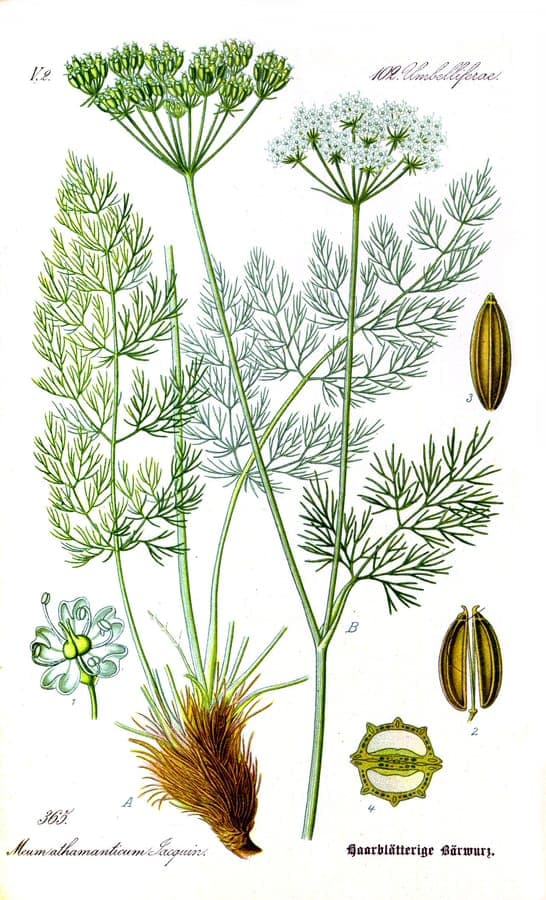
The appearance of Meum athamanticum is elegant and very finely textured. The plant forms compact clumps of decoratively divided foliage, reaching 30 to 70 centimeters height. The leaves are doubly compound and extremely finely divided, almost thread-like, giving an airy and feathery appearance. Color ranges from light green in young stages to dark green in mature growth. In May and June, tiny white flowers appear in flat umbrella-like floral clusters measuring approximately 4 to 8 centimeters across. Individual flowers are merely 2 to 3 millimeters but are numerous in aggregate. These flowers attract many small insects. After flowering, characteristic two-ribbed seeds develop, approximately 4 to 6 millimeters long.
The ideal location for Spignel is a sunny to partially shaded spot with excellent drainage. The plant thrives in locations where light and air flow freely, not in dark corners. Plant this species on south-facing slopes or in well-draining soils for optimal growth. The plant loves windy positions and actually grows stronger in such locations.
Regarding soil composition, Meum athamanticum is not demanding but has clear preferences. The plant grows best in loose, sandy to gravelly soils with excellent drainage. Heavy, water-retaining clay soils are unsuitable. The pH may be acidic to neutral, between 5.5 and 7.0. An important point is that this plant reacts poorly to nutrient-rich soils by producing more foliage and fewer flowers. Plant this in lean, impoverished soil for best blooming results. Do not add artificial fertilization.
Watering is needed only during extreme drought periods. Once established, Spignel is extremely drought-tolerant, particularly in deep-rooted locations. During the first season in the growing season from April to June, provide moderate water if rainfall is insufficient. Thereafter, supplemental water is practically unnecessary. This plant grows naturally in mountainous areas where water availability is irregular.
Pruning is unnecessary. The plant grows naturally compact and forms a neat habit by itself. You may simply remove yellowed leaves as needed. After flowering, you may deadhead seed heads for seed collection, but leave some to allow natural self-seeding next season. The plant naturally spreads through self-seeding.
The maintenance calendar for Spignel is exceptionally simple. In April, simply add sand or gravel through surrounding soil for improved drainage. From May through June, enjoy the delicate white flowers. In July, you may harvest seeds. In September, allow young seedlings from previous season to grow. No special winter care is required.
Winter hardiness is exemplary. Meum athamanticum is fully hardy to approximately minus 25 degrees Celsius or lower, depending on local conditions. The plant grows naturally in alpine areas where extreme winters occur. The foliage is evergreen and provides attractive winter interest even in cold seasons. Snow and frost pose no threat.
As a garden companion, Spignel pairs well with other alpine and mountain plants. Combine it with dianthus, saxifraga, sedum, and other hardy succulent alpine plants for authentic alpine garden style. The plant grows excellently with other fine-leaved Apiaceae species and small compact plantings. Plant it in groups of three to five individuals for best effect.
Spignel is a perfect plant for the specialist gardener and rock garden designer. With its elegant foliage, delicate white flowers, and exceptional winter hardiness, this plant is ideal for alpine gardens and mountain landscapes. The plant is relatively rare in commerce but specialized alpine herb nurseries usually have this species available. For best results, consult local alpine plant specialists or seek out Alpine garden nurseries. Gardenworld.app can help you determine where this plant fits best in your alpine garden design. This is a plant for gardeners who appreciate mountain flora and elegant, finely textured plants. The Spignel represents the beauty of alpine habitats and mountain plants. With careful management and proper placement, this plant can bring years of joy and aesthetic value to your gardens.
¿Quieres ver Spignel: complete guide en tu jardín? Crea un diseño gratis ahora.
Sube una foto, elige un estilo y obtén un diseño fotorrealista con lista de plantas en menos de un minuto.
Más de 10.000 jardines diseñados
Sin tarjeta de crédito


Plantas similares
Whorled carrot: complete guide
Daucus involucratus
Daucus involucratus is a Mediterranean umbellifer with white flower heads framed by lacy bracts. Growing this gravel garden gem.
Daucus muricatus: complete guide
Daucus muricatus
Daucus muricatus, the spiny wild carrot, grows wild on Mediterranean coasts. Discover sowing, June-July bloom, and wildflower meadow use.
Daucus pumilus: complete guide
Daucus pumilus
Daucus pumilus is a dwarf wild carrot relative with white lacy umbels, thriving on dunes and coastal rock in poor, fast-draining soil.