
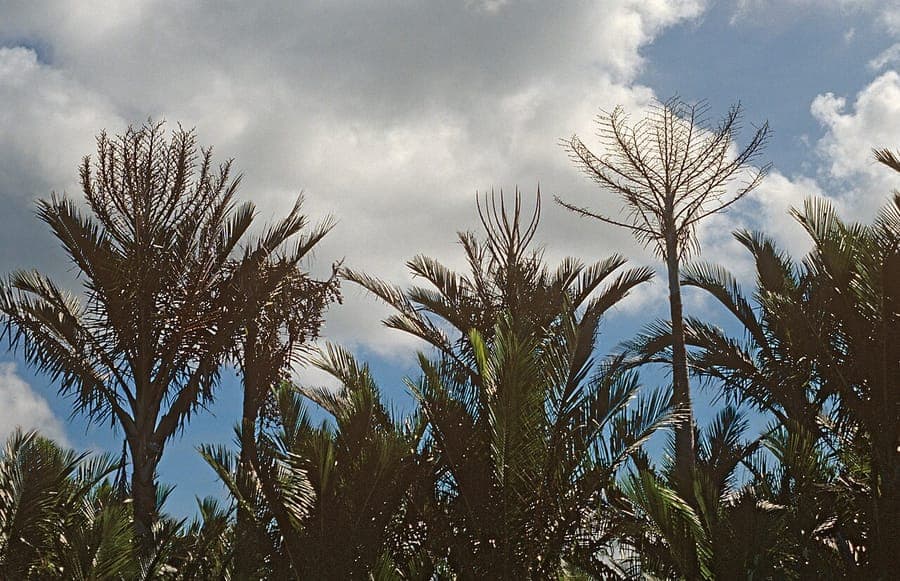
Rik Schuiling / TropCrop-TCS / CC BY-SA 4.0, via Wikimedia Commons
Metroxylon sagu: complete guide
Metroxylon sagu
¿Quieres ver Metroxylon sagu: complete guide en tu jardín?
1 minuto, sin tarjeta de crédito
Overview
Metroxylon sagu, better known as the sago palm, is a mighty tropical palm native to Indonesia and Papua New Guinea. This impressive palm is not only botanically fascinating but is also valued for the sago starch extracted from its trunk. The sago palm is a unique choice for gardens in warm, tropical climates.
Appearance and bloom
The sago palm is a monocarpic palm that reaches heights of 10 to 15 meters, with a trunk diameter of 30 to 40 centimeters. The plant grows from a single trunk with large feathery leaves that can be up to 5 meters long. Flower panicles are not conspicuous but are very important for reproduction. After flowering and seed set, the entire plant dies, typical of monocarpic palms.
Ideal location
The sago palm grows best in warm, humid, tropical climate with temperatures between 20 and 30 degrees Celsius. The plant thrives in partially shaded to full sun locations. Shelter from strong winds is essential, as the large leaves can be easily damaged.
Soil
The sago palm thrives best on rich, moist soil that contains plenty of nutrients. Choose soil with plenty of organic matter and good water retention. The plant can also grow on wet soil, indicating a preference for moist conditions. Ensure well-worked compost or planting material when planting.
Watering
The sago palm requires regular watering, especially during the growing season. Keep the soil consistently moist but not waterlogged. During dry periods, regular misting of the leaves is recommended. In rainy areas, supplemental watering is rarely needed, but check soil moisture regularly.
Diseño gratis
¿Quieres ver Metroxylon sagu: complete guide en tu jardín? Crea un diseño gratis ahora.
Pruning
Pruning of the sago palm is mainly limited to removing dead leaves and damaged petioles. Avoid pruning living foliage, as this damages the plant. Remove seed panicles after seed set to concentrate energy for growth.
Maintenance calendar
Spring: Check the plant for harmful insects. Water regularly. Add fertilizer as needed. Summer: Ensure adequate humidity. Mist leaves in dry periods. Fall: Prepare for cooler periods. Check for diseases. Winter: Minimal maintenance. Protect from unexpected frost.
Winter hardiness
The sago palm is sensitive to cold and cannot survive temperatures below 10 degrees Celsius. In temperate climates, the plant must be grown in a warm greenhouse or indoors. Frost damage occurs quickly and can be fatal.
Companion plants
Combine the sago palm with other tropical plants such as banana trees, heliconias, and other palms. Shade-strengthening plants like Colocasia and Alocasia are ideal for underplanting. The large leaves of the sago palm work well in combination with finer textures of ferns.
Closing
Metroxylon sagu is a unique, impressive palm for tropical and subtropical gardens. With proper support, fertilization, and watering, this plant can provide beauty for many years. For gardens in warmer climates, the sago palm is a must-have for those desiring an exotic, tropical feel.
Looking for seedlings or sago palms? Check local tropical plant nurseries. For more information about tropical garden designs, visit gardenworld.app/nl or gardenworld.app/en for inspiration.
¿Quieres ver Metroxylon sagu: complete guide en tu jardín? Crea un diseño gratis ahora.
Sube una foto, elige un estilo y obtén un diseño fotorrealista con lista de plantas en menos de un minuto.
Más de 10.000 jardines diseñados
Sin tarjeta de crédito


Plantas similares
Needle palm: complete guide
Rhapidophyllum hystrix
Everything about the needle palm: the world's hardiest palm, suitable for gardens in temperate climates down to USDA zone 7b.
Saw palmetto: complete guide
Serenoa repens
A complete guide to saw palmetto (Serenoa repens), the iconic fan palm from Florida and the southeastern United States, prized for its toughness.
Puerto Rican hat palm: complete guide
Sabal causiarum
Grow Puerto Rican hat palm successfully. A majestic fan palm with tropical presence suited to sheltered Mediterranean-style gardens.