
Andrey Butko / CC BY-SA 3.0, via Wikimedia Commons
Mesembryanthemum cordifolium: complete guide
Mesembryanthemum cordifolium
¿Quieres ver Mesembryanthemum cordifolium: complete guide en tu jardín?
1 minuto, sin tarjeta de crédito
Overview
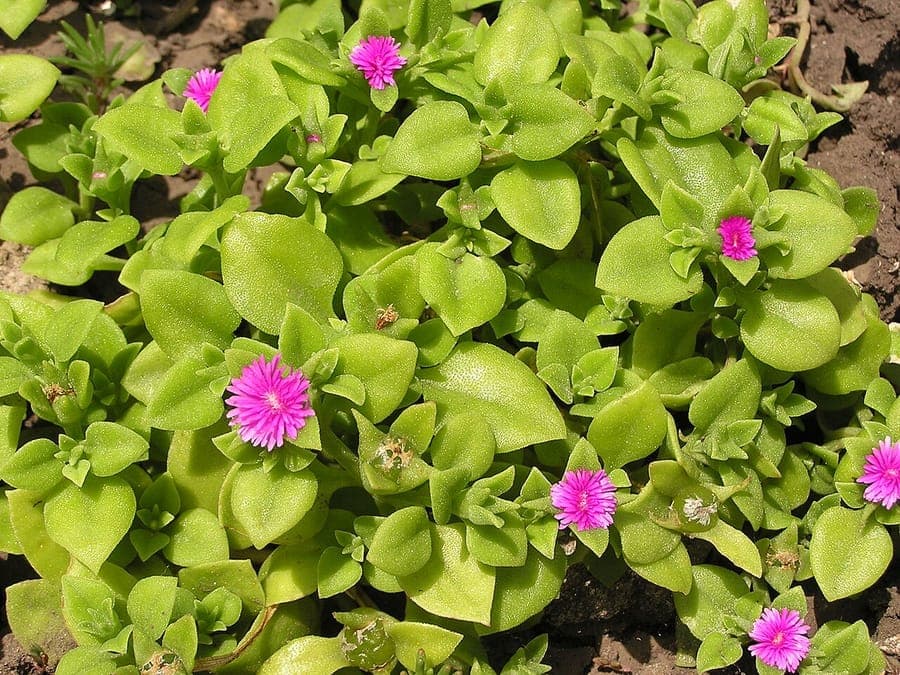
Mesembryanthemum cordifolium, commonly known as Heartleaf iceplant or Aptenia cordifolia, is a captivating succulent plant native to South Africa. This member of the Aizoaceae family is cherished for its fleshy, heart-shaped leaves and delightful small flowers in warm, sunny gardens.
This plant grows low and spreads as a natural groundcover. The succulent nature of Mesembryanthemum cordifolium means minimal water requirements and exceptional drought tolerance. Combined with other xeriphytic plants, it creates a perfect pairing.
The plant becomes particularly valuable in Mediterranean and semiarid gardens where traditional plants struggle. Once established, it grows independently and asks for very little maintenance.
Appearance and Bloom
Mesembryanthemum cordifolium grows 10-20 centimeters tall but can spread 30-50 centimeters wide. The leaves are remarkable - small, fleshy, heart-shaped, glossy green with thick flesh beneath the epidermis.
Flowers are small but beautiful, varying from pink to magenta to white, appearing in abundance across the plant. They open primarily during daylight and close at night.
Blooming extends spring through autumn, peaking in summer. The plant attracts numerous pollinating insects.
Ideal Location
Messembryan hemum cordifolium grows best in full sunlight. Position it where it receives at least six to eight hours of direct sun daily. The more sunlight, the better the bloom.
The plant can grow in light partial shade, but flowers much less profusely. Avoid deep shade entirely. Full sun promotes intense coloring and better growth.
It excels in open garden borders, on rocky slopes, and in container cultivation.
Soil
Messembryan hemum cordifolium requires excellent drainage above all. Sandy, loamy-sandy soils are ideal. Add coarse sand, perlite or grit to garden soils to improve drainage.
The plant is undemanding regarding nutrients and grows well in poor-nutrient soils. Excess organic matter can cause root rot. pH can vary widely (6-8).
When planted in pots, use a mixture with lots of sand and gravel for optimal drainage.
Diseño gratis
¿Quieres ver Mesembryanthemum cordifolium: complete guide en tu jardín? Crea un diseño gratis ahora.
Watering
Messembryan hemum cordifolium is very drought-tolerant and requires minimal watering. Once established, water only occasionally during very dry periods. Excessive water is the principal cause of death for this plant.
During growth period (spring-summer) you can water occasionally, but let the soil dry completely between waterings. In winter, water scarcely.
In pot culture, water very sparingly. Better to underwater than overwater.
Pruning
Messembryan hemum cordifolium requires virtually no pruning. Remove only dead or damaged leaves or branches. If the plant grows too gangly, you can gently cut it back in spring.
The plant can naturally maintain its form.
Maintenance Calendar
March-April: Check drainage. Plant can be carefully repotted if needed.
May-August: Blooming peaks. Water only in extreme drought. Enjoy colored flowers.
September-October: Plant begins growing slower. Water even less. Seed formation can be prevented by removing spent flowers.
November-February: Winter rest. Water scarcely. Plant can shelter.
Winter Hardiness
Messembryan hemum cordifolium tolerates temperatures to about 0 to -3 degrees Celsius. It grows permanently in USDA zones 10-11. In colder regions, it must be planted as an annual or protected indoors during frost.
In temperate conditions (like southern Mediterranean) it can overwinter outdoors if protected from water excess.
Companion Plants
Messembryan hemum cordifolium pairs beautifully with:
- Other succulents (Echeveria, Sedum, Aeonium)
- Ornamental grasses
- Lavender
- Rock roses
- Other drought-lovers
Closing Thoughts
Messembryan hemum cordifolium is a fantastic choice for dry, sunny gardens where traditional plants struggle. With its attractive leaves and colorful flowers, it brings color and texture. Plant it in full sun and very well-drained soil, water sparingly, and it will flower reliably for years.
For UK gardeners, check Mediterranean plant specialists or Thompson and Morgan for young plants.
¿Quieres ver Mesembryanthemum cordifolium: complete guide en tu jardín? Crea un diseño gratis ahora.
Sube una foto, elige un estilo y obtén un diseño fotorrealista con lista de plantas en menos de un minuto.
Sin tarjeta de crédito


Plantas similares
Carpobrotus glaucescens: complete guide
Carpobrotus glaucescens
Pigface or angular sea-fig is a succulent from Australia. Learn cultivation, care, and use for coastal and container gardens.
Delosperma nubigenum: complete guide
Delosperma nubigenum
Everything about Delosperma nubigenum: a prolific-flowering succulent from South Africa with orange blooms. Growing tips, care and design ideas for your garden.
Crocea Iceplant: complete guide
Malephora crocea
Discover Crocea Iceplant (Malephora crocea), a South African succulent with coppery-orange flowers. Perfect for dry, sunny gardens and rock gardens.