
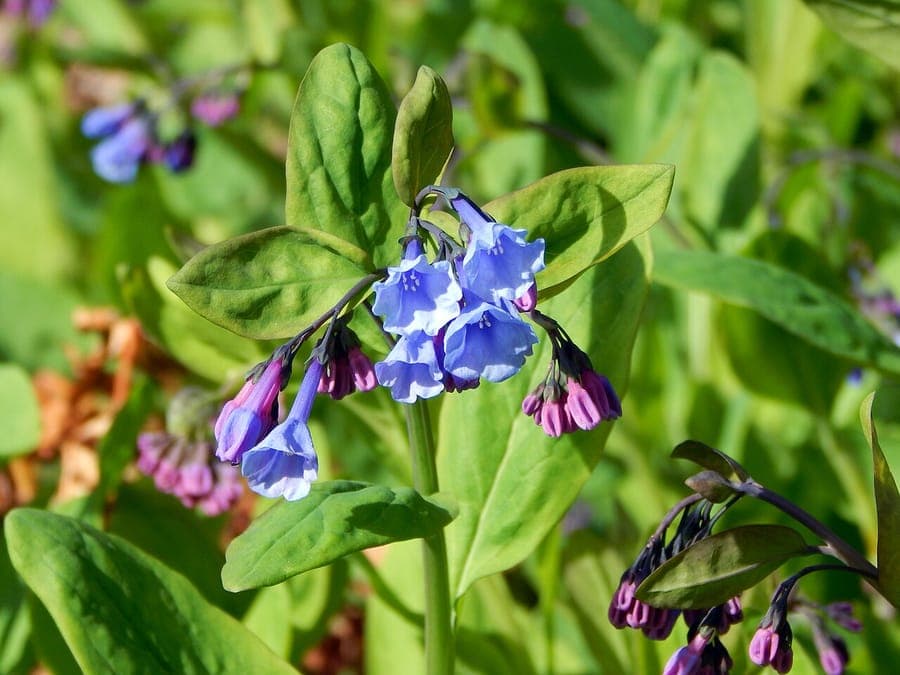
Khan "Sadh" N. Mostafa / CC BY 2.0, via Wikimedia Commons
Virginia bluebells: complete guide
Mertensia virginica
¿Quieres ver Virginia bluebells: complete guide en tu jardín?
1 minuto, sin tarjeta de crédito
Virginia bluebells (Mertensia virginica), also called Roanoke-bells and Virginia cowslip, is an enchanting spring ephemeral from the Boraginaceae family. This native North American plant grows from Canada to North Carolina in moist forests and river valleys.
Morphology: Virginia bluebells have upright, succulent stems reaching 30 to 50 centimeters tall. The leaves are elliptical and blue-green with distinctive ripples. The stems bear drooping clusters of brilliant blue, bell-shaped flowers at the tips.
Flowering and timing: Blooming occurs in April through May, at the tail end of spring season. This makes Virginia bluebells invaluable for filling spring gaps in woodland gardens. The flowers are brilliant porcelain-blue and exceptionally attractive to pollinators.
Growth requirements: Virginia bluebells thrive in moist, humus-rich woodland soils. The plant loves moisture-retentive earth with abundant leaf mold. Preference pH ranges from 4.5 to 8.0 - very flexible.
Light requirements: Blooming and propagation require full shade under deciduous trees during early spring. The plant is fully winter-hardy and undergoes summer dormancy.
Water requirements: Virginia bluebells need very moist soil from October through May. In dry summers, the plant goes dormant and disappears underground until next autumn.
Cultivation: Plant rhizomes in autumn - October is ideal. Set at 5-10 centimeters depth in moist soil. Seeds can also be sown, but require cold stratification during winter.
Propagation: From seed extremely easy. Sow directly after seed ripening in late May. Seedlings germinate in March. Rhizome division also possible.
Winter hardiness: Hardy to USDA zone 3, so exceptionally cold-hardy. Underground rhizomes survive severe winters.
Companion plants: In woodlands grow with other spring bloomers such as dogtooth violet, bloodroot, and early trillium. Also beautiful with ferns and mosses.
Pollinator value: Virginia bluebells are visited by bumblebees, hover flies, and other pollinators. The nectar is valuable for early season food.
Planting locations: Ideal under pine, oak, and birch trees. Plant in large groups for maximum impact.
Summer dormancy: This is a spring ephemeral - the plant is completely underground from June through October. Plan your garden accordingly.
Diseases and pests: Highly resistant to disease. Some caterpillars possible but damage is minimal.
We recommend planting Virginia bluebells rhizomes in autumn. This is invaluable for woodland gardens. Discover more plant guides at gardenworld.app.
¿Quieres ver Virginia bluebells: complete guide en tu jardín? Crea un diseño gratis ahora.
Sube una foto, elige un estilo y obtén un diseño fotorrealista con lista de plantas en menos de un minuto.
Sin tarjeta de crédito


Plantas similares
Western waterleaf: complete guide
Hydrophyllum occidentale
Full growing guide for western waterleaf (Hydrophyllum occidentale): shade tolerance, soil needs, watering, winter hardiness and naturalistic garden use.
Limestone phacelia (Phacelia affinis): complete guide
Phacelia affinis
Full guide to Phacelia affinis, the limestone phacelia: sowing tips, purple-blue bee flowers, drought tolerance and uses in dry or wildlife gardens.
Pyrenean viper's bugloss: complete guide
Echium asperrimum
Echium asperrimum is a striking biennial from the western Mediterranean with rough bristly stems and vivid blue flowers. A magnet for bees and a bold border plant.