
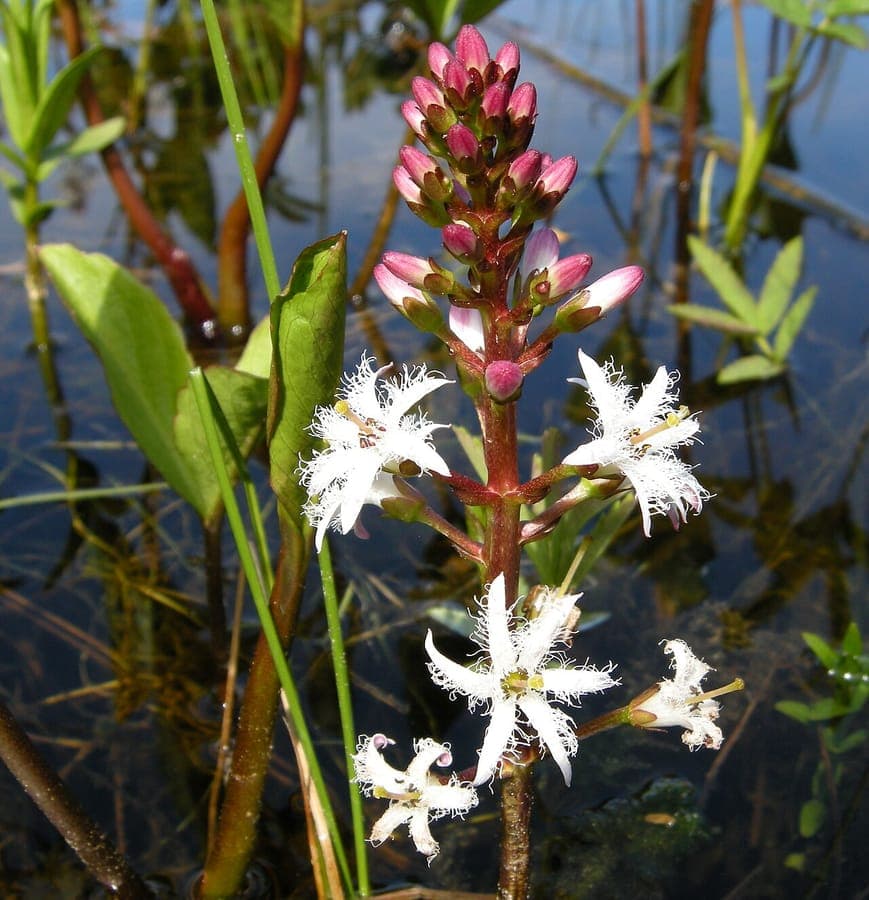
Arnstein Rønning / CC BY 3.0, via Wikimedia Commons
Bog bean: complete guide
Menyanthes trifoliata
¿Quieres ver Bog bean: complete guide en tu jardín?
1 minuto, sin tarjeta de crédito
Overview
Bog bean, scientifically known as Menyanthes trifoliata, is a fascinating semi-aquatic plant from the Menyanthaceae family. This northern hemisphere native grows naturally in peatlands, marshes, fens, and wet shoreline zones in subarctic through temperate climates. Also called Bogbean or Marsh Trefoil due to its traditional medicinal heritage, the plant creates a spectacular floral display at the water's edge with distinctive hairy flowers that are genuinely unique in character.
Bog bean is not only botanically fascinating but also culinarily valuable - young leaves have traditionally served as herbal tea and contain bitter compounds supporting digestion. On gardenworld.app, you can design water gardens and wetland gardens where this unique plant perfectly fits into your water zone ecology.
Appearance & blooming cycle
Bog bean forms a low, creeping water-mat only 10-30 cm tall at the water surface. The plant roots deeply in marshy substrates and forms long runners (stolons) that spread horizontally across water. The leaves are distinctly trifoliate (three-leafed), each leaflet 4-8 cm long, oval to lanceolate, entirely unlobed and smooth.
The flowers are the highlight: tiny, approximately 1 cm across, white to very pale pink with distinctive long white hairs on the petals. This hairy structure makes the flower absolutely recognizable and unique. The blooming period runs from May to July (6-8 weeks) with many flowers simultaneously at stem tips. A vigorous blooming specimen can cover the entire water surface with white flowers.
Ideal location
Bog bean is a true water-lover and thrives only in wet to aquatic environments. Plant it in shallow water (5-20 cm deep), in marshes, at pond edges, in reed beds, or in extremely wet ground where water is permanently at or below surface level. Full sun to partial shade are both acceptable, though full sun (6+ hours daily) provides optimal flowering.
In Dutch gardens this means: beside a natural pond, in a constructed marsh/wetland zone, or in containers with permanent water levels. Avoid dry locations absolutely - this plant demands water, plenty of water.
Soil & feeding
Bog bean grows best in wet, muddy substrates abundantly supplied with organic material. Acidic peaty soils are ideal (pH 5.5-6.5), though the plant also thrives in neutral to slightly acidic substrates. In artificial waters, you can provide a rich mud layer (10-15 cm deep) mixed with compost or leaf litter.
The plant is far less particular about nutrition than many water plants - it grows vigorously in poor marsh waters without synthetic fertilization. No chemical fertilizing needed; natural decomposition of organic material in the water supplies sufficient nutrients.
Diseño gratis
¿Quieres ver Bog bean: complete guide en tu jardín? Crea un diseño gratis ahora.
Watering (Water level)
Bog bean requires permanent moisture to water level. This is actually the crucial point: this plant does not grow in normal, dry garden soil. Maintenance of 5-20 cm permanent water is essential. In winters deeper roots may freeze, but the plant survives as long as the substrate doesn't freeze solid.
In very dry seasons (which are rare in the Netherlands), carefully monitor water levels and add water if levels drop excessively.
Pruning & shaping
Bog bean requires virtually no pruning. The plant naturally forms an open, spreading growth habit that usually looks attractive on its own. Only remove dead or rotten plant parts when they appear.
The plant spreads via long runners and can colonize large areas, so you can regularly trim and manage runners if you wish to constrain growth.
Maintenance calendar
March-April: Check for winter damage, initiate spring growth May-July: Monitor water level, observe flowering, trim runners if needed August-October: Maintain water level, observe seed dispersal November-February: Winter dormancy, maintain water level
Winter hardiness
Bog bean is fully hardy in USDA zones 3-9, making it suitable for all northern and central European regions, including the Netherlands. The plant behaves as a true cold-lover from northern peatlands. Even harsh winter frost (to -30°C) causes no mortality as long as roots don't completely desiccate.
In gardens where water freezes over, the plant survives beneath the ice without difficulty. This is a tremendous advantage in continental and temperate climates.
Companion plants
Bog bean combines beautifully with other water and marsh plants:
- Cranberry (Vaccinium oxycoccos) at marsh margins
- Sundew (Drosera rotundifolia) for special microhabitats
- Flowering rush (Butomus umbellatus) with red flowers in deeper water
- Purple loosestrife (Hottonia palustris) with fine foliage in same water zone
- Sweet flag (Acorus calamus) for adjacent zoning
- Water mint (Mentha aquatica) aromatic in adjacent zones
- Yellow iris (Iris pseudacorus) for shoreline zoning
Conclusion
Menyanthes trifoliata, the underrated Bog bean, is absolutely essential for marsh and water gardens in northern climates. Its hairy flowers, culinary potential, and simple maintenance needs make it ideal for anyone wanting to establish a water zone in their garden. On gardenworld.app, you can design water gardens where this magnificent aquatic specimen functions perfectly.
Bog bean is available from specialized water plant nurseries. Many Dutch garden centers don't carry it in standard inventory, so inquire about availability or order from recognized water plant suppliers. Add this unusual gem to your water zone and enjoy years of hairy flowers and ecological value!
¿Quieres ver Bog bean: complete guide en tu jardín? Crea un diseño gratis ahora.
Sube una foto, elige un estilo y obtén un diseño fotorrealista con lista de plantas en menos de un minuto.
Más de 10.000 jardines diseñados
Sin tarjeta de crédito


Plantas similares
Acer pycnanthum: complete guide
Acer pycnanthum
Acer pycnanthum, the Japanese swamp maple, is a fast-growing tree with early red flowers and brilliant autumn color, ideal for damp garden settings.
Freeman maple: complete guide
Acer × freemanii
Everything about the Freeman maple (Acer x freemanii): a fast-growing shade tree with spectacular autumn colour for large gardens.
Silver vine: complete guide
Actinidia polygama
Discover silver vine (Actinidia polygama): a hardy climbing plant with silvery foliage, loved by gardeners and cats alike.