
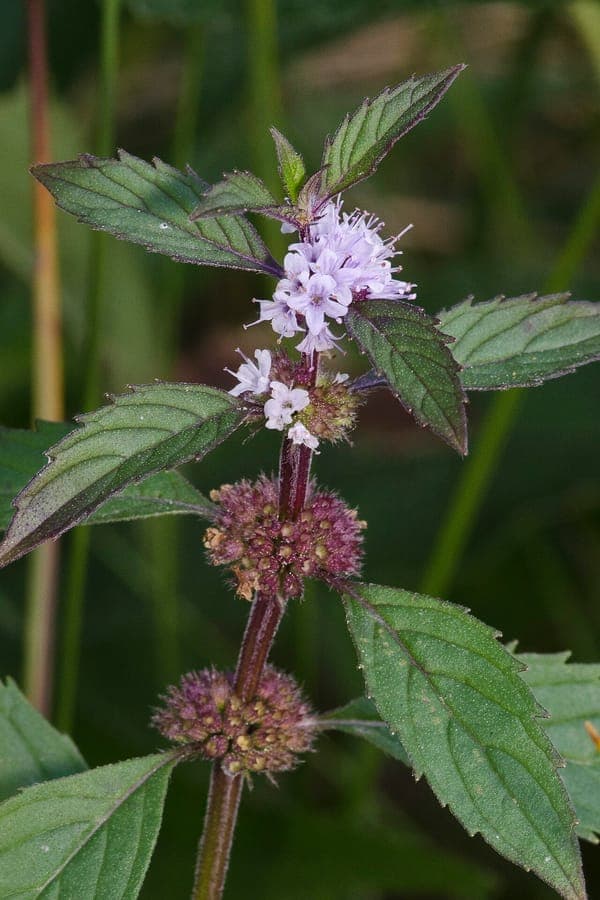
Mjhuft / CC BY-SA 4.0, via Wikimedia Commons
Mentha canadensis: complete guide
Mentha canadensis
¿Quieres ver Mentha canadensis: complete guide en tu jardín?
1 minuto, sin tarjeta de crédito
Overview
Mentha canadensis, commonly known as American corn mint, is a versatile herbaceous plant from the Lamiaceae family. This robust creeping species originates from North America and Siberian regions and excels in European gardens thanks to its exceptional hardiness and simple growing requirements.
The plant is renowned for its potent aromatic leaves and deserves a prominent place in any herb garden. With rapid growth and minimal maintenance needs, American corn mint suits gardeners of all skill levels.
Appearance and Bloom
American corn mint grows as a compact, spreading plant reaching 30 to 50 centimetres in height. The plant spreads via underground rhizomes, forming dense mats of fresh green foliage. The lance-shaped leaves are dark green and glossy, with prominent veins and a strong mint aroma when touched.
Flowering occurs during summer months (June to August), displaying small purple or pale pink flowers arranged in tight inflorescences along the stems. These flowers prove highly attractive to honeybees and other pollinators.
Ideal Location
Mentha canadensis thrives in full sun to partial shade conditions. In southern regions, dappled light even provides beneficial respite from excessive heat. The plant tolerates shaded locations, though growth will be slower.
For optimal aroma and most vigorous growth, gardenworld.app recommends minimum four hours of direct sunlight daily. The plant remains flexible enough to succeed in diverse settings.
Soil
American corn mint proves undemanding regarding soil type and grows in virtually any garden or potting mix. Ideal conditions feature fertile, well-draining soil with pH between 6.0 and 7.5. The plant tolerates wet soil better than many other herbs.
For container growing, use quality potting mix mixed with some sand for improved drainage. In heavy clay soils, work in humus-rich compost to improve structure.
Watering
Keep the soil around American corn mint consistently moist, especially during dry periods and growing seasons. The plant tolerates brief dry spells but performs best with regular moisture. Water when the top soil layer feels dry.
Container plants require more frequent watering than in-ground specimens. Ensure good drainage to prevent root rot. Winter moisture proves far less critical.
Diseño gratis
¿Quieres ver Mentha canadensis: complete guide en tu jardín? Crea un diseño gratis ahora.
Pruning
American corn mint responds well to regular pruning, keeping the plant compact and full. Pinch back young shoots during the growing season to encourage branching. In spring, the plant can be cut back hard to approximately 10 centimetres to stimulate fresh growth.
For harvesting purposes, continuously pinch off leaves, which only encourages the plant to produce more foliage.
Maintenance Calendar
March: Cut back to 10-15 cm; apply fertiliser April to May: Regular pinching; weeding around the plant June to August: Flowering; fertilise every two weeks; water as needed September to October: Reduce fertilising; prepare for dormancy November to February: Winter rest; minimal watering
Winter Hardiness
Mentha canadensis displays extraordinary winter hardiness, tolerating temperatures to minus 20 degrees Celsius. The plant suits all European hardiness zones. Above-ground parts may die back in severe winters, but roots survive and regenerate in spring.
As protection against extreme frost, mulching with straw or leaves proves beneficial, particularly in exposed locations.
Companion Plants
American corn mint forms excellent plant partnerships with other herbaceous plants like oregano, thyme and sage. The strong aroma works as an insect repellent for many pests, helping protect companion plants.
In flower arrangements, pair American corn mint with lavender and rosemary, both for aesthetic appeal and complementary growing requirements.
Conclusion
Mentha canadensis proves a versatile, low-maintenance plant adding value to any herb garden. With its potent aroma, rapid growth and exceptional winter hardiness, this American mint delivers reliable performance for years. Whether brewing fresh tea or using the plant as ground cover, American corn mint will impress.
Available at leading garden centres across Europe. For more inspiration and garden advice, visit gardenworld.app/en and discover how to integrate American corn mint into your garden design.
¿Quieres ver Mentha canadensis: complete guide en tu jardín? Crea un diseño gratis ahora.
Sube una foto, elige un estilo y obtén un diseño fotorrealista con lista de plantas en menos de un minuto.
Más de 10.000 jardines diseñados
Sin tarjeta de crédito


Plantas similares
Apple mint (Mentha x villosa): complete guide
Mentha x villosa
Meet apple mint (Mentha x villosa): a fruity-scented kitchen herb with woolly leaves, perfect for tea and mojitos.
Salvia peyronii: complete guide
Salvia peyronii
Discover Salvia peyronii, a rare Lebanese mountain sage. Growing tips, hardiness, and companion planting for a Mediterranean gravel garden.
Bigleaf mint (Mentha x rotundifolia): complete guide
Mentha x rotundifolia
Discover bigleaf mint: cultivation, care tips, and garden uses. Learn how to grow this aromatic herb with soft, hairy leaves.