
Wikimedia Commons / CC BY-SA 3.0, via Wikimedia Commons
Bastard Balm: complete guide
Melittis melissophyllum
¿Quieres ver Bastard Balm: complete guide en tu jardín?
1 minuto, sin tarjeta de crédito
Overview
Bastard Balm, scientifically known as Melittis melissophyllum, is a charming wild plant from the Lamiaceae family (mint family). This European native species grows naturally in moist woodlands and forest edges from Britain to Turkey. The plant is a true gem for shaded garden corners, where it displays its distinctive two-coloured flowers with pride. Melittis melissophyllum transforms woodland-style gardens and shaded areas into buzzing hubs of insect activity.
The plant is extensively visited by bees, bumblebees, and other pollinators, making it invaluable for wildlife-friendly gardens. On gardenworld.app, you can design shaded garden spaces where this treasure is perfectly integrated with other shade-loving plants that thrive away from intense midday sun.
Appearance & blooming cycle
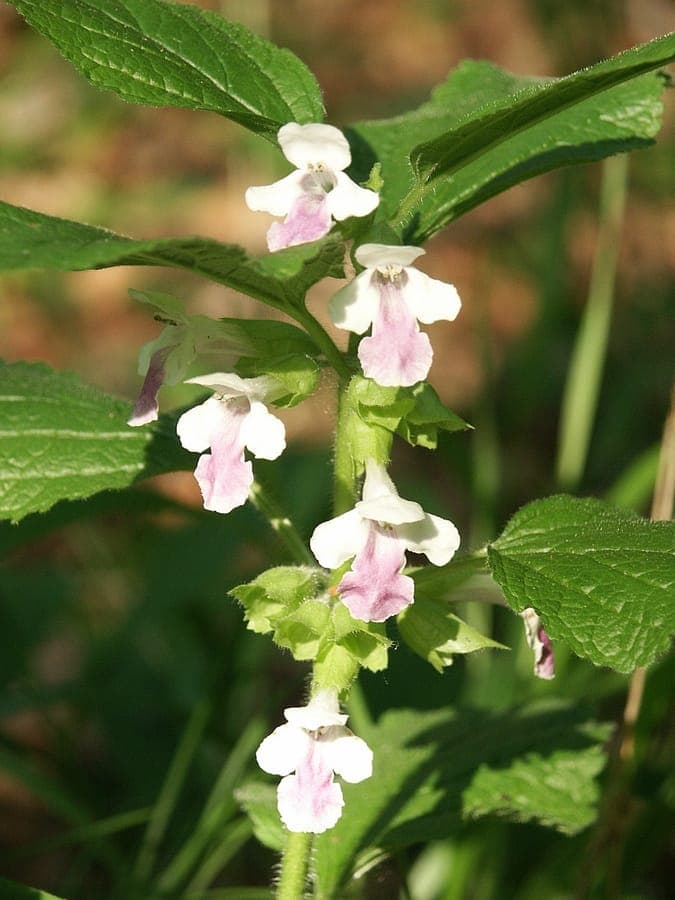
Bastard Balm forms elegant upright to spreading mounds of 25-60 cm in height and spread. The stems are characteristically square and hairy, typical of mint-family plants. The leaves are oval-heartshaped, 4-8 cm long, coarsely toothed, and greyish-green with distinctive veining. When gently touched, they release a pleasant minty-herbal aroma.
The flower is the highlight: beautifully bicoloured with a white or pale cream upper lip and a purple or pink lower lip with darker speckles. Flowers appear from May to July (spanning 5-8 weeks) in the leaf axils, creating full and attractive floral displays. June is peak flowering time, when bees and bumblebees absolutely swarm around these plants with enthusiasm.
Ideal location
Bastard Balm thrives in dappled shade to full shade, though it tolerates some morning sun. The plant suffers from intense midday sun, especially in warming climates. For Dutch climate zones (USDA zones 5-7), a location beneath native tree canopies is ideal - think under birch, ash, or spring-blooming hazel. Position plants at least 30-40 cm away from larger trees to avoid root competition. In the west or southwest of your garden, the plant will appreciate afternoon shade.
Soil & feeding
The plant grows best in humus-rich, well-draining soil with pH 6.5-7.0 (slightly acidic to neutral). Heavier clay soils benefit from substantial organic amendments - compost, leaf mold, or shredded leaf litter works wonders. Bastard Balm loves moisture-retentive soil but abhors waterlogging; drainage is essential to prevent root rot in wet winters.
Given the plant's preference for nutrient-rich, humus-laden environments, apply a layer of organic mulch once every two years in spring (3-4 cm thick) or provide moderate organic fertilizer. Synthetic fertilizers are unnecessary and can actually be harmful to this woodland plant.
Diseño gratis
¿Quieres ver Bastard Balm: complete guide en tu jardín? Crea un diseño gratis ahora.
Watering
Once established, Bastard Balm is relatively drought-tolerant but grows faster and flowers more profusely with regular moisture. Ensure soil remains consistently moist during the growing and flowering season (May-July) - a thorough watering every 2-3 days during dry spells is desirable. After flowering, you can reduce watering somewhat, though the soil should never dry out completely.
In rainy seasons, minimal supplemental watering is needed. Container-grown plants require more vigilant monitoring as they dry out faster than in-ground specimens.
Pruning & shaping
Bastard Balm requires minimal pruning. Deadheading spent flowers extends the blooming period and encourages additional flower production. In autumn, after flowering ceases, you can cut the entire plant back to approximately 10-15 cm above ground level, allowing it to sprout fresh growth in spring.
Avoid aggressive pruning unless the plant becomes unkempt. Natural form is actually far more attractive than rigidly pruned specimens.
Maintenance calendar
January-March: Spring pruning, apply compost/mulch layer April-May: Monitor growth, remove weeds May-July: Water regularly, deadhead spent flowers, observe pollinator activity August-October: Reduce watering, prepare for autumn November-December: Cut back to ground level for winter dormancy
Winter hardiness
Bastard Balm is fully hardy in USDA zones 5-9, making it suitable for all Dutch climate regions. The plant tolerates temperatures down to -20°C without protection. In extremely severe winters, a light leaf mulch around the base provides additional frost insurance, though this is rarely necessary in the Dutch climate.
Companion plants
Bastard Balm combines wonderfully with other shade-loving native plants:
- Wood Geranium (Geranium robertianum)
- Climbing plants like Birthwort (Aristolochia clematitis)
- Sedges (Carex remota, C. pendula) for textural contrast
- Shield Fern (Polystichum setiferum) for green architecture
- Snowberry (Symphoricarpos albus) for autumn berries
- Hepatica (Hepatica nobilis) for spring colour
Avoid planting with overly aggressive competitors that might overwhelm this modest plant.
Conclusion
Melittis melissophyllum, the humble Bastard Balm, is an absolute gem for wildlife-friendly shaded gardens. Its bicoloured flowers, pleasant fragrance, and high value to bee pollinators make it essential for any partially shaded garden corner. Once established, it performs virtually independently. With gardenworld.app, you can design the perfect environment for this plant in your specific garden conditions. This unique mint-family treasure proves that gardens need not always be sunny - sometimes the best things grow in the peaceful shade.
Bastard Balm is available at Dutch garden centers like Intratuin and other specialist nurseries, or through specialized seed merchants. Plant this beautiful specimen in your garden and enjoy years of pollinator visitation and bicoloured floral abundance!
¿Quieres ver Bastard Balm: complete guide en tu jardín? Crea un diseño gratis ahora.
Sube una foto, elige un estilo y obtén un diseño fotorrealista con lista de plantas en menos de un minuto.
Más de 10.000 jardines diseñados
Sin tarjeta de crédito


Plantas similares
Apple mint (Mentha x villosa): complete guide
Mentha x villosa
Meet apple mint (Mentha x villosa): a fruity-scented kitchen herb with woolly leaves, perfect for tea and mojitos.
Salvia peyronii: complete guide
Salvia peyronii
Discover Salvia peyronii, a rare Lebanese mountain sage. Growing tips, hardiness, and companion planting for a Mediterranean gravel garden.
Bigleaf mint (Mentha x rotundifolia): complete guide
Mentha x rotundifolia
Discover bigleaf mint: cultivation, care tips, and garden uses. Learn how to grow this aromatic herb with soft, hairy leaves.