
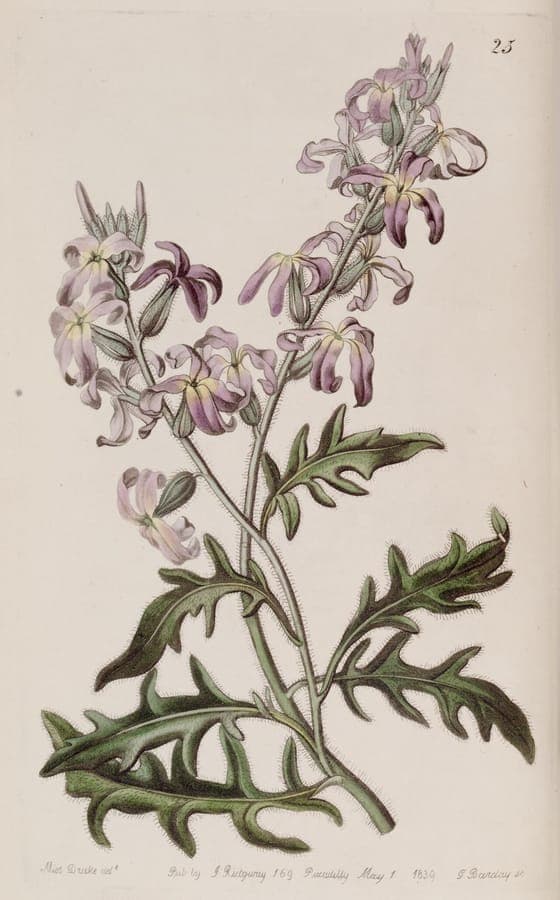
Lindley, John; Ridgway, James / Public domain, via Wikimedia Commons
Evening-scent stock: complete growing guide for fragrant gardens
Matthiola longipetala
¿Quieres ver Evening-scent stock: complete growing guide for fragrant gardens en tu jardín?
1 minuto, sin tarjeta de crédito
Overview
Evening-scent stock (Matthiola longipetala) is an exceptionally unique annual plant from the Brassicaceae family, native to the Eastern Mediterranean through Central Asian region. This plant is particularly renowned for its fantastic fragrance that intensifies especially during evening and night hours and becomes very intense, while the flowers themselves remain inconspicuous and small. Therefore called 'evening-scent' or 'perfume plant'. Ideal for those who prioritize fragrance over visual flower beauty. The plant is particularly valuable for those creating gardens that engage all senses, especially the sense of smell.
Evening-scent stock grows as a low herb to approximately 30-40 centimeters tall with narrow, lance-like leaves. Flowers are strikingly small, approximately 1-2 centimeters across, usually purple to violet colored, sometimes pink or white. They grow in dense spikes at the top of the plant. But the real value and fame lies absolutely in the fragrance: sweet, spicy-aromatic, intense and pleasant during evening and night twilight hours. In full daylight the flowers are much less fragrant or even not fragrant. This is a classic 'fragrance-focused' plant choice.
The plant produces flowers continuously throughout the season ensuring an extended blooming period. The fragrance attracts night-active insects and is a pleasure for evening garden strolls. This is the ideal plant for those wishing to enjoy the garden in the evening hours.
Appearance and bloom
Evening-scent stock grows as a low herb to approximately 30-40 centimeters tall with narrow, lance-like leaves approximately 5-10 centimeters long. Leaves are green and smooth. Growth habit is upright with some side branches. The plant doesn't form dense growth but rather an airy structure.
Flowers are strikingly small and inconspicuous, approximately 1-2 centimeters across, usually purple to violet colored, sometimes pink or white. Each flower has four petals that spread widely. They grow in dense spikes at the top of the plant and along the stem. The real value lies absolutely in the intensely sweet, spicy-aromatic fragrance that especially during evening and night twilight hours becomes very strong. In full daylight flowers are much less fragrant.
The plant produces flowers continuously throughout the entire season ensuring an extended blooming period from June through October. Every part of the plant smells intensely when brushed, supporting the plant-specific scent distribution.
Ideal location
Evening-scent stock grows best in sunny to lightly shaded sites with at least 4-5 hours sunlight daily which is ideal. Plant near patios, terraces, under windows so you can enjoy and experience the evening fragrance. In full shade it grows poorly and hardly smells. The plant appreciates protection from extreme midday sun in very hot climates. Always position where evening air circulation brings the fragrance toward you.
Diseño gratis
¿Quieres ver Evening-scent stock: complete growing guide for fragrant gardens en tu jardín? Crea un diseño gratis ahora.
Soil
Evening-scent stock prefers light, well-draining soil with good drainage capacity. The pH should be between 6.0 and 7.5. Improve heavy soils by adding sand and compost which improves structure. This plant tolerates dryness fairly well, so extra-rich soil isn't needed. Good drainage is however absolutely essential. When sowing in ground add coarse sand for drainage.
Watering
Evening-scent stock tolerates dryness better than many other flowering plants. Water regularly but not excessively during the growing season. Ensure water drains well and prevents waterlogging. In very hot periods extra water may be needed. Don't waterlog. Excess water leads to disease and root rot.
Once established the plant can tolerate reasonable drought stress.
Sowing
Evening-scent stock is grown from seed which is very simple. Sow directly in ground in March-April or October. Press seed lightly, don't cover completely as seed needs light to germinate. Thin to 15-20 centimeter spacing. Germination takes 1-2 weeks under favorable conditions. This is very simple to grow from seed without assistance.
Maintenance calendar
March-April: Sow directly in ground, prepare site. May: Young plants grow quickly. June: Blooming begins. July-August: Peak of bloom and evening fragrance, enjoy fragrance. September-October: Autumn bloom period possible, fragrance remains strong. November: Plant dies. Year-round you can enjoy evening fragrance.
Winter hardiness
Evening-scent stock is an annual and tolerates no frost. It grows year-round outdoors only in zones 8-10, but elsewhere it dies at frost. In temperate regions resow each year in March-April for summer bloom and fragrance. This is a simple annual ritual.
Companion planting
Combine evening-scent stock with day-fragrant plants like scented marigold or fragrant verbena for continuous aroma throughout the day. Plant with night-blooming jasmine for evening fragrance collection. Group 3-5 plants together for stronger fragrance effect. This creates a sensorial evening garden that will delight visitors.
Closing thoughts
Evening-scent stock is the perfect choice for those who prioritize fragrance over beauty. The evening fragrances make any garden special and attractive. In cooler regions sow annually. Seed available from seed suppliers and online. Gardenworld.app provides extensive inspiration for fragrant gardens and evening gardens. Evening-scent stock certainly deserves a place in every scent garden. This is absolutely a plant for sensitive gardeners wishing to engage all their senses.
¿Quieres ver Evening-scent stock: complete growing guide for fragrant gardens en tu jardín? Crea un diseño gratis ahora.
Sube una foto, elige un estilo y obtén un diseño fotorrealista con lista de plantas en menos de un minuto.
Más de 10.000 jardines diseñados
Sin tarjeta de crédito


Plantas similares
Brassica cretica: complete guide
Brassica cretica
Brassica cretica, the Cretan cabbage, grows wild on Aegean cliffs. Discover how to grow this drought-tolerant, yellow-flowered Mediterranean perennial.
Corsican cabbage: complete guide
Brassica insularis
Corsican cabbage is a rare Mediterranean rock cabbage with white flowers and blue-green leaves. Location, soil and winter protection.
Prostrate cabbage: complete guide
Brassica procumbens
Prostrate cabbage is a creeping North African cliff plant with yellow flowers. Discover location, soil type and winter protection.