
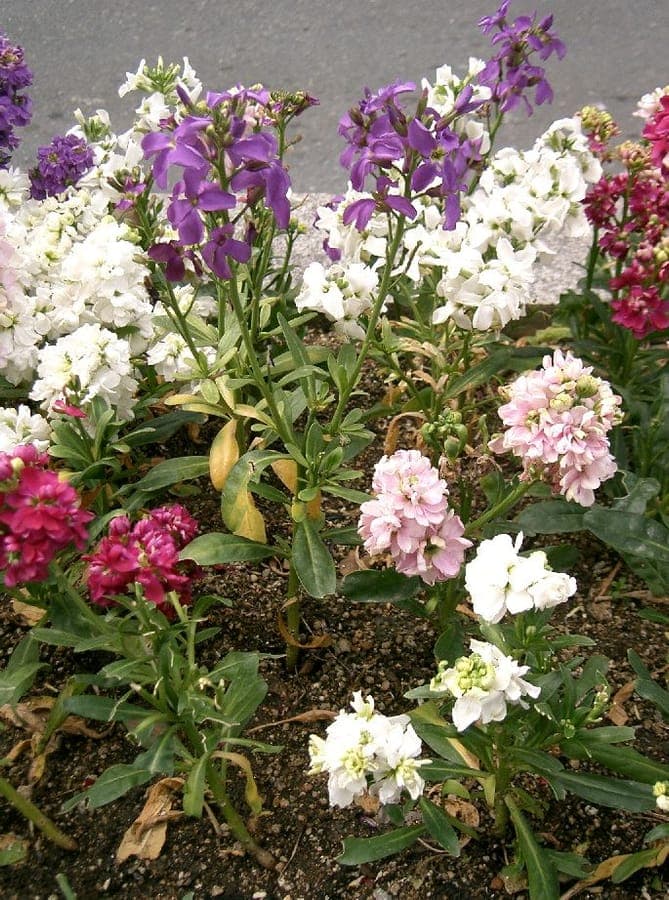
KENPEI / CC BY-SA 3.0, via Wikimedia Commons
Hoary Stock (Matthiola incana): complete guide
Matthiola incana
¿Quieres ver Hoary Stock (Matthiola incana): complete guide en tu jardín?
1 minuto, sin tarjeta de crédito
Overview
Matthiola incana, commonly called hoary stock or gillyflower, is a classical Mediterranean garden plant with a cultivation history stretching back to the 18th century Renaissance gardens. This beloved ornamental remains a favorite among gardeners seeking the perfect combination of visual beauty and intoxicating fragrance. The botanical name 'incana' refers to the characteristic grayish-white hairs covering leaves and stems, creating a soft, velvety texture that catches light beautifully.
Hoary stock is celebrated for two exceptional qualities: densely packed double flowers in numerous color ranges and an enchanting fragrance that intensifies during evening and nighttime hours. This combination of visual splendor and bewitching scent makes matthiola an essential element in romantic gardens, cut flower arrangements, and container displays. The plant grows easily from seed, reaching blooming maturity in just six to eight weeks, making it perfect for gardeners seeking rapid visible results.
Appearance and Bloom Cycle
Hoary stock develops a compact, upright growth pattern typically reaching 30 to 60 centimeters tall, depending on cultivar and growing conditions. Stems are sturdy, sparsely branched, and completely clothed with fine grayish-green foliage creating an almost silvery appearance in certain light quality. This leaf texture is not merely decorative; the hairs help the plant retain moisture during dry periods.
The flowers are the true spectacle. Dense, tightly packed double flowers form upright trusses reaching 20 to 30 centimeters in length. Colors range from deep purple, rose, red, white, and even bluish-purple, depending on cultivar selection. Popular cultivars include 'Brompton,' 'Ten Weeks,' and the more recent 'Excelsior' series. Each flower truss contains dozens to hundreds of individual blooms persisting four to six weeks, delivering extended color and interest.
Matthiola's fragrance is legendary among gardeners. Described as sweet, spicy, and sometimes clove-scented, the perfume is strongest during evening hours. This makes hoary stock ideal for gardens where you spend time during twilight – terraces, patios, and garden seating with views of matthiola provide full, aromatic experiences.
Ideal Location
Matthiola performs optimally in sunny locations receiving at least six hours of direct daily sunlight. Southwest-facing positions are ideal, especially in climates with cool evenings that stimulate maximum fragrance release. The plant tolerates partial shade but produces fewer, less densely packed flowers and reduced fragrance in shadier situations.
Regarding location, air circulation proves important. Gentle breezes help distribute fragrance throughout the garden and reduce fungal disease risk. Avoid dense, sheltered spots beneath trees. Open, airy positions, particularly against garden walls or fences reflecting gentle heat, produce the best-performing plants.
Soil Requirements
Matthiola prefers well-drained, neutral to slightly alkaline soil. The ideal pH range extends from 6.5 to 7.5. The plant succeeds in less fertile soils but performs better with moderate fertility. Heavy, waterlogged soils cause root rot and must be avoided entirely.
For container cultivation, light potting soil mixed with sand or perlite works ideally. For open-ground planting, incorporate fine sand and compost into the top 20 centimeters for optimal texture and drainage. Matthiola doesn't require specialized nutrient regimes, but potassium-balanced fertilizer supports profuse flowering.
Diseño gratis
¿Quieres ver Hoary Stock (Matthiola incana): complete guide en tu jardín? Crea un diseño gratis ahora.
Watering
Once established, matthiola requires regular watering, especially during growth and flowering periods. Water when the top centimeter feels dry. Consistent moisture promotes healthy development and abundant flowering. Base watering is preferable; overhead watering can spread fungal diseases.
In containers, check moisture levels daily during warm periods – containers dry quickly. Severe, prolonged drought stresses the plant, potentially causing premature flower drop. Young transplants require more frequent watering than established garden specimens.
Pruning and Training
Matthiola requires minimal formal pruning. Spent flower trusses can be carefully removed as they brown, potentially stimulating light rebloom, though this isn't necessary. Many gardeners enjoy dried trusses against green foliage, especially in autumnal schemes.
To achieve bushier, fuller plants, gently pinch shoot tips of young plants when they reach 8-10 centimeters. This encourages branching and results in more flower trusses per plant.
Maintenance Calendar
February-March: Indoor seed sowing, seedling propagation. April: Transplant into larger containers or open ground, harden off. May-July: Monitor moisture, light feeding every two weeks, remove spent flowers. August-October: Peak flowering, fragrance at maximum, regular watering. October-November: Plant senescence, can be removed. December-January: For autumn sowers, can overwinter indoors.
Winter Hardiness
Matthiola incana is technically biennial but is usually grown as an annual due to rapid flowering after sowing. In milder gardens (southern Netherlands, southern Germany), established plants may survive winter in excellent drainage conditions. Therefore, sow in autumn (August-September) for spring flowering, or spring (March-April) for summer flowering.
In USDA zones 9-11, matthiola can be grown as a perennial, especially in dry summer climates. In harsher zones, plants typically succumb to first frosts.
Companion Planting
Matthiola works beautifully in cottage-style borders alongside roses, lavender, and catmint. The vertical growth habit complements the rounded forms of salvias and pelargoniums. In cut-flower arrangements, matthiola provides texture and fragrance. For containers, combine with silvery artemisia, heuchera, and trailing ivy for three-dimensional interest.
In mixed containers, place matthiola in the center, surrounded by shorter silver-foliaged plants and trailing 'Lysichiton' or 'Plecostachyus' for dramatic contrasts. Compact 'Ten Weeks' cultivars work well in small containers of 20-30 centimeter diameter.
Benefits and Applications
Matthiola is a classic cut flower. Trusses last exceptionally well indoors with daily water changes, remaining fresh for 5-7 days. Commercial florists value matthiola highly for fragrance, color, and long vase-life. Home gardeners can grow their own cut flowers for inexpensive, fragrant bouquets throughout the season.
The plant is non-toxic and particularly interesting for children due to its rapid growth cycle. Matthiola seeds easily, and children can observe the complete growth-to-bloom cycle within several months.
Gardenworld.app helps integrate matthiola into your garden design. With photo uploads, you receive personalized recommendations for matthiola placement, cultivar selection, and successive plantings for continuous bloom. Gardenworld.app provides detailed maintenance calendars for ongoing flower availability throughout the growing season.
Conclusion
Matthiola incana is an indispensable plant for gardeners who value fragrance, color, and romantic garden moments. This easily grown classical bloomer with intoxicating fragrance and stunning densely packed flower trusses deserves space in every garden. Sow seeds in March-April or August-September, ensure excellent drainage, position in sunny locations with air circulation, and enjoy months of beautiful fragrance and visual splendor.
¿Quieres ver Hoary Stock (Matthiola incana): complete guide en tu jardín? Crea un diseño gratis ahora.
Sube una foto, elige un estilo y obtén un diseño fotorrealista con lista de plantas en menos de un minuto.
Más de 10.000 jardines diseñados
Sin tarjeta de crédito


Plantas similares
Brassica cretica: complete guide
Brassica cretica
Brassica cretica, the Cretan cabbage, grows wild on Aegean cliffs. Discover how to grow this drought-tolerant, yellow-flowered Mediterranean perennial.
Corsican cabbage: complete guide
Brassica insularis
Corsican cabbage is a rare Mediterranean rock cabbage with white flowers and blue-green leaves. Location, soil and winter protection.
Prostrate cabbage: complete guide
Brassica procumbens
Prostrate cabbage is a creeping North African cliff plant with yellow flowers. Discover location, soil type and winter protection.