
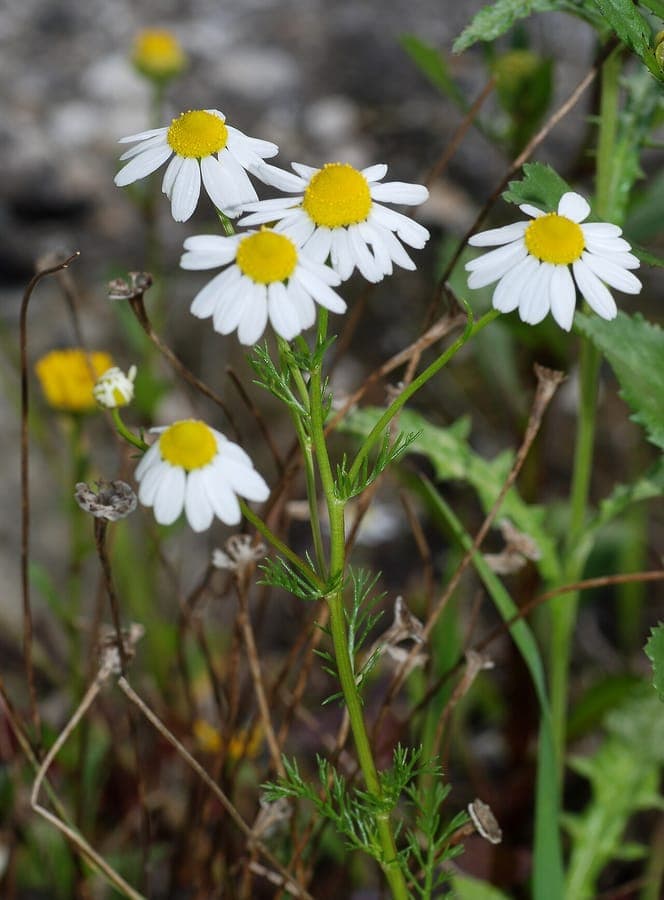
Alvesgaspar / CC BY-SA 3.0, via Wikimedia Commons
German chamomile (Matricaria chamomilla): complete guide
Matricaria chamomilla
¿Quieres ver German chamomile (Matricaria chamomilla): complete guide en tu jardín?
1 minuto, sin tarjeta de crédito
Overview
German chamomile (Matricaria chamomilla), called true chamomile or common chamomile in English, is a delightfully simple annual herb native to temperate Eurasia extending to Indo-China. This remarkably popular medicinal plant has been valued in traditional medicine for at least two thousand years across Europe, the Middle East, and North Africa. Chamomile remains arguably the most widely consumed medicinal herb globally, with billions of cups brewed annually from its distinctive small daisy-like flowers featuring yellow disk florets surrounded by white ray petals. Modern research confirms traditional uses: chamomile exhibits genuine anxiolytic, mild sedative, and digestive benefits supported by scientific evidence.
In gardens, chamomile behaves as an effortless self-sower requiring virtually no cultivation skill. The plant grows rapidly from seed, blooms prolifically throughout summer and autumn, and produces extraordinary quantities of viable seed persisting for years. Both beginning and experienced gardeners cultivate chamomile without difficulty - it is arguably the easiest medicinal herb to grow successfully. The plant also attracts fine pollinating insects and contributes positively to garden ecosystems. For anyone drinking tea or interested in home medicinal herb cultivation, chamomile represents an essential starting point.
Appearance & bloom cycle
Chamomile develops as a compact, finely-branched annual reaching typically 20-60 centimeters height, though tall cultivars exceed 80 centimeters. Stems are delicately branching with very fine, lightly hairy texture. Leaves are extremely fine and feathery (finely pinnately divided), giving the plant a light, elegant, almost wispy appearance despite robust growth habit. The overall aesthetic is airy and refined.
Characteristic flowers appear from June through October in temperate climates, continuously opening throughout the growing season until frost threatens. Each flower consists of a bright yellow central disk (actually composed of hundreds of tiny disk florets lacking ray petals) surrounded by approximately 15-20 white ray petals. Individual flowers measure merely 1-2 centimeters diameter, but sheer abundance creates spectacular displays at peak bloom. Following flowering, microscopic seeds develop that remain viable for 3-5 years if stored dry, enabling reliable self-sowing.
Ideal location
Chamomile grows optimally in full sun locations receiving minimum 6-8 hours direct sunlight daily. The plant tolerates partial shade reasonably well, becoming thinner with reduced blooming in less light. Select an open, sunny location where water doesn't stagnate. The plant is completely frost-tolerant during growth season; seed can be sown directly outside in autumn or spring. Thin, airy locations allow good air circulation preventing fungal diseases.
Soil requirements
Chamomile is remarkably flexible regarding soil preference. The plant thrives in nearly all soils from sandy to clayey, though it prefers well-drained soils with pH 5.5-8.0. The plant tolerates poor soils excellently and requires no special feeding. In very rich soils, chamomile sometimes produces excessive foliage at the expense of flowering. Soil preparation: add sand or gravel to heavy clay soils improving drainage. Add small amounts of compost to very poor soils (no more than 20-25 percent of volume). The plant actually performs better in somewhat lean soils.
Watering
Chamomile is quite drought-tolerant once established. During germination and very young plant stage (first 4-6 weeks), provide regular water supporting consistent germination and early establishment. Thereafter, chamomile usually sustains itself through rainfall in temperate climates. During dry periods, water when the top 3-4 centimeters of soil becomes dry. Overwatering promotes fungal diseases; ensure good drainage always. Chamomile actually performs better with moderate moisture rather than constant water. During the flowering phase, water more consistently as blooming increases water loss through transpiration.
Diseño gratis
¿Quieres ver German chamomile (Matricaria chamomilla): complete guide en tu jardín? Crea un diseño gratis ahora.
Harvesting for tea & medicine
Flowers can be harvested as soon as they open fully, typically 6-8 weeks after sowing (August-October depending on sowing date). Harvest flowers in early morning after dew evaporation but before the hottest part of day. Gently pinch flowers from their stem bases. Hang cuttings upside-down in loose bundles in dry, dark, well-ventilated spaces for 7-10 days until completely desiccated. Store dried flowers in sealed glass containers away from light; properly stored chamomile maintains potency for 12+ months. To brew: steep 1-2 teaspoons dried flowers (or 1 tablespoon fresh flowers) in 250 milliliters boiling water for 5-10 minutes, straining before drinking. Chamomile tea displays mild, apple-like flavor most people find pleasant.
Propagation
Chamomile propagates with remarkable ease via seed. Sow seed directly outside in early spring (March) or autumn (September-October) where it completes vernalization before spring growth. Seed is very fine, so scatter carefully. Press seed lightly into soil surface but don't completely bury it - chamomile seed requires light to germinate. Seeds germinate within 7-14 days at 15-20 degrees Celsius. Alternatively, start seed indoors in February under grow lights, transplanting hardened-off seedlings after last frost date. However, direct outdoor seeding is typically simpler and produces stronger plants.
Maintenance calendar
February-March: Start seed indoors under grow lights, or sow directly outside.
April-May: Seedlings grow rapidly. Thin to 15-20 centimeter spacing when reaching 5-8 centimeters height. Harden off seedlings before transplanting if started indoors.
June-July: Plants grow vigorously, developing flower buds. Water regularly during dry periods. Inspect for fungal diseases or unwanted pests.
August-October: Peak blooming and harvesting! Harvest flowers regularly encouraging continued flower production. Allow at least a few plants to set seed for next season.
October-November: Collect seed from retained plants. Dry seed in warm, dry location. Plants naturally senesce as seed ripens (chamomile is annual), but self-sown seed ensures next season's crop.
December-February: Seed overwinters in soil awaiting spring warmth. Seed sown previous autumn germinates as soil temperature rises in spring.
Winter hardiness
Chamomile is an annual plant, so it doesn't survive hard winters in mature form. However, in mild winters (USDA zones 8-10), some plants may survive winter and regrow in spring. In colder regions, all plants succumb to frost, but seed persists in soil and germinates again in spring. This makes chamomile virtually self-perpetuating: sow once, and chamomile re-seeds itself reliably for years.
Companion plants
Chamomile grows beautifully alongside other annual herb plants: dill, parsley, caraway, flax, and small aromatic herbs create harmonious herb gardens. Plant chamomile also in vegetable gardens because it attracts beneficial pollinating insects. Many gardeners incorporate chamomile into flower borders where its fine foliage and flowers add delicate texture. Avoid planting directly adjacent to very large plants that might shade chamomile; provide at least 30 centimeters open space around each plant.
Closing
Chamomile truly represents the perfect medicinal herb for beginning gardeners and tea enthusiasts. The plant requires minimal care, produces extraordinary quantities of flowers, and delivers excellent medicine almost everyone finds pleasant and beneficial. For back-to-basics gardeners, chamomile teaches fundamental herb cultivation principles: sow seed, water when needed, harvest flowers, and enjoy fresh tea. Learn more about medicinal herbs and home-growing possibilities at gardenworld.app.
Beginning with chamomile gradually introduces gardeners into medicinal plant cultivation, home health apothecary-building, and self-sufficiency in wellness. Success with chamomile enables progressive experimentation with more complex medicinal herbs. Start now, enjoy this enchanting plant, and discover why billions worldwide have embraced chamomile tea as their preferred calming beverage. Explore more medicinal herbs and home-growing ideas at gardenworld.app.
¿Quieres ver German chamomile (Matricaria chamomilla): complete guide en tu jardín? Crea un diseño gratis ahora.
Sube una foto, elige un estilo y obtén un diseño fotorrealista con lista de plantas en menos de un minuto.
Más de 10.000 jardines diseñados
Sin tarjeta de crédito


Plantas similares
Calendula stellata: complete guide
Calendula stellata
Complete guide to Calendula stellata, the star-flowered marigold from Sicily: location, soil, watering and companion planting tips.
Korean chrysanthemum: complete guide
Chrysanthemum x rubellum
Chrysanthemum x rubellum is a hardy autumn perennial with single pink to copper flowers from August to November. Care and combinations.
Helianthus divaricatus: complete guide
Helianthus divaricatus
Helianthus divaricatus is a North American woodland sunflower with yellow summer blooms, ideal for naturalistic borders and shady edges.